
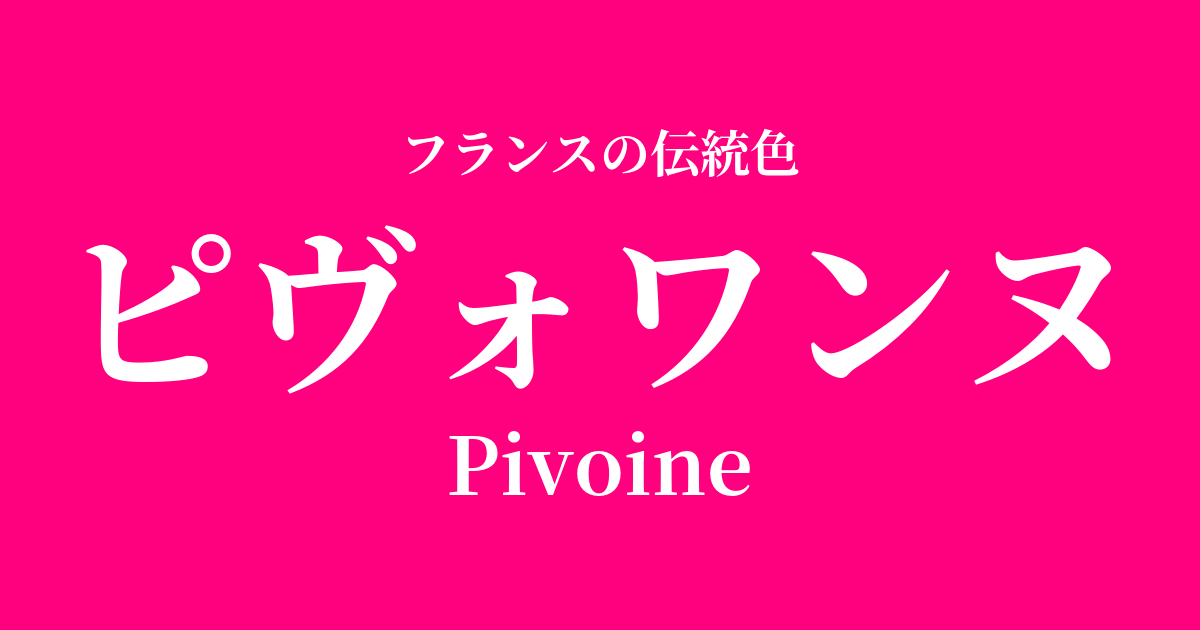
| French | Pivoine |
|---|---|
| Katakana | Pivoine |
| HEX | #ff007f |
| RGB | 255, 0, 127 |
What is Pivoinne? Origin and Etymology
"Pivoine" is a French word meaning "peony" flower. As the name suggests, it refers to the vibrant, slightly bluish pink color, or magenta, of the large, showy petals of the peony.
In Europe since ancient times, peonies, alongside roses, often called the "queen of flowers," have captivated people with their beauty. Their full and elegant appearance has made them a symbol of wealth, nobility, and happiness, and their color, peonies, has also been cherished as a color symbolizing beauty and grace.
The sensibility of directly incorporating the beautiful colors of flowers found in nature into names speaks to the refined nature of French culture.
Historical background of Pivoine
Pivoine shone particularly brightly in French history during the Rococo period of the 18th century. During this era, court culture reached the pinnacle of elegance and refinement, and bright, sweet colors were highly favored in fashion and interior design.
In particular, Marie Antoinette, the last queen of France, and Madame de Pompadour, the mistress of Louis XV, are said to have been very fond of this pink color. This vibrant pink was used extensively in their luxurious dresses and in the textiles that adorned the private spaces of the Palace of Versailles.
Pivoine perfectly embodied the light, sweet, and slightly sensual aesthetic pursued by the aristocracy of the time. Even after the French Revolution and the changing times, this color continued to live on in art and culture as a symbol of passion and femininity within the Romantic era.
Pivoine in the world of art and fashion
In the world of art, we can find the color of pivoine in the works of Rococo painters such as François Boucher and Jean-Honoré Fragonard. The shimmering pink of the dresses worn by the mythological goddesses and noblewomen they depict conveys the color sensibility of that era to this day.
In the world of fashion, peonies have inspired many couturiers as a color symbolizing the spirit of France. Christian Dior, in particular, is known as a designer who loved flowers, and dramatic pinks reminiscent of peonies frequently appear in his collections.
Furthermore, the sophisticated techniques for dyeing these vibrant colors also developed in Lyon's silk weaving industry, a source of pride for France. Even in the traditional fabric "Toile de Jouy," characterized by its elegant floral patterns, designs based on peacock dye can be seen, demonstrating the richness of French textile culture.
La pivoine est, dit-on, la rose sans épines.
Color scheme preview
This is to check the readability of the text when this color is used as the background.
Pivoine's color scheme proposal
Gris de l'Ain (#d5d1c4)
The vibrant pivoine is gently complemented by a calming flaxen gray, creating a sophisticated and elegant look. This color scheme is perfect for Rococo-style interiors and chic fashion.
Veil Anis (#94d457)
The natural color contrast, reminiscent of flowers and young leaves, creates a fresh and vibrant impression. It's perfect for adding a playful touch to pop and modern designs, or to spring and summer outfits.
Violet de Palme (#874c99)
Two colors with similar hues but different depths harmonize to create a sensual and mysterious atmosphere. It would look stunning on a party dress or in the design of a unique website.
Practical Scenes
In fashion, pique is a key color. Simply incorporating it into dresses, skirts, or blouses instantly creates a glamorous and feminine impression. If it feels a little too bold, using it as an accent color in a scarf, bag, or lip color will brighten your face and add a stylish touch to your outfit.
For interior design, it's recommended to incorporate this color through small items such as cushion covers, art panels, and tablecloths. It brings elegance and warmth to the space, creating a pleasant accent. Using this color as an accent wall is also effective for creating a dramatic atmosphere.
In the world of web design and graphic design, it particularly shines on websites targeting women's products and beauty-related sites. When used as a main color to achieve a balance between luxury and approachability, or as an accent color for buttons you want to draw attention to, it can create a memorable design.