
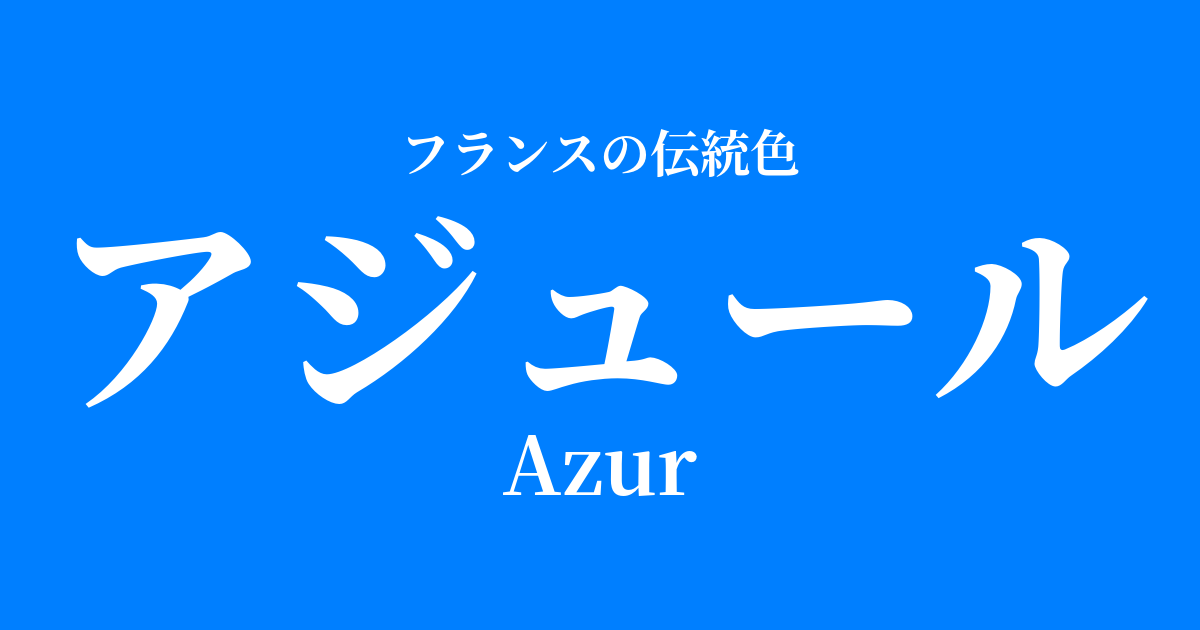
| French | Azur |
|---|---|
| Katakana | Azure |
| HEX | #007FFF |
| RGB | 0, 127, 255 |
What is Azure? Origin and Etymology
Azur refers to a vibrant, clear blue color that reflects the skies of southern France and the Mediterranean Sea.
Its etymology traces back to the ancient Persian word "lājevard," meaning "lapis lazuli." This word became "al-lāzaward" in Arabic, and eventually evolved into the Old French word "azur." Originally, it referred to the expensive gemstone itself, but gradually it became established as a word referring to the beautiful blue color of the pigment extracted from that gemstone.
Azure is more than just a color name; it carries poetic connotations of the ideal sky color or the color of the unattainable heavens. As a symbol of the most beautiful blue in nature, it has continued to inspire many artists and poets.
Azure's historical background
The history of azure is deeply intertwined with the symbols of the French royal family. In medieval European heraldry, azure was one of the five primary colors (tinctures) and was considered a noble color symbolizing "loyalty" and "justice."
Particularly symbolic is the coat of arms of the French royal family. Since the Capetian dynasty, the royal coat of arms has featured a design of golden fleur-de-lis (lily emblems) scattered on an azure background. This blue color held extremely important significance as it represented the sanctity of royal power and that France was a kingdom dedicated to the Virgin Mary.
Around the 12th century, the Abbot of Suger used a lot of blue in the stained glass windows during the reconstruction of Saint-Denis Basilica, and Louis IX (Saint Louis) favored wearing blue clothing, establishing blue as a sacred and noble color. Azure can truly be said to be a color that embodies the glory and identity of France.
Azure in the world of art and fashion
In the world of art, azure, or ultramarine (a pigment made from lapis lazuli), was more expensive than gold from the Middle Ages to the Renaissance. Therefore, its use was limited to depicting extremely sacred motifs, such as the Virgin Mary's mantle or Christ's clothing. Its vivid blue color gives paintings a divine atmosphere and depth.
In the modern era, artists captivated by the dazzling light of the French Riviera (Côte d'Azur) in southern France made extensive use of this color. Painters such as Henri Matisse and Raoul Dufy unleashed the colors of the Mediterranean sky and sea onto their canvases, expressing the joy of color itself.
In the world of fashion, azure is a beloved color that symbolizes summer vacations and resort styles. This refreshing and carefree color pairs well with marine looks and linen clothing, creating a sophisticated and elegant look.
Blue is the only color that retains its own unique character in all its shades.
Color scheme preview
This is to check the readability of the text when this color is used as the background.
Azure's color scheme proposal
Blanc de Roi (#FFFFFF)
The combination with royal white is a classic color scheme reminiscent of the French tricolor flag. It maximizes the vibrancy of azure, giving a clean, elegant, and noble impression.
Jaune Bouton d'Or (#FCDC12)
This vibrant color scheme evokes the sun and sunflowers of southern France. The near-complementary relationship between the colors enhances each other, creating a bright, cheerful, and uplifting positive impression.
Gris de Lignant (#DCDCDC)
By pairing it with a light, linen-like gray, the vibrancy of the azure is softened, creating a sophisticated and urban impression. It's a modern, calm, and intelligent color scheme.
Practical Scenes
Incorporating azure into interior design brings a sense of openness and freshness to a space. It is particularly well-suited to the Provençal style of Southern France; using azure as an accent on doors and window frames against white plaster walls can create a Mediterranean atmosphere. Even using it partially in cushions, rugs, or artwork can give the entire room a bright and sophisticated feel.
In fashion, azure is a key color for summer outfits. Azure dresses and shirts create a glamorous impression on their own, and when paired with white, beige, or silver accessories, they create an elegant resort style. When worn as an inner layer under a navy jacket, it allows you to combine intelligence and playfulness even in business settings.
In website and graphic design, this approach is effective when you want to convey both trustworthiness and innovation simultaneously. It's particularly useful in the travel, technology, and healthcare sectors, helping to build a clean and positive brand image.