
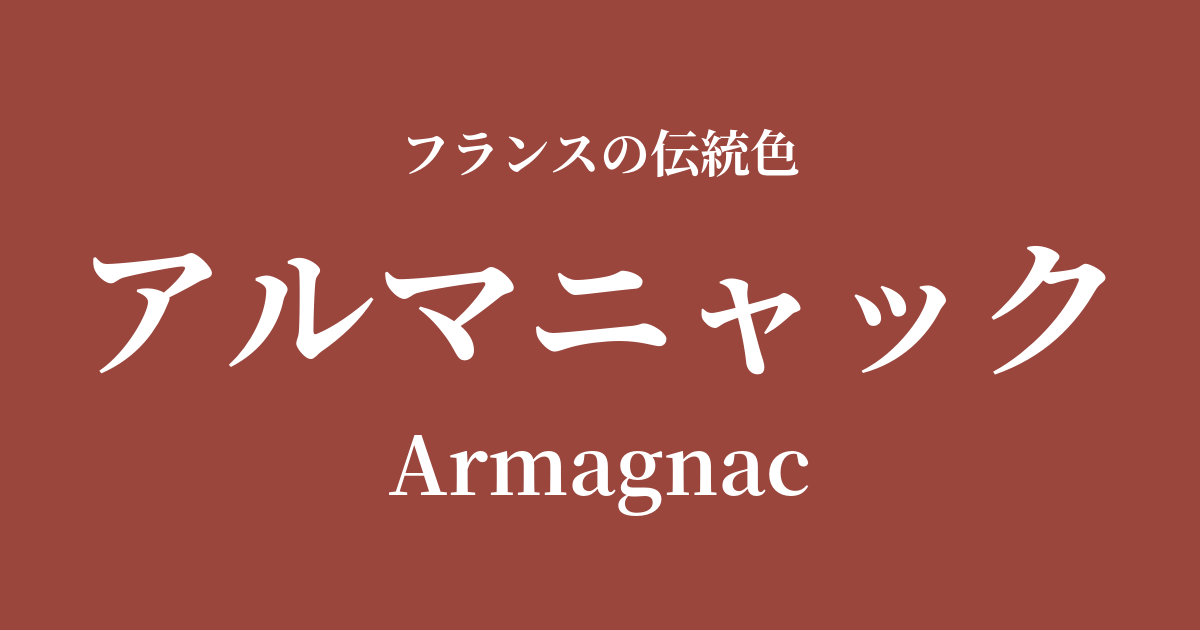
| French | Armagnac |
|---|---|
| Katakana | Armagnac |
| HEX | #9A463D |
| RGB | 154, 70, 61 |
What is Armagnac? Origin and Etymology
Armagnac is a color named after Armagnac, the world's oldest brandy, which originates in the Gascony region of southwestern France. This color captures the deep, beautiful amber-to-mahogany gradient that develops during the long maturation process of distilled spirits in oak barrels.
The name, of course, comes from the Armagnac region where it is produced. The deep, reddish-brown color of this wine is not just any brown; it's a richly narrative hue that evokes the mellow aromas and complex flavors woven by the magic of time.
Historical background of Armagnac
The history of Armagnac as a brandy is very old, with the oldest documented evidence dating back to the 14th century. At that time, it was called "the water of life" (l'eau-de-vie) and was believed to have medicinal properties.
It is believed that Armagnac as a color became culturally established from the 19th century onward. As the bourgeoisie rose to prominence and a more affluent lifestyle was established, this color was favored for use in gentlemen's studies, the interiors of social clubs, and high-quality leather goods. It was not merely a fashionable color, but played a role as a status color symbolizing mature intellect, wealth, and fine tradition. This color quietly tells the story of the deep connection between French history and gastronomic culture.
Armagnac in the world of art and fashion
In the world of art, deep browns like Armagnac were essential colors for creating dramatic contrasts of light and shadow. In particular, in the chiaroscuro technique used by the 17th-century Dutch master Rembrandt van Rijn, such warm, dark tones played a crucial role in expressing the inner lives of figures and the depth of the narrative.
In fashion, Armagnac is especially beloved as a color that symbolizes classic styles during the autumn and winter seasons. It pairs exceptionally well with warm materials such as tweed jackets, wool coats, corduroy trousers, and high-quality leather shoes and bags. Wearing Armagnac creates a timeless, mature elegance that transcends trends.
In interior design, incorporating this color into walls, furniture, and textiles can bring a sense of calm, solidity, and warmth to a space.
Color scheme preview
This is to check the readability of the text when this color is used as the background.
Armagnac color scheme proposal
Ecru (#FBF8E1)
Pairing it with a soft, off-white ecru softens the richness of Armagnac, creating a warm and refined impression. The result is a pleasant contrast that is both natural and elegant.
Blue Roi (#002D62)
The combination with the deep, noble Blue Roi, meaning "royal blue," creates an intelligent and dignified atmosphere. The colors are almost complementary, enhancing each other's beauty, resulting in a color scheme that is both classic and modern.
Vert Bouteille (#093A27)
The deep green, reminiscent of a wine bottle, combined with the Vert Bouteille color scheme, evokes a sense of calm and tranquility, like a study in the middle of a forest. The harmonious combination of earth tones, derived from natural colors, is truly beautiful.
Practical Scenes
In interior design, Armagnac is an ideal color for adding depth and warmth to a space. Incorporating it into accent walls in a study, leather sofas, heavy wooden furniture, or velvet curtains can create a classic, sophisticated, and luxurious atmosphere.
In fashion, Armagnac is a key color for autumn and winter outfits. Leather jackets and wool coats in Armagnac are timeless pieces that will be cherished for years to come. Even incorporating it through accessories like belts, bags, and leather shoes can elevate an overall style, giving it an intelligent and sophisticated feel.
In web and graphic design, it is an effective key color for brands that want to convey reliability, tradition, and high quality. Using it as a background color or heading brings a sense of calm and sophistication to the entire site.