
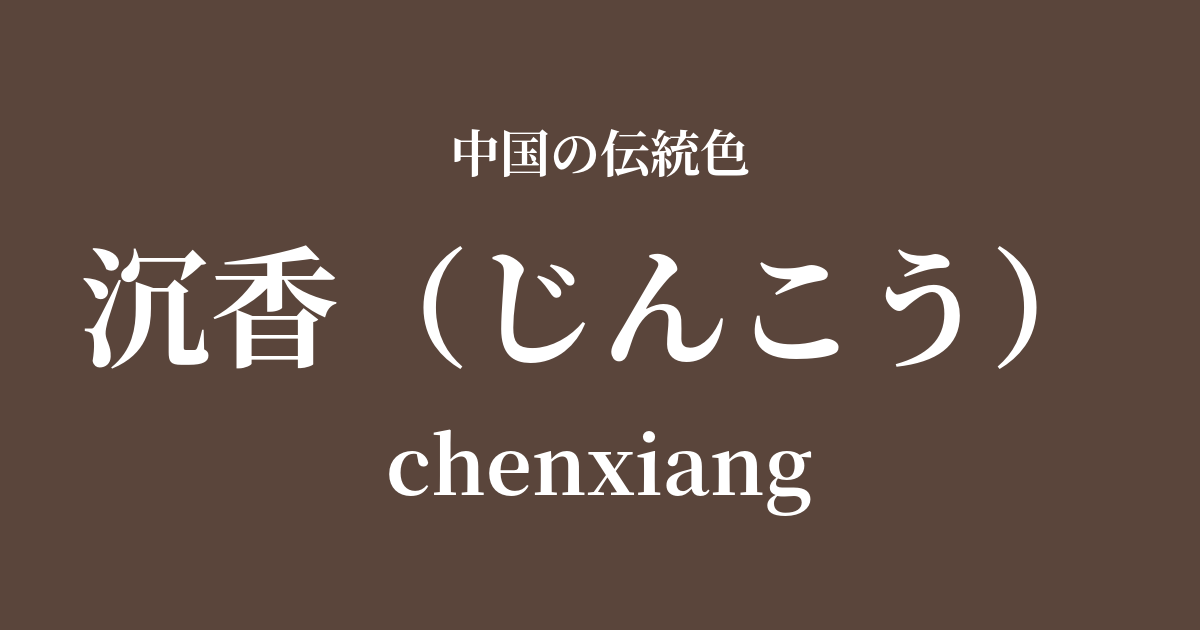
| Color name | Suika |
|---|---|
| reading | Artificial |
| pinyin | chenxiang |
| HEX | #5A453B |
| RGB | 90, 69, 59 |
What is apricot blossom? Origin and etymology
"Jinkō" (沉香), as the name suggests, is a color derived from agarwood, a precious aromatic wood. Agarwood refers to the resin secreted by trees of the Thymelaeaceae family when they are injured, which matures over many years in the soil or water, emitting a distinctive fragrance.
High-quality agarwood has a specific gravity greater than water and sinks in water, hence it came to be called "submerged agarwood," or simply "agarwood." Its color varies from blackish-brown to reddish-brown depending on the degree of resin concentration and the maturation process, but this deep, calming dark brown color in particular has become etched in people's minds as the color of "agarwood."
This color is not just a simple brown; it reflects the quiet and profound spirituality of fragrant wood that has been born over eons.
Historical background of apricot
The value of agarwood has been known since ancient times, and in China, it was already being presented to the imperial court as a tribute from the south during the Han dynasty. Particularly during the Tang dynasty, as culture flourished, agarwood became extremely popular among the nobility and literati, and its fragrance became a symbol of power, wealth, and refined taste.
During the Song Dynasty, the culture of "incense appreciation," the art of distinguishing fragrances, flourished, and agarwood was positioned as the most important fragrant wood. Literati burned agarwood in their studies, and while enveloped in its tranquil scent, they indulged in poetry, calligraphy, and painting. In this era, the color of agarwood is thought to have been an important element in creating the serene and spiritually rich space that they idealized.
From the Ming to the Qing dynasties, agarwood remained beloved by emperors and courtiers, and its color and fragrance were indispensable in telling the story of China's profound court culture.
Apricot in Chinese Art and Crafts
The color of agarwood can also be seen in Chinese art and crafts. In particular, in furniture from the Ming and Qing dynasties, agarwood itself was sometimes used in carvings and decorations, along with other high-quality woods such as rosewood and huanghuali. Its rich and deep hue gives furniture a sense of dignity and tranquility.
Furthermore, in the world of "Sumibun Gosai," which expresses the shades of ink used in calligraphy, "Chinko" corresponds to the darkest shades, "Kogureboku" and "Kosumi." It is a color that evokes the tranquility of the studies loved by literati and the solemn atmosphere when concentrating one's mind.
In clothing, it is rarely used as a direct dye, but the deep brown and dark brown silk fabrics of the ceremonial robes worn by emperors and high-ranking officials were associated with the nobility and dignity of "apricot." On lustrous silk, this color exudes a quiet yet undeniable presence.
Shenshui good quality food Bai Zhen, Boshan Warm Yulu Spring.
Color scheme preview
This is to check the readability of the text when this color is used as the background.
Apricot color scheme proposal
Tsukihaku (#EAF4FC)
The deep apricot color, combined with the pure and clear moonlight, creates an intellectual and sophisticated atmosphere reminiscent of a quiet study at night. The contrast is beautiful, and the colors complement each other perfectly.
Coral beads (#F89A80)
The rich agarwood is combined with the vibrant brightness of lively coral beads to create a warm and appropriately elegant fragrance. It gives a traditional yet modern impression, making it suitable for decorative spaces and fashion.
Pine flower (#B3D578)
Combining the earthy apricot color with the vibrant color of young pine sprouts creates a calm color scheme that evokes the breath of nature. The harmony of these earth tones is soothing and ideal for creating a peaceful space.
Practical Scenes
In interior design, "Apricot" is a color that brings elegance and tranquility to a space. Incorporating it into accent walls in studies or bedrooms, or into heavy wooden furniture or leather sofas, can create a quiet and contemplative atmosphere. When combined with lighter colors such as moon white or off-white, it creates a modern and sophisticated impression.
In fashion, choosing this color for coats, jackets, and high-quality leather goods creates an intelligent, sophisticated, and mature style. Adding bright colors as accents, such as gold accessories or coral beads, brings vibrancy and depth to your outfit.
In web and graphic design, it is effective as a base color to tie the whole design together, such as for backgrounds and footers. In particular, it can visually convey trustworthiness and expertise in websites with themes of history, tradition, or luxury.