
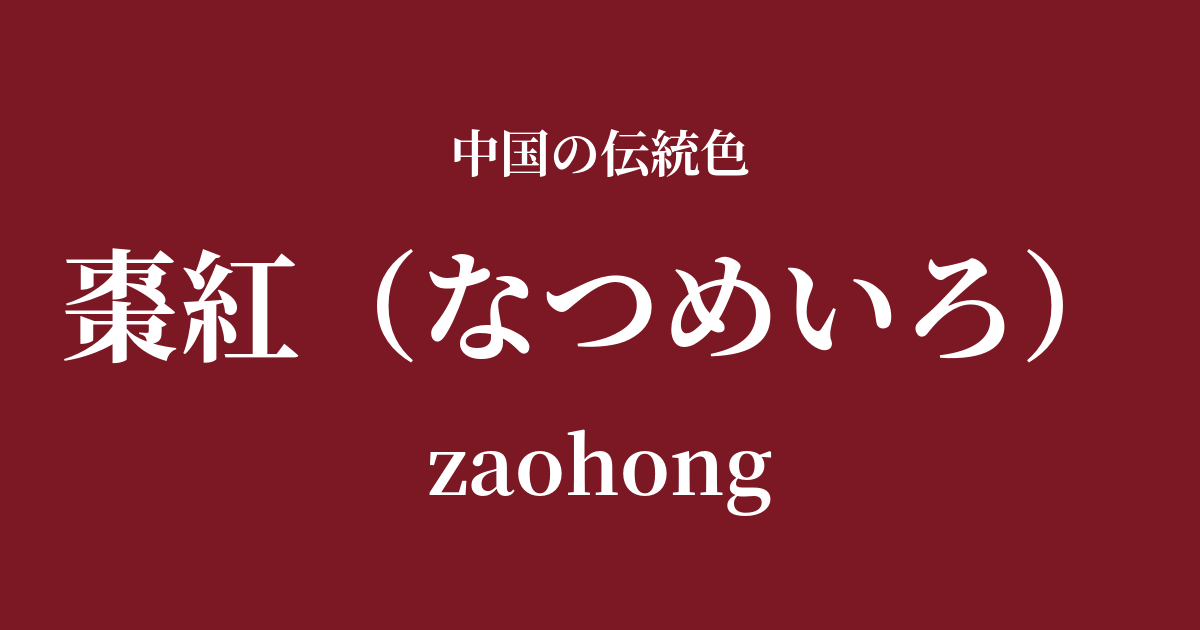
| Color name | Natsume red |
|---|---|
| reading | Summer Maze |
| pinyin | zaohong |
| HEX | #7C1823 |
| RGB | 124, 24, 35 |
What is "Zaohong"? Origin and etymology
As the name suggests, "Zao Hong" (枣红) refers to a deep, dark red color resembling the fruit of a ripe jujube. Jujubes are a fruit native to China and have long been deeply rooted in people's lives, used for food and medicine.
The deep red color of jujubes, which ripen at the end of autumn, symbolizes the joy of harvest and the maturation of life. Therefore, jujube red has come to mean more than just a color name; it's associated with fertility, wealth, and good fortune. Its defining characteristic is its calmness and depth, setting it apart from the vibrant splendor of brighter reds.
Historical background of dappled red
Duck red has been a favorite color in China's long history, particularly among the court culture and the upper classes. Unlike the vivid red of vermilion used by emperors, the subdued hue of duck red was suitable for conveying dignity and refinement without being flashy.
During the Ming and Qing dynasties, this color was used for the ceremonial and everyday clothing of high-ranking officials, as well as for furnishings that adorned the palace. Achieving this deep red color using natural dyes required advanced techniques, such as using madder and safflower, and devising the right mordants. For this reason, fabrics dyed with this color were considered extremely valuable.
Furthermore, because this color deepens over time, it was also recognized as a color that represents things that are passed down for a long time and the weight of history.
Duck red in Chinese art and crafts
The deep hue of dappled red has showcased its beauty in various fields of Chinese art.
In the world of ceramics, a deep red color reminiscent of zao red can be seen, particularly in red-glazed porcelain produced from the Song to the Qing dynasties. Glazes such as "Langyao Hong" and "Ci Hong" were highly valued for their subdued luster and depth.
In clothing culture, it is used in traditional garments such as Hanfu and Qipao, giving the wearer an elegant and refined impression. In particular, when expressed in silk fabrics, the subtle shading created by the way light hits it makes its beauty even more striking.
In painting, it was used in techniques such as meticulous brushwork to depict the clothing and objects of figures, and played a role in bringing a sense of weight and stability to the image.
Color scheme preview
This is to check the readability of the text when this color is used as the background.
Red color scheme suggestion
Moon white (#EAF4F4)
The deep red of the tangerine color, combined with a pale, moonlight-like bluish-white, creates a serene and noble atmosphere. It's a sophisticated combination reminiscent of the world of classical literature.
Ai green (#A4B59D)
The combination of ripe fruit red (Daoji red) and vibrant green (Mugwort), reminiscent of plant life, expresses the richness and tranquility of nature. The earth tones harmonize beautifully, creating a peaceful and calming impression.
Black (#333333)
The rich, deep feel of the tangerine red is further enhanced by the ink black, creating a dignified impression. This color scheme conveys strength and dignity, making it suitable for traditional architecture and high-end product packaging designs.
Practical Scenes
Date red brings elegance and tranquility to modern lifestyles.
In interior design, incorporating these accents into fabrics such as cushions, rugs, and curtains adds warmth and a touch of luxury to a space. They pair particularly well with wooden furniture and gold accessories, making them ideal for relaxing spaces like studies and bedrooms.
In fashion, incorporating it into coats, dresses, and skirts creates a classic and elegant look. Even adding just one accessory like a bag, shoes, or scarf can elevate the entire outfit and give it a sophisticated feel.
In website and graphic design, using this color for backgrounds and headings can convey an image of trustworthiness, tradition, and authenticity. It is suitable for high-end food products, historical content, and designs for established brands.