
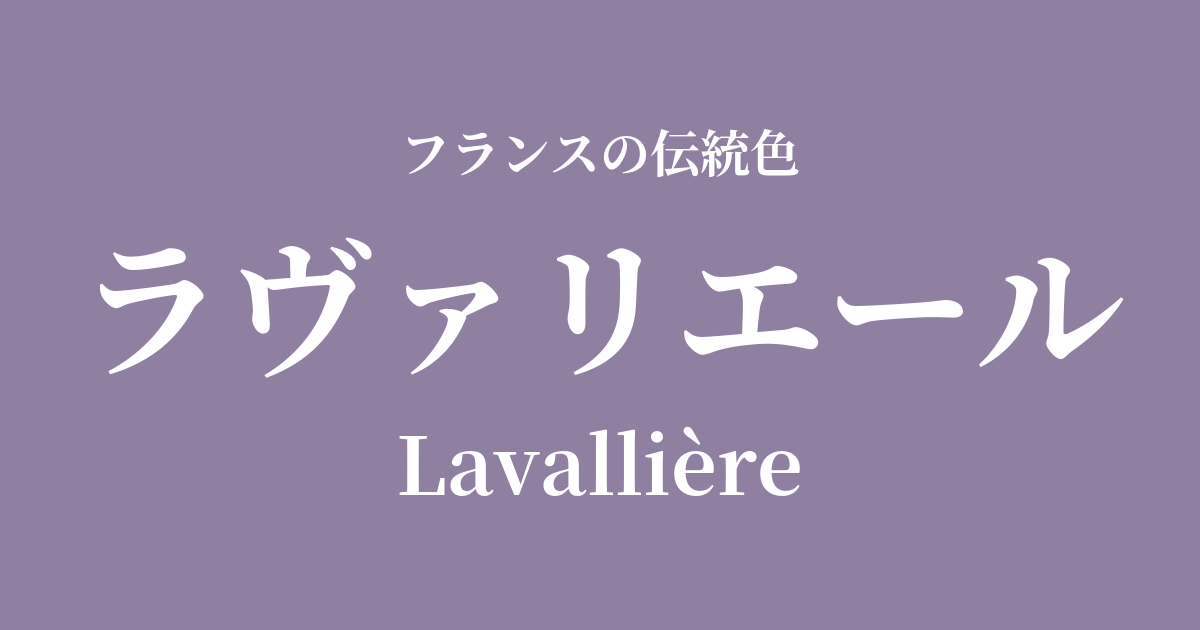
| French | Lavallière |
|---|---|
| Katakana | Lavallière |
| HEX | #8F80A1 |
| RGB | 143, 128, 161 |
What is a Lavallière? Origin and etymology
The name "Lavallière" comes from Madame de Lavallière, the first official mistress of Louis XIV, the King of France in the 17th century.
The wide, loosely tied bow scarf (a type of cravat) that she favored wearing was called a "lavallière," and it is said that the term eventually came to refer to the elegant, purplish-blue color often used for that scarf.
This color has been passed down through generations as a symbol of her modest and quiet personality, as well as the opulent yet sophisticated fashion sense of the Palace of Versailles.
Historical background of Lavallière
The late 17th century, when this color was created, was the era when Louis XIV, the "Sun King," wielded absolute power. The Palace of Versailles was a center of culture and fashion throughout Europe, and trends born at the court spread rapidly.
The Duchess of La Vallière was known more for her modesty and elegance than for her ostentatious nature at her opulent court. This color, named after her, quietly reflects the refined aesthetic sensibilities of the aristocratic society of the time and the romances that unfolded within the court.
As time progressed, the "lavallière" knot scarf became fashionable again during the Belle Époque period from the late 19th to the early 20th century. It was particularly popular among artists, students, and those who favored a bohemian lifestyle, as a symbol of a free spirit unconstrained by conventional norms. During this period, color not only served as a trendy color but also as a cultural icon representing specific ideologies and lifestyles.
Lavallière in the world of art and fashion
In the world of fashion, "lavallière" has long been loved as a color name and as the name of a scarf or tie knot. In particular, the design that adorns the collar of a blouse, known as a "lavallière blouse" or "bow tie blouse," remains very popular today and is a staple item that gives a classic and intellectual impression.
In the works of Henri de Toulouse-Lautrec, a Post-Impressionist painter from the late 19th century, people gather in the cafes and dance halls of Montmartre, and among them can be seen men stylishly wearing lavallière scarves. This shows how popular this style was among artists of the time.
In textiles, this color is often expressed using lustrous and deep materials such as silk, satin, and velvet, which bring out its elegance to the fullest. Along with its graceful drape, it has added a sophisticated touch to dresses and accessories.
Color scheme preview
This is to check the readability of the text when this color is used as the background.
Lavallière's color scheme proposal
Gris de Lignan (#DCD5C8)
The purplish-blue hue of Lavallière and the natural gray of flaxen harmonize beautifully, creating a very sophisticated and elegant impression. It is recommended for classic and calm spaces and fashion.
Rose Pompadour (#ED87A3)
By combining the understated Lavallière with the vibrant and lovely Rose Pompadour, a romantic and feminine atmosphere reminiscent of the Rococo era is created.
Blue Nuit (#0F2540)
The deep blue nuit complements the blue and purple hues of Lavallière, giving the whole look a refined finish. It's a beautifully contrasting color scheme that creates an intelligent, modern, and slightly mysterious impression.
Practical Scenes
In the field of interior design, incorporating it into wallpaper for bedrooms and studies, or into fabrics such as curtains and cushions in living rooms, brings a sense of calm and intellectual elegance to the space. It also pairs well with silver and gold metals and glass materials, creating a modern yet classical atmosphere.
In fashion, using this color in key items such as blouses, dresses, and skirts creates an elegant, understated yet striking look. The graceful qualities of the color are especially enhanced when incorporated into soft materials like silk and chiffon.
In web and graphic design, using it as an accent color gives the entire site a sophisticated and trustworthy feel. It is particularly well-suited for beauty brands and content related to art and culture.