
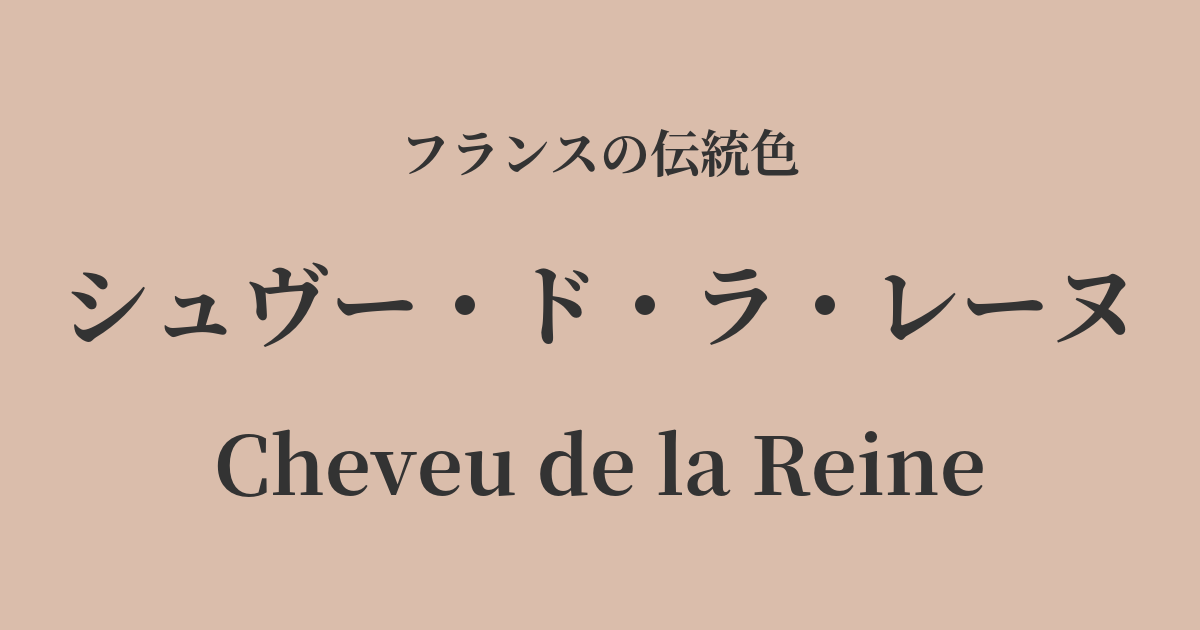
| French | Cheveu de la Reine |
|---|---|
| Katakana | Cheveux de la Reine |
| HEX | #DABDAB |
| RGB | 218, 189, 171 |
What is Cheveux de la Reine? Origin and Etymology
"Cheveu de la Reine" is a color with a very poetic and elegant name, meaning "the queen's hair" in French.
There are various theories as to who this "queen" refers to, but the most likely candidate is Marie Antoinette, the last queen of France. Her beautiful, abundant blonde hair was the object of admiration at the court at the time. This color is said to refer to her radiant blonde hair.
Another theory suggests that the name was inspired by the fact that her hair had faded and taken on a duller color due to the repeated stress she endured before the revolution—a somewhat melancholic story. In any case, the fact that the existence of one queen has been etched into history as the name of a color speaks volumes about the immense influence she had on culture and fashion.
Historical background of Cheveux de la Reine
This color became popular in late 18th-century France, during the height of the Rococo culture. During this time, when Marie Antoinette was the center of attention at the Palace of Versailles, her fashion and hairstyles were quickly imitated by the ladies of the court, becoming a major trend.
It is believed that the color name Cheveux de la Reine originated from this background. Not only was it used as a hair color, but it was also a cutting-edge fashion color of the time, incorporated into dresses, ribbons, and interior decorations. It symbolized the admiration for the queen and the refined, elegant aesthetic unique to the Rococo era.
This color, embodying both the splendor and transience of the eve of revolution, is remembered as one of the historical colors that reflects the light and shadow of the era.
Cheveux de la Reine in the world of art and fashion
The Cheveux de la Reine color scheme can be seen in Rococo art, particularly in portraits of Marie Antoinette. This delicate hair color and the luxurious, harmonious dresses frequently appear in depictions of the queen by court painter Elisabeth-Louise Vigée-Le Brun.
In the world of fashion, this color was further enhanced by its use in lustrous fabrics such as silk, satin, and taffeta. Its soft, delicate hues harmonized beautifully with embellishments like lace, frills, and ribbons, completing the feminine and decorative style of the Rococo era.
Furthermore, in the fields of architecture and interior design, this color family was used in wall paneling (boiserie), furniture coloring, and tapestries, playing a role in creating elegant and bright spaces.
Color scheme preview
This is to check the readability of the text when this color is used as the background.
Cheveux de la Reine's color scheme proposal
Rose Pompadour (#EDADC7)
This sweet and romantic combination evokes the court of the Rococo era. Elegance and charm harmonize beautifully, creating a very feminine and glamorous impression.
Gris de Lignan (#BDBAAE)
Using similar grayish tones creates an intelligent and sophisticated impression. This is recommended when you want to create a calm, tranquil, and elegant space.
Vert Veronnaise (#538674)
This natural and elegant color scheme is reminiscent of the gardens of the Petit Trianon, which Marie Antoinette loved. It gives a classical yet somehow calming impression.
Practical Scenes
When incorporated into interior design, it brings a refined and calming atmosphere to a space. Using it on large areas such as wallpaper, curtains, and sofas can create a bright, sophisticated, and elegant room. It also pairs exceptionally well with gold, brass, and antique-style furniture.
In fashion, this color is perfect for feminine items such as dresses, blouses, and skirts. It enhances the appeal of high-quality materials like silk, lace, and cashmere, elevating the wearer's elegance. As a nuanced color, it will broaden your styling options.
In web design and graphic design, using this color as a background evokes a sense of luxury and trustworthiness. It is particularly effective when you want to express an elegant worldview, such as on luxury brand websites, bridal sites, or beauty-related sites.