
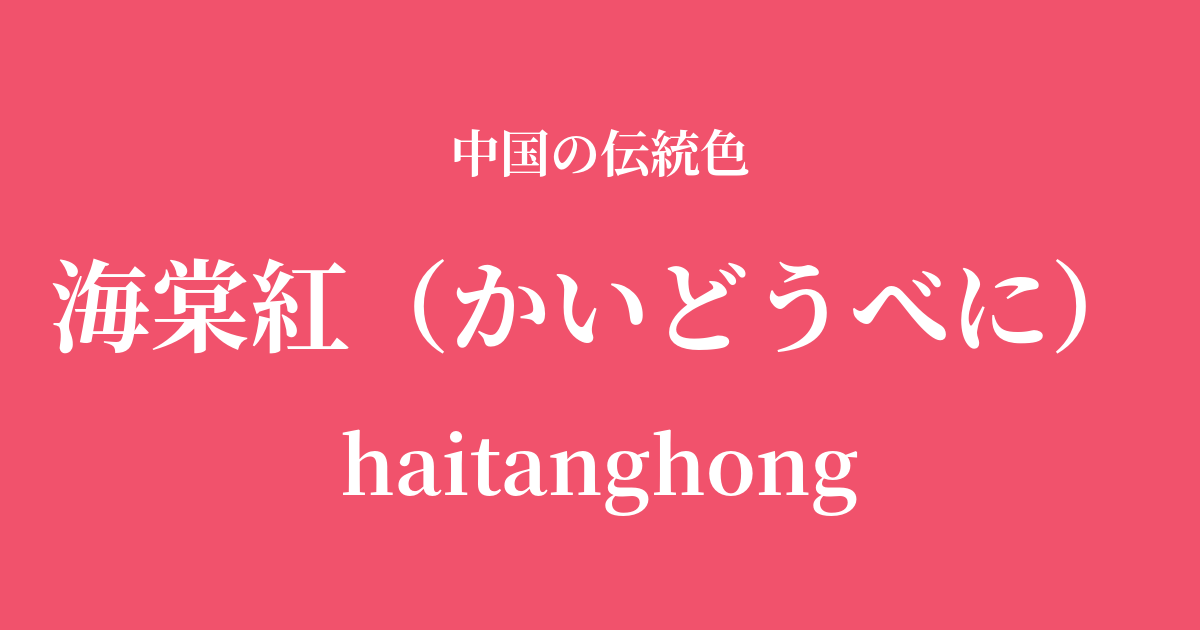
| Color name | Kaido Beni |
|---|---|
| reading | Kaidobeni |
| pinyin | haitanghong |
| HEX | #F1526C |
| RGB | 241, 82, 108 |
What is Haworthia chinensis? Origin and etymology
As its name suggests, Kaido-beni (花棠紅) derives its name from the color of the petals of the Kaido flower, which blooms with the arrival of spring. It is characterized by a slightly pinkish-red color that is vibrant yet somehow gentle.
The crabapple tree, a member of the rose family native to China, has long been known as the "Noble Consort of Flowers" for its lustrous beauty and has been loved by many poets and painters. This color name conveys to the present day the delicate sensibilities of people in ancient times who sought to incorporate the beauty of nature into their daily lives.
Historical background of Haidang Red
When discussing the history of Habenaria radiata, stories from the Tang Dynasty are indispensable. Particularly famous are the anecdotes concerning Emperor Xuanzong and Yang Guifei.
It is said that one spring day, when Emperor Xuanzong saw Yang Guifei, who had fallen asleep after getting a little drunk at a banquet, he remarked on the beauty of her flushed cheeks, "She is like a begonia that has not yet slept enough." From this story, the begonia became a symbol of the sleeping beauty, and the color begonia red became deeply rooted in court culture as a color representing elegant and radiant beauty.
Its popularity did not wane even into the Song dynasty, and many literary figures, including Su Shi, praised its beauty in their poetry. It was a special color that transcended time and stimulated people's aesthetic sensibilities.
Begonia red in Chinese art and crafts
Begonia red has added rich color to the world of Chinese art and crafts. In particular, in "flower and bird paintings," which depict flowers and birds, the begonia is a popular subject, and its petals are often painted with delicate brushstrokes using this begonia red.
Furthermore, this color was also favored in the Hanfu (traditional Chinese clothing) and silk fabrics that adorned the women of the imperial court. The begonia red dyed onto the lustrous silk fabric changed its appearance depending on the light, likely enhancing the elegance and splendor of the wearer.
In the world of ceramics, we can also find lustrous red glazes reminiscent of the flowering begonia. In particular, the enamelware produced during the Qing Dynasty exhibits exquisite and beautiful color expressions that evoke this shade.
Just after midnight, Hana fell asleep, and the late Yakitakasho Kosho.
Color scheme preview
This is to check the readability of the text when this color is used as the background.
Sea red color scheme proposal
Tsukihaku (#EAEAE1)
The vibrant crimson of the flowering crabapple blossom stands out when paired with a soft white reminiscent of moonlight. The color scheme evokes a sense of cleanliness and elegance, like a tranquil spring scene.
Willow green (#A9A534)
The combination with the fresh green of newly sprouted willow leaves expresses the beautiful contrasts found in nature. It gives an impression of vitality, liveliness, and tranquility.
Raven blue (#424268)
The deep, quiet blue, reminiscent of the darkness of night, complements the vibrant and lustrous beauty of the flowering crabapple blossom. This color scheme creates a dramatic, noble, and sophisticated adult atmosphere.
Practical Scenes
Even in modern lifestyles, begonia red remains a captivating accent color.
In fashion, incorporating it into dresses, blouses, or scarves instantly brightens the face and creates an elegant impression. It's especially perfect for celebratory occasions and special days. When chosen as a lip color, it enhances the skin's translucency.
For interior design, we recommend incorporating these elements through small items such as cushion covers, art panels, and table runners. They add warmth and elegance to the space, creating a sophisticated accent. They look particularly good in rooms with a neutral color scheme, such as white, gray, and beige.