
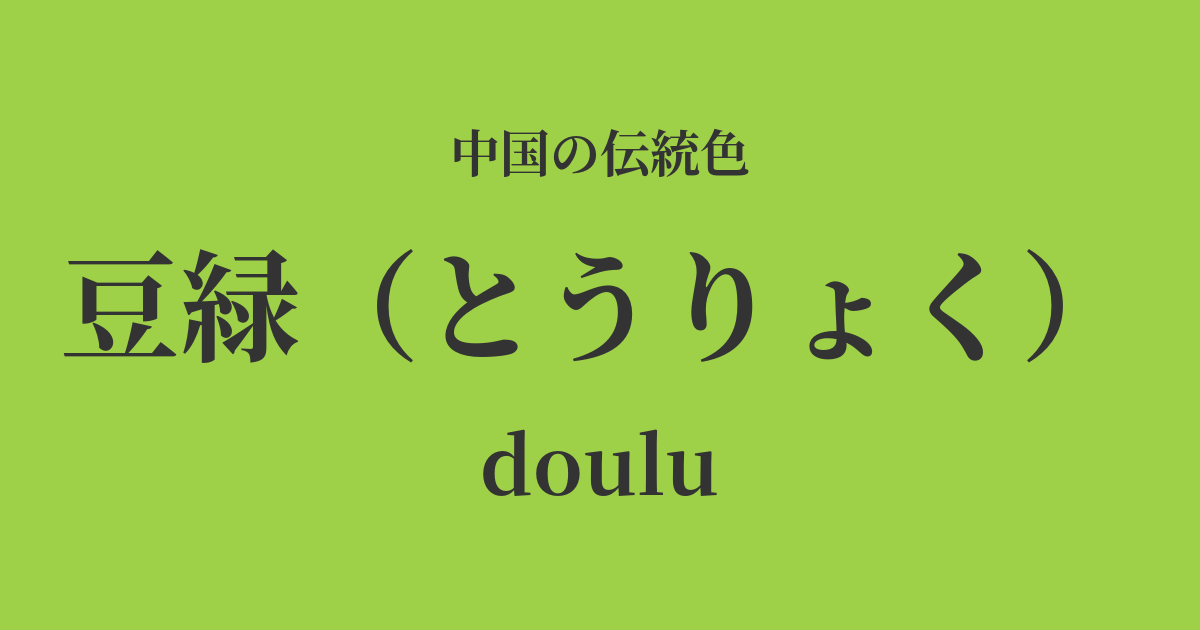
| Color name | Bean Green |
|---|---|
| reading | power |
| pinyin | doulu |
| HEX | #9ED048 |
| RGB | 158, 208, 72 |
What is Doulu? Origin and Etymology
As the name suggests, "Tōryoku" (豆緑) is a vibrant and fresh green color derived from the color of the pods of young beans that have just sprouted.
This color captures the vibrant, youthful hues of peas and mung beans that appear with the arrival of spring, evoking feelings of hope, growth, and peaceful tranquility in the viewer.
This is one of the approachable traditional colors, whose name simply reflects the natural beauty of the world.
The historical background of Doulu
The color "dou-green" (bean green) became particularly deeply associated with court culture during the Qing dynasty. During this period, the imperial kilns of Jingdezhen produced a large quantity of celadon known as "dou-qing glaze" or "dou-lu glaze," which was favored by emperors and nobles.
Douqing glaze is characterized by a milder, gentler green color than traditional celadon, and its elegant hue was particularly highly valued during the reigns of the Kangxi, Yongzheng, and Qianlong emperors. This color enhances the inherent beauty of the vessel itself without the need for extravagant decoration, thus aligning with the refined aesthetic sensibilities of the literati.
From ceremonial vessels used in the royal court to everyday tableware, porcelain with a dome-blue glaze was widely used, likely adding a gentle touch of color to the lives of people at that time.
Doulou in Chinese Art and Crafts
The most iconic example of the bean-green hue is the "douqing glaze" of Qing Dynasty porcelain. This smooth, subdued green glaze was applied to various vessels such as vases, bowls, and plates. Sometimes it was used as a single color, and other times it was combined with other techniques such as fencai (fencai) and doucai (doucai) to create more elaborate decorations.
In fashion culture, this refreshing green color was favored for spring and summer clothing. Hanfu and qipao made from lustrous silk fabrics dyed in this bean green color exuded a sense of coolness and youthful elegance. The literary work "Dream of the Red Chamber" also mentions a thin silk fabric called "bean green palace sheath," suggesting that this color was popular among upper-class women of the time.
My family's four-color color, and its naivety. It's always raining, it's blue, it's autumn, it's pine green, it's the same color, it's the same color, it's the same color, it's the same color, it's the same color, it's the same color, it's green.
Color scheme preview
This is to check the readability of the text when this color is used as the background.
Mame green color scheme suggestion
Ivory white (#F2EEDD)
The refreshing green of the bean-green harmonizes with the warmth of the ivory-white, creating a color scheme that is both clean and elegant. It creates a natural and calming space, giving viewers a sense of peace and tranquility.
Momoko (#F4A7B9)
Combining a fresh, leafy green with a flower-like pink creates a vibrant color scheme that evokes the arrival of spring. It gives a bright, lovely, and youthful impression.
Raven blue (#404852)
The vibrant bean green is contrasted with a deep, calming raven blue, creating a sophisticated and intellectual impression. It's a color scheme that feels modern yet somehow traditional.
Practical Scenes
In interior design, incorporating bean green into wallpaper, accent walls, cushions, and other fabrics brings a bright and refreshing atmosphere to a space. It pairs particularly well with wooden furniture and is suitable for creating a natural and relaxing living room, study, or children's room.
In the world of fashion, using this color in spring and summer blouses, skirts, and dresses brightens the complexion and gives a cheerful and youthful impression. Pairing it with white or beige creates an elegant look, while combining it with navy or gray allows for a sophisticated and urban style.
In web and graphic design, this style is effective when used on websites related to organic products, health, or the environment. It conveys a fresh and trustworthy image, giving users a sense of security and a positive impression.