
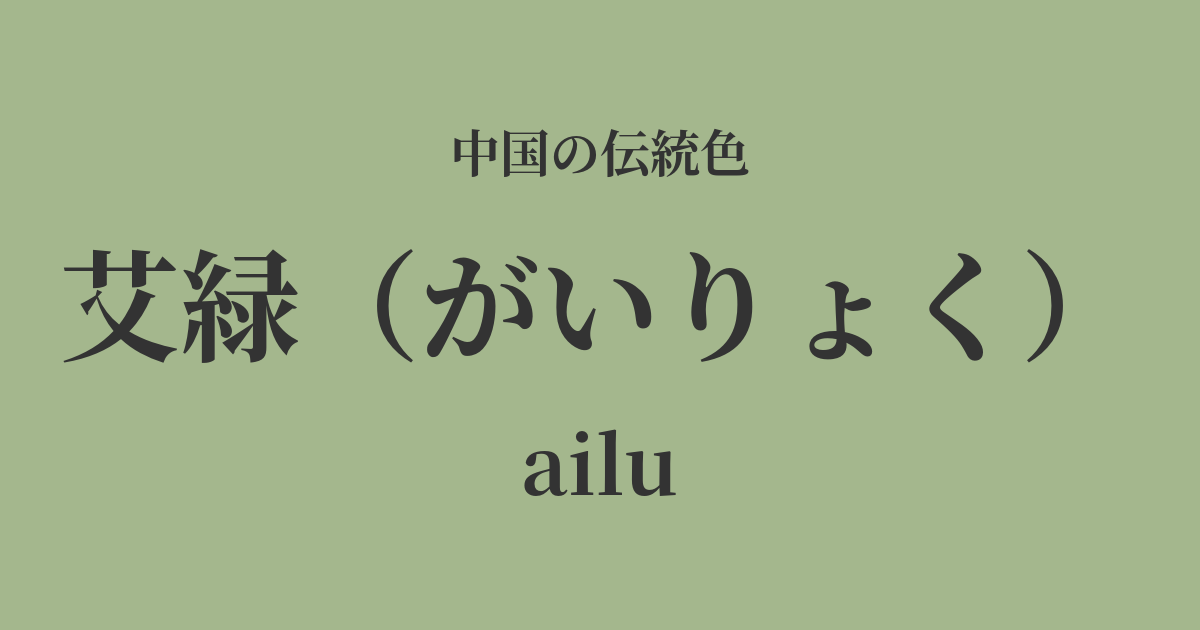
| Color name | Aoi green |
|---|---|
| reading | Power |
| pinyin | ailu |
| HEX | #A4B78D |
| RGB | 164, 183, 141 |
What is Ai Green? Origin and Etymology
"Gairyoku" refers to a gentle, slightly grayish green color, like the leaves of mugwort that sprout in early spring. "Gai" is the Japanese word for mugwort, and as the name suggests, it derives from the color of this vibrant wild plant.
In ancient China, mugwort was not only used as food, but also as a medicinal herb to cure illnesses and as a sacred plant to ward off evil spirits, deeply rooted in people's lives. In particular, "moxa," made from dried leaves, has been used as a material for moxibustion to this day.
This color embodies meanings related to health, longevity, and protection from evil, stemming from the medicinal properties and vitality of mugwort. More than just a color name, it's a color rich in cultural background, reflecting people's wishes for a healthy life.
The historical background of Ai Green
The history of mugwort is very old, and its name even appears in the "Book of Songs," the oldest collection of Chinese poetry. There, the feeling of waiting for a loved one is expressed as "one day apart feels like three years," accompanied by a scene of picking mugwort.
In the field of medicine, moxibustion treatment using mugwort was already established during the Han dynasty, and its medicinal properties were widely known. Furthermore, in folk beliefs, especially during the Dragon Boat Festival (Tango no Sekku), the custom of hanging mugwort and irises from the eaves of houses to ward off evil spirits and pray for the health and well-being of the family continues to this day. Mugwort green is a color that has been nurtured within this culture closely intertwined with people's lives.
Unlike the vibrant colors used in royal courts, mugwort has been cherished by many people across generations as a color symbolizing a more natural and simple beauty.
Ai Lu in Chinese Art and Crafts
The gentle and natural hues of mugwort can be found in various Chinese works of art. In particular, it is deeply connected to the aesthetic sensibilities of the Song dynasty, which revered natural landscapes.
For example, some celadon ware from the Longquan kilns produced during the Song dynasty uses a gentle, calming green glaze reminiscent of mugwort. Eliminating ostentatious decoration, celadon ware captivates with its quiet, refined form and the beauty of its glaze color, and was highly valued among the literati of the time.
Furthermore, in the realm of clothing culture, this color is thought to have been used in everyday wear such as Hanfu. Clothes made from natural materials like hemp and cotton dyed in mugwort green, while not flashy, convey a sense of dignity and intelligence to the wearer. As a color that evokes the image of a calm and thoughtful person living in harmony with nature, it has played a role in the world of clothing as well.
He was not seen for a day, and he was three years old.
Color scheme preview
This is to check the readability of the text when this color is used as the background.
A green color scheme proposal
Moon white (#D9D6C3)
The delicate, elegant shade of moonlight complements the tranquility of mugwort, creating a pure and refined impression. This combination is perfect for creating a peaceful space that feels as if natural light is streaming in.
Pilestone (#9D553D)
The warm, earthy feel of the ochre stone harmonizes with the plant-like image of the mugwort, creating a very natural and calming atmosphere. The combination of earth tones gives a soothing impression.
Anzu (#F7A259)
The bright, soft yellow of the apricot color adds warmth and vitality to the quiet green of the mugwort. This color scheme evokes the arrival of spring, creating a bright yet elegant impression full of hope.
Practical Scenes
With its calming hue, mugwort blends naturally into modern lifestyles.
In interior design, incorporating this material into wallpaper, curtains, and sofa fabrics in living rooms and bedrooms can create a relaxing and peaceful space. It pairs particularly well with wooden furniture and houseplants, adding depth to natural and Japanese modern styles.
In fashion, incorporating this color into shirts, dresses, and skirts creates an elegant and sophisticated impression. Choosing this color for clothing made from natural materials such as cotton and linen further enhances the gentle and soft charm of mugwort.
In web and graphic design, this color is suitable for brand images related to healthcare, organic products, and lifestyle. It can be used to create a sense of ease and trust in users, as it is pleasing to the eye.