
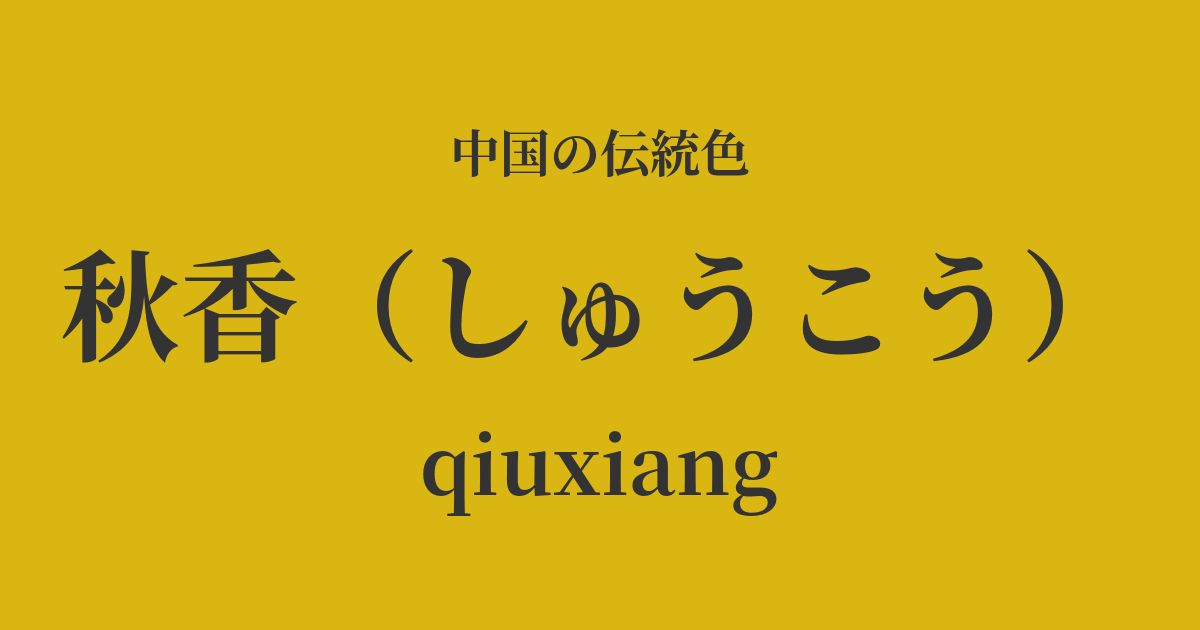
| Color name | Akika |
|---|---|
| reading | Shuko |
| pinyin | qiuxiang |
| HEX | #D9B611 |
| RGB | 217, 182, 17 |
What is Akika? Origin and etymology
The name "Shūkō" literally means "the scent of autumn." This name expresses the rich and tranquil atmosphere of autumn, emanating from ripe grains and withered leaves, through color.
Another plausible theory suggests that the color originates from the color of fragrant wood. In particular, it is said to have been inspired by the fragrance released when precious fragrant woods such as agarwood and sandalwood burn, as well as the color of the wood itself. In China, where incense culture was deeply ingrained among the nobility, fragrance was not merely a pleasure for the sense of smell, but also symbolized spirituality and dignity. Autumn fragrance can be seen as a color that visualizes this noble world of fragrance.
Historical background of Akika
Autumn fragrance was especially popular in the imperial court during the Qing dynasty. Around the 18th century, when emperors such as Kangxi, Yongzheng, and Qianlong reigned, this color was frequently used for the clothing worn by emperors and members of the imperial family.
Unlike the vibrant yellow "Ming Huang" worn at the emperor's official ceremonies, Qiu Xiang (autumn fragrance) is a more subdued shade, and records indicate that it was favored for everyday "regular wear" and private "casual wear." This reflected a refined yet understated sense of color that developed through the fusion of traditional Manchu aesthetics and the sophisticated culture of the Han Chinese.
Among the women of the court, autumn-colored silk fabrics were extremely popular, and their fashion can be seen in numerous paintings and documents of the time.
Autumn fragrance in Chinese art and crafts
Autumn fragrance is an indispensable color when discussing the clothing culture of the Qing Dynasty. It was often used as the base color for the dragon robe (longpao) worn by emperors and nobles, and for the qipao (qipao), the traditional attire of Manchu women. On this subdued yellow background, auspicious patterns and floral embroidery in colorful silk threads were added, resulting in a luxurious yet dignified appearance.
Furthermore, the color "autumn fragrance" can also be found in the world of ceramics. In porcelain such as enamelware and femcai, which reached the pinnacle of technique during the Qing Dynasty, this color is sometimes used as a background color or as part of the pattern. As an elegant base color that enhances the vibrant colors, it creates harmony in the overall piece of pottery.
Hogyokudou: ``Autumn color? ” Ujido: “The return has been completed. ”
Color scheme preview
This is to check the readability of the text when this color is used as the background.
Akika's color scheme proposal
Tsukihaku (#EAEAE1)
By combining it with Tsukishiro, a pale white reminiscent of moonlight, the warmth and elegance of Akiko-iro are highlighted. This color scheme gives a quiet, refined, and intellectual impression.
Hot oil (#8D2E56)
Adding a vibrant rouge reminiscent of lipstick enhances the sophistication of the autumnal colors, creating a lustrous and elegant atmosphere. The colors complement each other, resulting in a noble and striking impression.
Stone blue (#165E83)
The combination with the deep, calming blue of stone blue is a dignified color scheme also seen in official robes of the Qing Dynasty. It conveys a sense of trust and dignity, and gives an impression of strength and stability.
Practical Scenes
In interior design, incorporating autumnal colors into accent walls, cushions, and rugs creates a warm and calming atmosphere. These colors pair particularly well with wooden furniture and houseplants, helping to create a natural and comfortable ambiance.
In fashion, it's perfect for autumn and winter outfits, including coats, knitwear, and skirts. It gives off an elegant and sophisticated impression, and when paired with earth tones or deep colors, you can enjoy a refined look.
In web design and graphic design, using this color as a background or accent color can create a sense of luxury and trustworthiness. It's a suitable color not only for websites themed around traditional culture and history, but also for brands promoting organic products and a high-quality lifestyle.