
| Color name | lotus |
|---|---|
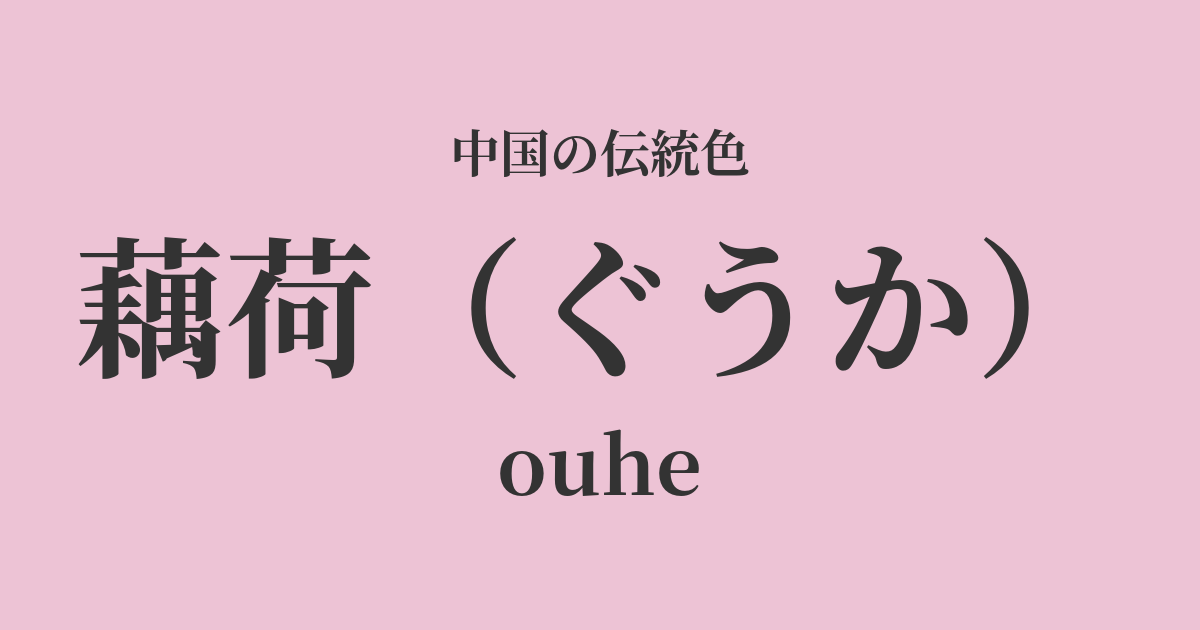
| reading | Guuka |
| pinyin | ouhe |
| HEX | #EDC3D5 |
| RGB | 237, 195, 213 |
What is Ouga? Origin and etymology
The lotus flower (Gūka) is a pale, purplish-pink color, derived from the lotus flower that adorns watersides in summer.
"藕" refers to the lotus root (renkon), which is the underground stem of the lotus plant, while "荷" refers to the lotus leaves and flowers themselves. By combining these two characters, the delicate and pure colors of the lotus flower are expressed.
In Chinese culture, the lotus flower, which emerges from the mud yet blooms into a pure and beautiful flower, has been considered a symbol of purity and integrity. Therefore, the color of the lotus flower has also been cherished by people as a color that evokes a sense of nobility untainted by the secular world and a refined beauty.
Historical background of the lotus flower
The lotus has been deeply rooted in people's lives since ancient China, used for ornamental purposes, food, and medicine. Its history is so ancient that it is even mentioned in the Book of Songs, and it held special significance in successive dynasties.
Particularly during the Song dynasty, the culture of appreciating lotus flowers reached its peak among literati. In "On Loving the Lotus," a work by the Confucian scholar Zhou Dunyi, the lotus is praised as "the gentleman among flowers," and its noble appearance is likened to an ideal human being. Against this ideological backdrop, the color of the lotus flower, ouhe, also came to be recognized not merely as a beautiful color, but as a color with spiritual value.
During the Ming and Qing dynasties, the lotus flower was a popular choice for women's clothing and ornaments in the imperial court. Its elegant and subdued colors perfectly complemented the refined aesthetic sensibilities of aristocratic women, and it is frequently depicted in literary works.
Pogo in Chinese Art and Crafts
The color of the lotus flower has inspired various fields of Chinese art.
In the world of ceramics, lotus flowers are often depicted elegantly, particularly in Qing Dynasty fencai porcelain, capturing the delicate hues of the lotus flower. Combined with the soft texture of the glaze, the lotus flowers blooming on the vessels exude a lifelike vitality.
In painting, lotus flowers have been a subject of art throughout history. In particular, in "gongbi painting," a style of painting that depicts subjects with meticulous brushstrokes, intermediate colors like those of the lotus flower were skillfully used to express the subtle nuances and changes in color of the petals.
Furthermore, the lotus flower (Louis japonica) was an important color in clothing culture. Using this color in Hanfu (traditional Chinese clothing) and Qipao (Chinese dress) enhanced the wearer's elegance and femininity. In particular, lotus flowers expressed in lustrous silk fabrics change their appearance depending on how the light hits them, revealing a profound beauty.
Color scheme preview
This is to check the readability of the text when this color is used as the background.
Color scheme proposal for lotus root
Tsukihaku (#EAEAE1)
By combining it with a pure, moon-white color reminiscent of moonlight, the elegance and tranquility of the lotus flower are further enhanced. This color scheme gives a refined, sophisticated, and gentle impression.
Screwdriver (#40424D)
When paired with the deep, rich blue-black of Nejidai, the pale hues of Ouga stand out, giving the overall look a refined and sophisticated feel. The color scheme is not overly sweet, but rather modern and intellectual.
Yanagi Huang (#C9DD22)
The addition of a vibrant willow yellow, reminiscent of newly budding willows, evokes a scene full of life from spring to early summer. This color scheme gives a fresh, bright, and cheerful impression.
Practical Scenes
The gentle and calming atmosphere of the lotus flower blends naturally into modern lifestyles.
In interior design, incorporating it into accent walls, curtains, and cushions in bedrooms and living rooms brings a sense of tranquility and elegance to the space. It pairs exceptionally well with neutral colors such as white, beige, and light gray, as well as natural wood.
In fashion, choosing lotus flower color for items such as dresses, blouses, and scarves brightens the face and gives an elegant and feminine impression. It is especially suitable for spring and summer outfits, creating a refreshing look.
In website and graphic design, using it as a background or accent color can effectively express the sophistication and luxury associated with themes such as beauty, wellness, and bridal.