
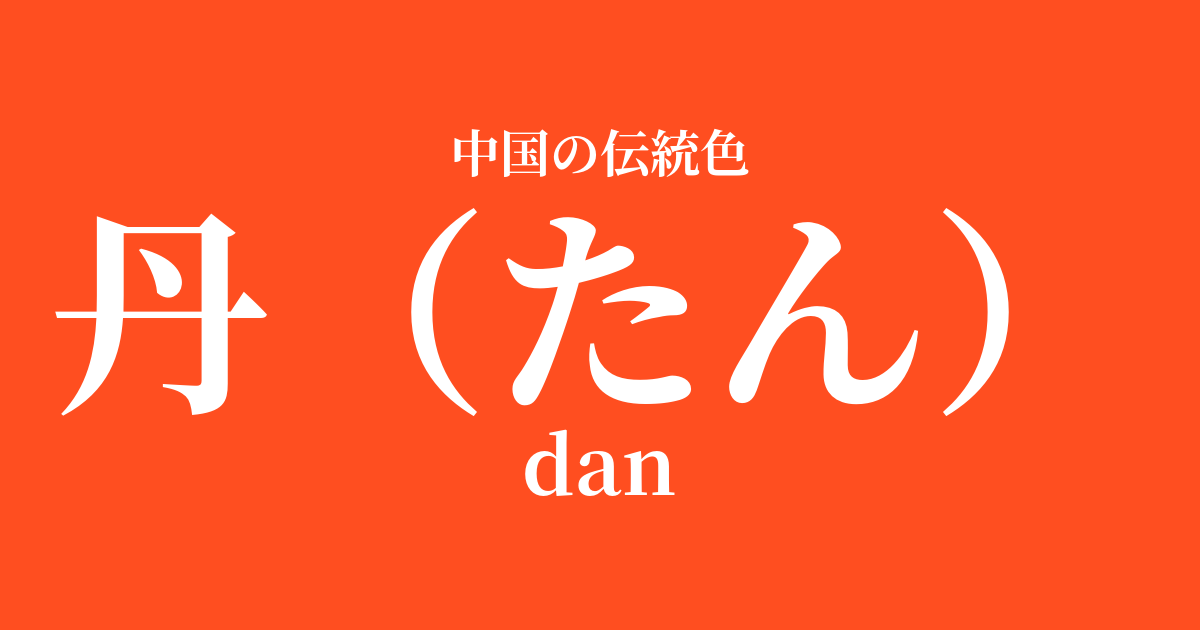
| Color name | 丹 |
|---|---|
| reading | sputum |
| pinyin | dan |
| HEX | #FF4E20 |
| RGB | 255, 78, 32 |
What is Tan? Origin and etymology
The name of the color "tan" originates from the natural mineral "tansha." Tansha, also known as cinnabar, is a crystalline form of mercury sulfide, and the vivid red pigment obtained by grinding it into a powder is "tan."
The character's etymology is said to be a pictograph depicting a well (井) with a dot (丶) inside, representing the process of mining cinnabar from a mineral vein. Since ancient times, it has been used not only as a valuable pigment but also as medicine.
Furthermore, just as the word "tanshin" means "sincerity" or "honest heart," "tan" is also used as a word that symbolizes purity and passion that wells up from within, and it is deeply rooted in Chinese culture.
Historical background of Tan
The history of cinnabar is closely intertwined with ancient Chinese thought, particularly Taoism. Cinnabar was the main ingredient of the "elixir of immortality," which was sought after by Qin Shi Huang, the first emperor of China. In Taoist alchemy, it was believed that one could become an immortal by consuming cinnabar, and many powerful figures and Taoist priests sought its mysteries.
Furthermore, cinnabar was also a symbol of authority and sanctity. In magnificent palace architecture, including the Forbidden City, the pillars and walls were painted cinnabar. This was not merely decorative, but also had the meaning of warding off evil. The vermilion ink used by Taoist priests when drawing talismans was also cinnabar, and it was believed that this color had the power to repel evil.
From the Han dynasty onward, vermilion was considered a color signifying high status, and vermilion became the basic color for the ink used in official seals, or seal paste. A vermilion seal stamped on official documents represented the very authority of the state.
Dan in Chinese art and crafts
In Chinese art, dan (red pigment) has a significant presence in various forms. In particular, in architectural decoration, it was frequently used on the pillars, beams, and murals of palaces, temples, and pavilions, creating magnificent and solemn spaces. It is also said to have served a practical purpose as a wood preservative.
In the world of painting, it is used as an accent in landscape paintings, particularly in the depiction of pavilions and the clothing of figures, bringing vitality and splendor to the image. Especially in paintings with themes of immortals and Taoism, it is often depicted as a symbolic color of immortals.
In the world of calligraphy, cinnabar is an indispensable color for the seal ink used at the end of a work. The cinnabar impression pressed onto white paper tightens the overall look of the work and serves as the final touch that imprints the artist's soul. Even today, the highest quality seal ink is made from natural cinnabar.
Life is old, no one dies, Tottori Tanshin Terukan Blue
Color scheme preview
This is to check the readability of the text when this color is used as the background.
Tan's color scheme proposal
Gen (#191919)
The vibrant vermilion is balanced by the deep black, creating a powerful and majestic impression. In ancient Chinese thought, red and black were considered a special combination, a dignified color scheme often seen in palace architecture and lacquerware.
Yellow (#FFD700)
The red of cinnabar and the yellow of orpiment are both warm colors that complement each other well, creating a very vibrant and festive atmosphere. They give a magnificent impression that expresses wealth, power, and joy.
Matsuka (#BCEE68)
The vibrant vermilion combined with a youthful pine-green creates a color scheme reminiscent of a lively natural scene. The near-complementary relationship between red and green enhances each other, giving a vibrant and fresh impression.
Practical Scenes
In interior design, tan is an ideal accent color that brings energy and warmth to a space. Using this color on just one wall, or incorporating it through cushions, rugs, or artwork, can tighten the space and create a dramatic atmosphere. It particularly complements dark brown wooden furniture and modern spaces based on black and white tones.
In fashion, using tan as an accent color rather than using it to create an entire outfit gives a more sophisticated impression. It's recommended to incorporate it through accessories such as scarves, bags, and shoes. When paired with basic colors such as black, white, beige, and gray, the vibrancy of tan stands out, adding flair and individuality to your outfit.
In web and graphic design, its powerful hue makes it effective for buttons and headings that you want to attract the user's attention. Setting a dark background color emphasizes the passionate image of tan, creating a sophisticated and impactful design.