
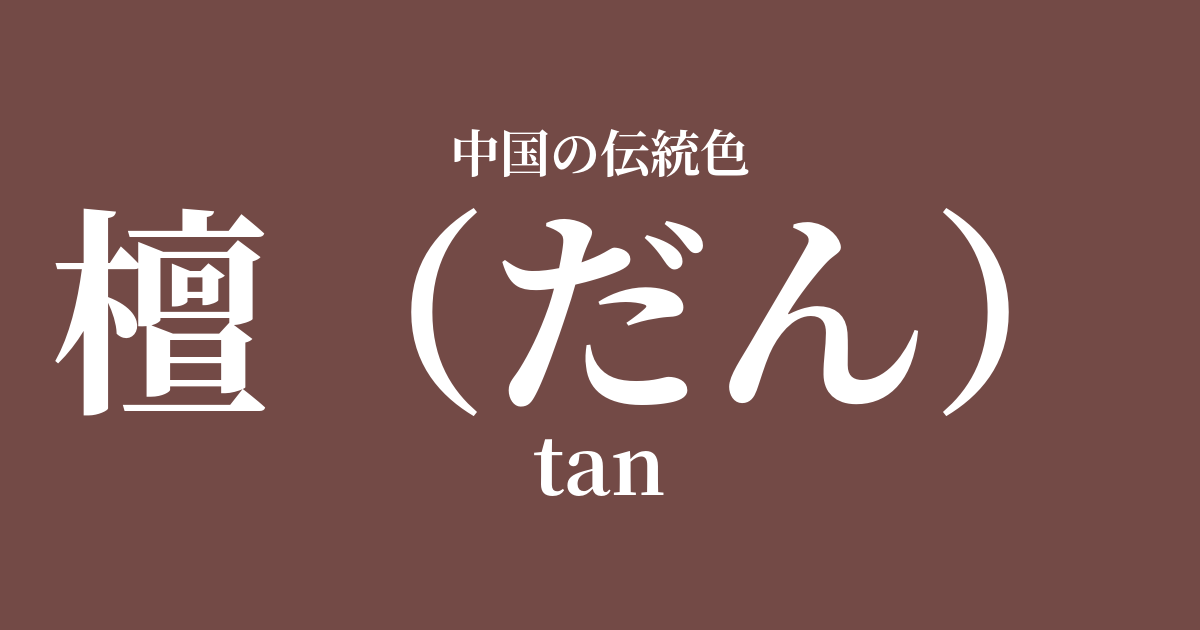
| Color name | 檀 |
|---|---|
| reading | Dan |
| pinyin | tan |
| HEX | #734A46 |
| RGB | 115, 74, 70 |
What is Dan? Origin and etymology
Dan refers to a deep, reddish-brown color. Its name originates from the fragrant wood called "danboku," which emits a delightful aroma.
While there are various types of sandalwood, such as white sandalwood (byakudan) and rosewood (shitan), this color specifically refers to the deep reddish-brown color found in the heartwood of rosewood. Rosewood is extremely hard, and has been prized as a top-quality wood since ancient times due to its beautiful grain, unique luster, and pleasant fragrance.
It is believed that the color of sandalwood itself became established as the color name "dan" due to its rarity and beauty. It is not merely a color, but a profound hue that conveys the dignity of the material and the vitality of the wood nurtured over eons.
Historical background of Dan
Sandalwood became particularly important in Chinese history from the Tang Dynasty onward. As trade with the south became more active, precious woods like rosewood were brought to the court and became extremely popular among emperors and nobles.
This color was not only beautiful, but also a symbol of wealth, power, and a refined aesthetic sense. It also had deep ties to Buddhism, as sandalwood was used in the creation of Buddhist statues and implements, giving it a sacred and serene impression.
Particularly during the Ming and Qing dynasties, the color of sandalwood established itself as the color of the royal family. Furniture made of rosewood during this period is known as "Ming-style furniture" or "Qing-style furniture," and its refined design and perfect craftsmanship are considered the pinnacle of Chinese art and craftsmanship. The emperor's study and living quarters were filled with this sandalwood furniture, creating a majestic and intellectual space.
Sandalwood in Chinese Art and Crafts
The color of rosewood is deeply intertwined with woodworking in Chinese art. Chairs, desks, and shelves made of rosewood during the Ming and Qing dynasties are works of art that make the most of the material's beauty. From pieces with intricate carvings to simple designs that highlight the natural grain, all of them reflect the highest level of aesthetic sensibility of the time.
Furthermore, sandalwood was favored for the "Four Treasures of the Study" (brush, ink, paper, and inkstone) that adorned the studies of literati, such as the handles of brushes and inkstone boxes, giving a sense of calm and dignity to the intellectual space.
In architecture, the columns, doors, and window frames of palaces and temples were sometimes made of sandalwood itself, or painted to resemble the color of sandalwood. It played a role in bringing a sense of grandeur and formality to the entire space.
In fashion culture, although it wasn't widely used as a direct dye, this deep reddish-brown color was sometimes incorporated into the formal and everyday attire of bureaucrats and literary figures as a color that conveyed calmness and dignity.
Color scheme preview
This is to check the readability of the text when this color is used as the background.
Dan's color scheme proposal
Moon White (#EAEFEF)
The dignified presence of the sandalwood is enhanced by the pure, soft, and light-like color of the moon-white wood, creating a quiet and refined space. It is ideal for creating a calm atmosphere reminiscent of a traditional study or tea room.
Yellow (#F4B849)
The dignified elegance of the sandalwood combined with the brilliance of the orpiment creates a luxurious and majestic impression reminiscent of a royal court. It is particularly effective when used as an accent in special decorations and designs.
Secret color (#A6D4B9)
The earthy sandalwood and the beautiful celadon-like hieroglyph harmonize to create a natural and calming color scheme. It brings a gentle and elegant atmosphere to interiors and fashion.
Practical Scenes
In interior design, sandalwood brings elegance and tranquility to a space. Incorporating it into flooring, wooden furniture, and fixtures such as doors tightens the overall look of the room and creates a dignified atmosphere. It also works well as an accent wall. Combining it with ivory or off-white fabrics creates a traditional yet modern impression.
In fashion, this color particularly shines in autumn and winter outfits. Choosing this color for wool or cashmere coats, leather jackets, leather bags, or shoes creates an elegant and sophisticated style. Because it's a muted yet impactful color, it can also serve as the focal point of an outfit.
In web and graphic design, using this color for backgrounds and footers can give the entire site a sense of stability and sophistication. It is particularly suitable for websites in fields where trustworthiness is paramount, such as established brands, traditional crafts, and law firms.