
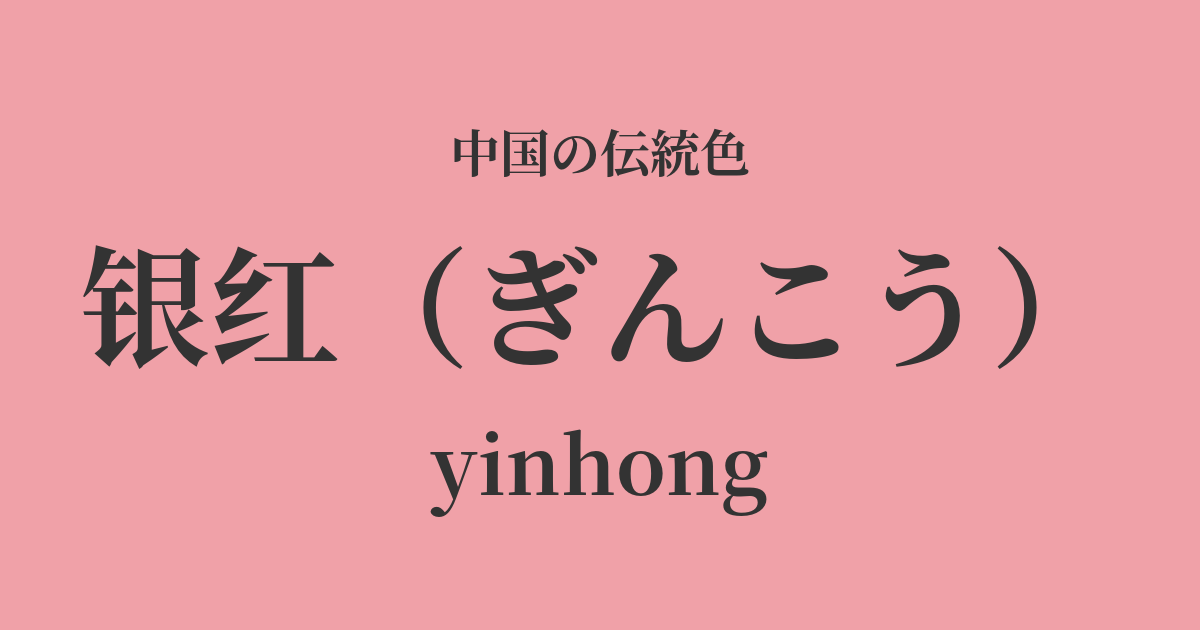
| Color name | silver |
|---|---|
| reading | bank |
| pinyin | yinhong |
| HEX | #F0A1A8 |
| RGB | 240, 161, 168 |
What is silver red? Origin and etymology
Silver red, as the name suggests, is a pale red color with a silvery sheen, a combination of "silver" and "red."
It's said that this elegant name wasn't given because silver powder was physically mixed into the fabric, but because the delicate sheen that the silk fabric emits when exposed to light appeared to have a silvery sheen.
This color was particularly used for blush and lipstick, and was highly valued for giving the skin a natural flush and translucency. The combination of "crimson," a symbol of vitality and youthfulness, and "silver," which signifies nobility and purity, resulted in a color that was not merely red, but exuded refined elegance.
The historical background of silver red
The popularity of silver-red dates back to the Tang Dynasty, a period when a rich, international culture flourished. In the capital city of Chang'an, court ladies eagerly incorporated this color into their makeup and clothing, competing to be the most beautiful.
In particular, it is said to have been a favorite color of Yang Guifei, who was known as a woman of unparalleled beauty, and it may have been an indispensable color in highlighting her beauty. Poetry of the time often described the silver-red blush that adorned women's cheeks and the silver-red silk dresses that fluttered in the wind, and it became established as a color that symbolized the splendid court culture.
Even after the Tang Dynasty, its elegant hues were loved by the literati of the Song Dynasty, and it continued to be used in poetry and verse to express beauty, transience, or noble women.
Silver Red in Chinese Art and Crafts
Silver red is deeply intertwined with Chinese clothing culture, particularly the attire of women during the Tang Dynasty. Thin, light silk fabrics such as "sha" and "ra" dyed silver red, used to create garments like "jukun" (a type of skirt) and "bihaku" (a scarf-like garment worn over the shoulders), were extremely popular among aristocratic women. The pale red color, shimmering in the light, created elegant shadows that accompanied their movements, enhancing their graceful charm.
Furthermore, silver red was an important color in cosmetic culture. Used as blush and lipstick, its contrast with fair skin expressed both vibrant youthfulness and elegance. Traces of this can be seen in the plump cheeks and lips of female figures depicted in Tang Dynasty paintings.
Ginko Tsuyoshi Half Mengjin
Color scheme preview
This is to check the readability of the text when this color is used as the background.
Silver-red color scheme proposal
Moon White (#D9E4E8)
When combined with the pure, serene, bluish-white of Tsukishiro, the elegance and refinement of Ginkou are further enhanced. It gives a calm, sophisticated, and elegant impression.
Dark blue (#E6D2D5)
By combining it with a pale, purplish-pink color reminiscent of lotus root, an overall soft and feminine harmony is created. It gives off a warm and gentle impression, like springtime.
Red (#49585F)
The deep, bluish-black of the dark brown tones balances the brightness and sweetness of the silver-red, creating a sophisticated and modern contrast. It gives an intelligent and stylish impression.
Practical Scenes
In the world of fashion, silver red is a color that pairs particularly well with feminine items. When incorporated into dresses and blouses made of glossy or sheer materials such as silk, satin, and organza, its delicate beauty is brought out to the fullest. Using it as an accent color in accessories such as scarves and bags can add an elegant touch of glamour to the entire outfit.
In interior design, using silver-red in textiles such as cushion covers, curtains, and rugs brings a gentle and warm atmosphere to a space. Creating a silver-red accent wall on one side of the room gives the entire room a sophisticated feel. Combining it with colors like moon white, light gray, or gold is recommended.
In web and graphic design, it can be used for women's brand websites and beauty-related content. Because it gives a soft impression, it's effective as a main color, as well as an accent color for buttons and banners you want to draw attention to.