
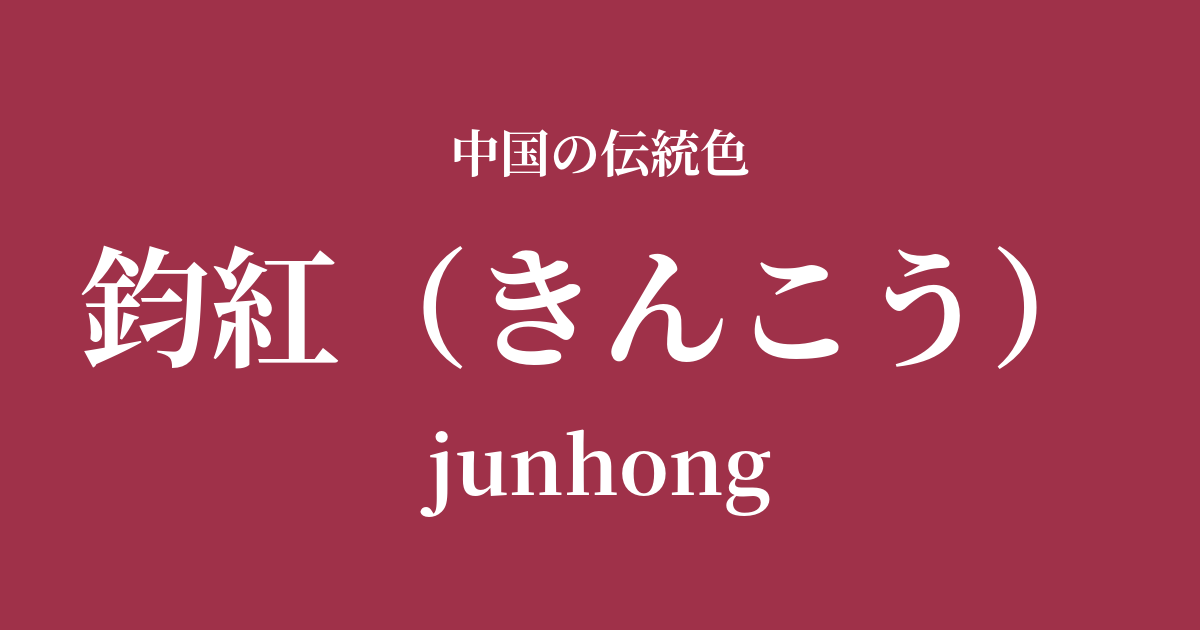
| Color name | Junhong |
|---|---|
| reading | Kinko |
| pinyin | junhong |
| HEX | #9F3149 |
| RGB | 159, 49, 73 |
What is "Jun Hong"? Origin and etymology
Jun Hong is a color name derived from the deep, beautiful reddish-purple glaze of porcelain fired at the Jun ware kiln, one of the five great kilns of the Song Dynasty in China.
The name comes from "Junzhou," the old place name of Yuzhou City in Henan Province, where the kilns were located. The most distinctive feature of Jun ware is a phenomenon called "kiln transformation," in which the glaze undergoes unexpected chemical changes during the firing process, producing a wide variety of colors.
Jun Hong in particular was considered a miraculous color, created by chance when the copper components in the glaze are reduced in the high-temperature kiln. No two pieces have the same hue, and its unpredictable beauty is celebrated with the phrase, "One color when it enters the kiln, ten thousand colors when it leaves." It's not just a simple red; its complex blend of blue and purple hues evokes a profound beauty reminiscent of a sunset sky or ripe fruit.
Historical background of dun red
The history of Jun ware began in the Northern Song dynasty, and its techniques are said to have reached their peak during the Jin and Yuan dynasties. Initially, blue glazes such as moon white and sky blue were the mainstream, but eventually, a reddish-purple glaze using copper as a coloring agent was developed, and its beauty captivated the imperial court and literati.
Jun red pottery, in particular, was traded at extremely high prices due to its rarity, and was such an object of desire that the saying "Even with tens of thousands of coins in wealth, it cannot compare to a single piece of Jun porcelain" was passed down.
It is said that the exquisite techniques of Jun ware production were lost after the Yuan Dynasty. However, its mystical beauty greatly influenced later potters, and numerous attempts were made to recreate it during the Ming and Qing dynasties. Jun red is more than just a color name; it symbolizes a pinnacle in the history of Chinese ceramics and the romance of lost techniques.
Jin Hong in Chinese Art and Crafts
Undoubtedly, the Jun red color was most symbolically used in Jun ware ceramics. Various forms of vessels were produced, including bowls, cups, plates, and vases. Its appeal lies not only in its color but also in the unique texture created by the thickly applied glaze. The flow of the glaze creates patterns resembling earthworms crawling, known as "earthworm-like mud patterns," and the fine bubbles give Jun ware a profound depth to its appearance.
Junhong pottery is not simply a single shade of red; in many cases, reddish-purple mottled patterns appear to float on a background of sky blue or moon white. This contrast of colors breathes a fiery vitality into a quiet world of blue, creating an unparalleled artistic quality.
This deep, noble red color is thought to have influenced the clothing culture of the time, albeit indirectly. Deep reddish-purple, reminiscent of jun red, was favored in the silk fabrics and Hanfu (traditional Chinese clothing) used in the imperial court as a symbol of authority and beauty.
Color scheme preview
This is to check the readability of the text when this color is used as the background.
Suggested color scheme for dark red
Tensei (#73B4D6)
This design recreates the blue and red color combination found in Jun ware pottery, evoking the quiet and dignified atmosphere of ceramics. The colors complement each other, creating a calm and profound impression.
Mud gold (#C7A252)
The noble impression of the golden hue is further enhanced by the shimmering gold. This color scheme evokes a luxurious and festive atmosphere reminiscent of court culture, adding a touch of splendor to special spaces and designs.
Pilestone (#995A34)
This combination with warm ochre evokes the feeling that the ceramics were born from the earth. It gives a natural and calming impression, and the deep red of the rosin gently enhances it, creating a soothing color scheme.
Practical Scenes
In interior design, Jun Hong is an ideal accent color that brings elegance and warmth to a space. Simply incorporating it into small items such as cushions, rugs, and art panels will tighten the overall look of the room and create a sense of luxury. It pairs particularly well with solid wood furniture and metal materials such as brass.
In the world of fashion, jun red gives a dramatic and sophisticated impression. When used in dresses and coats made of glossy materials such as silk and velvet, its depth stands out. Adding a touch of this color in accessories such as scarves, bags, or jewelry is also an effective way to add glamour to an outfit.
In web and graphic design, Jun Hong adds depth and credibility to content themed around luxury brands, traditional culture, and history. Using it boldly as a background color or as an accent color for buttons and headings can attract the user's attention and convey a sophisticated and substantial worldview.