
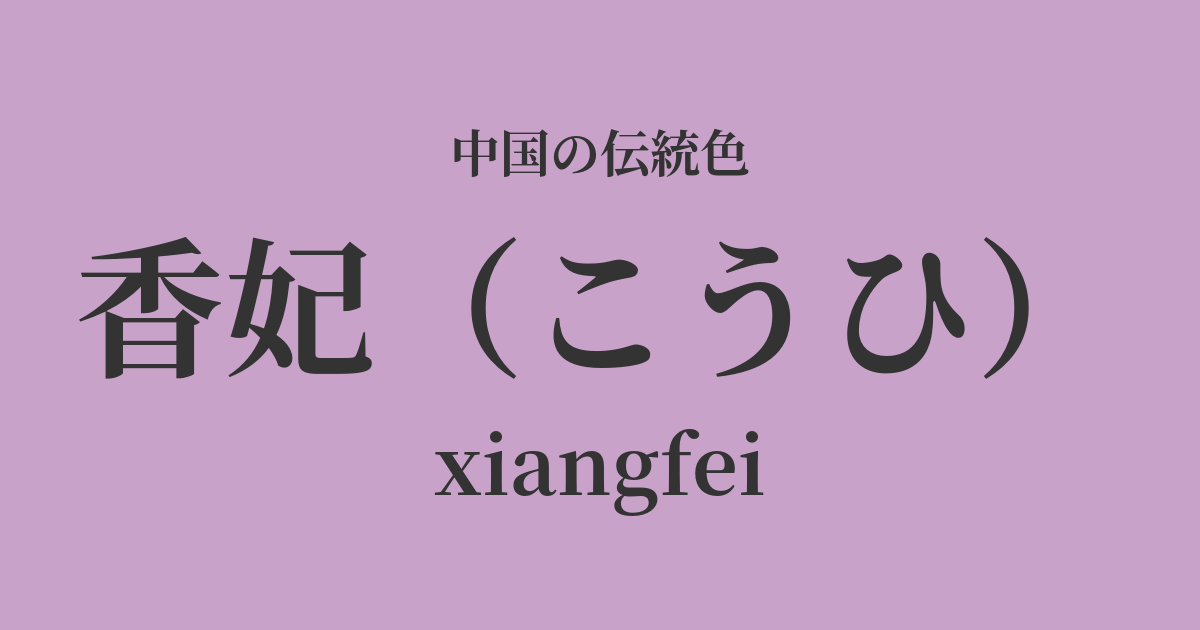
| Color name | Kohi |
|---|---|
| reading | Kohi |
| pinyin | xiangfei |
| HEX | #C8A2C8 |
| RGB | 200, 162, 200 |
What is Xiangfei? Origin and etymology
"Kōhi" (香妃), as the name suggests, is a color derived from the legendary beauty "Kōhi," who is said to have been a consort of Emperor Qianlong of the Qing Dynasty.
It is said that she was born with a fragrant scent, and her mystical beauty and noble character are associated with this elegant and dignified pale purple color.
This color, reminiscent of lavender and lilac, symbolizes her exotic charm and a somewhat ephemeral, narrative quality. The color name itself is an emotionally rich hue that seems to tell a romantic story.
The historical background of Xiangfei
The legend of Xiangfei originated in the 18th century during the Qing Dynasty. She was a woman from what is now the Xinjiang Uyghur Autonomous Region, and it is said that she received the undivided favor of Emperor Qianlong due to her extraordinary beauty and fragrance.
However, the existence of "Fragrance Consort" as a historical figure has not been fully confirmed, and the prevailing theory is that she is a legendary figure created by the fusion of "Consort Rong," a real person who was actually a consort of Emperor Qianlong, and stories told among the common people.
Since ancient times, purple has been considered a noble color in China and was one of the forbidden colors (a color that only the emperor and royalty were permitted to use). In particular, pale purple, like that of "Xiangfei," was very popular among the women of the imperial court and was seen as a symbol of elegance and sophistication. This color is intertwined with the opulent court culture of the Qing dynasty and the mystical stories woven by beautiful women from other lands.
Xiangfei in Chinese Art and Crafts
Portraits of noblewomen painted by court painters during the Qing Dynasty often feature delicate, elegant purple garments reminiscent of the "Fragrant Concubine." The Hanfu, with its lustrous silk fabric and intricate embroidery, perfectly captures the refined beauty of this color.
Furthermore, in the world of ceramics, delicate purple glazes reminiscent of this color were used in fencai and enamelware, which reached their peak during the Qing Dynasty. They were used to depict flowers, birds, butterflies, and elegant figures, creating a gorgeous and dreamlike world on the vessels.
Even today, "Fragrance Concubine" is a popular color incorporated into traditional Hanfu designs and cheongsams, combining classical elegance with modern sensibilities.
Color scheme preview
This is to check the readability of the text when this color is used as the background.
Kohi's color scheme proposal
Silver mouse (#AFAFAF)
The elegance of Xiangfei and the understated sophistication of silver-gray harmonize to create a highly refined and calm impression. This color scheme is ideal when you want to create a quiet and intellectual atmosphere.
Dark blue (#E6D2D1)
The gentle warmth of the lotus flower color enhances the romantic atmosphere of Xiangfei. It gives a soft, feminine, and graceful impression, making it suitable for creating a comfortable space and for fashion.
Tsukihaku (#EAF4FC)
The pure and clear color of the moonlight highlights the mystique of the concubine. The color scheme evokes the stillness of the night and the moonlight, creating a fantastical and noble atmosphere that leaves a special impression.
Practical Scenes
In the world of fashion, incorporating "Xiangfei" (香妃) into items such as dresses, blouses, and scarves can create an elegant and feminine impression. It pairs particularly well with light and lustrous materials such as silk and chiffon, further highlighting the gracefulness of the color. Combining it with white, gray, or silver creates a sophisticated look.
In interior design, it's recommended to use it as an accent color in bedrooms and living rooms. Using it on parts of wallpaper, cushions, or curtains will bring a calm and relaxing atmosphere to the space. Its appeal lies in its ability to harmonize easily with both modern and classic furniture.
In web and graphic design, this color can effectively create a romantic and luxurious atmosphere when used for women's products and services, or wedding-related websites. It's a versatile color that can be used in a variety of ways, such as as a main color to gently envelop the whole, or as an accent to add an elegant touch.