
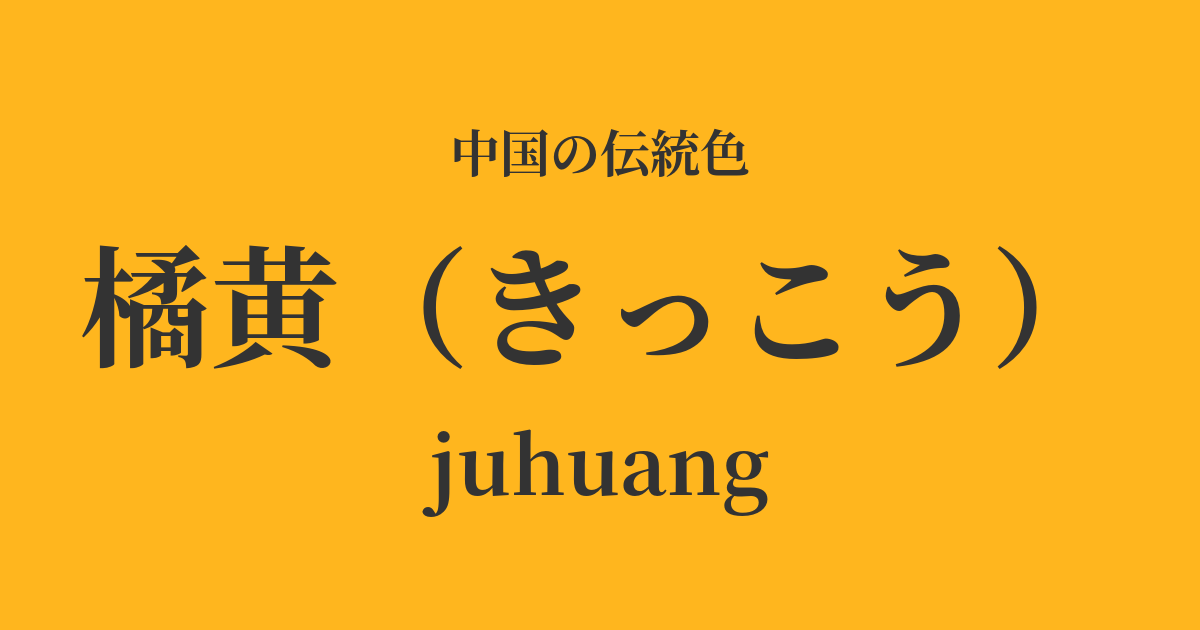
| Color name | Tachibana yellow |
|---|---|
| reading | Kikko |
| pinyin | juhuang |
| HEX | #FFB61E |
| RGB | 255, 182, 30 |
What is Tachibana-ki? Origin and etymology
Kikko, as its name suggests, is a vibrant and warm yellow color derived from the color of tachibana oranges that have ripened under plenty of sunlight.
In Chinese, the pronunciation of "橘 (jú)" is very similar to "吉 (jí)." For this reason, the mandarin orange has long been considered an auspicious fruit that brings good fortune and luck, and has been deeply loved by people. Therefore, the yellow color of the mandarin orange has also become deeply rooted in the culture as a color that symbolizes happiness, wealth, and fertility.
Historical background of Tachibana Yellow
The cultivation of the tachibana orange has a long history, with its name appearing in documents from before the Common Era. Particularly from the Han Dynasty onward, the tachibana orange was highly valued as a symbol of good fortune among the imperial court and nobility, and was used as a decoration during celebrations and festivals.
During the Tang Dynasty, many poets composed poems about the mandarin orange, praising its beauty and fragrance. Literary figures such as Du Fu and Su Shi also held a special affection for the mandarin orange and depicted it in their works. In this way, the mandarin orange established itself not merely as a fruit, but as a cultural symbol.
With such a rich cultural background, the orange-yellow color has become deeply integrated into people's lives. Used in a variety of settings, from the lavish decorations of the imperial court to the celebratory attire of commoners, it has brought brightness and hope to the hearts of those who see it.
Orange in Chinese Art and Crafts
In the world of Chinese art, orange yellow was favored as a color that expressed vitality and abundance. In particular, in flower-and-bird paintings and still-life paintings, orange fruits were often depicted as a symbol of fertility, and their vibrant yellow color added splendor to the painting.
In the field of ceramics, we can see a hue similar to orange-yellow in the glazes of Tang sancai porcelain and in Song dynasty porcelain. Unlike the austere yellow that symbolized the emperor, orange-yellow was a more approachable and warm color that enriched people's lives.
In clothing culture, tangerine yellow also played an important role. Its beautiful luster was particularly striking in silk fabrics, and it was favored for celebratory attire and ornaments. Less passionate than red, yet eye-catching, this color added vibrancy and charm to women's and children's clothing.
When the garden was grown, it was golden.
Color scheme preview
This is to check the readability of the text when this color is used as the background.
Orange yellow color scheme proposal
Ai (#165E83)
The warmth of the orange-yellow and the deep blue of the dark blue complement each other, creating a vibrant and sophisticated impression. It has a classic yet modern feel, offering a delightful visual contrast.
Matsuka Midori (#BCEE68)
This natural combination evokes the fruit and leaves of a tachibana orange. It exudes vitality, gives a fresh and youthful impression, and brings a sense of reassurance and comfort to the viewer.
Tsukihaku (#EAF4FC)
The pure and understated shade of Tsukishiro elegantly complements the brightness and warmth of Tachibana-ki. It is perfect for creating a clean, sophisticated, and elegant space.
Practical Scenes
In interior design, incorporating orange-yellow as an accent color brings warmth and vibrancy to a space. When used partially in cushion covers, rugs, or artwork, it adds a sophisticated touch to spaces based on white, gray, or wood tones.
In fashion, incorporating orange-yellow into accessories such as scarves, bags, and jewelry can add vibrancy and a bright accent to your entire outfit. It pairs particularly well with colors like indigo, green, and white.
In web and graphic design, it's effective when used for buttons, icons, and headings that you want to attract attention. It's also suitable as a brand color to convey friendliness and positive energy.