
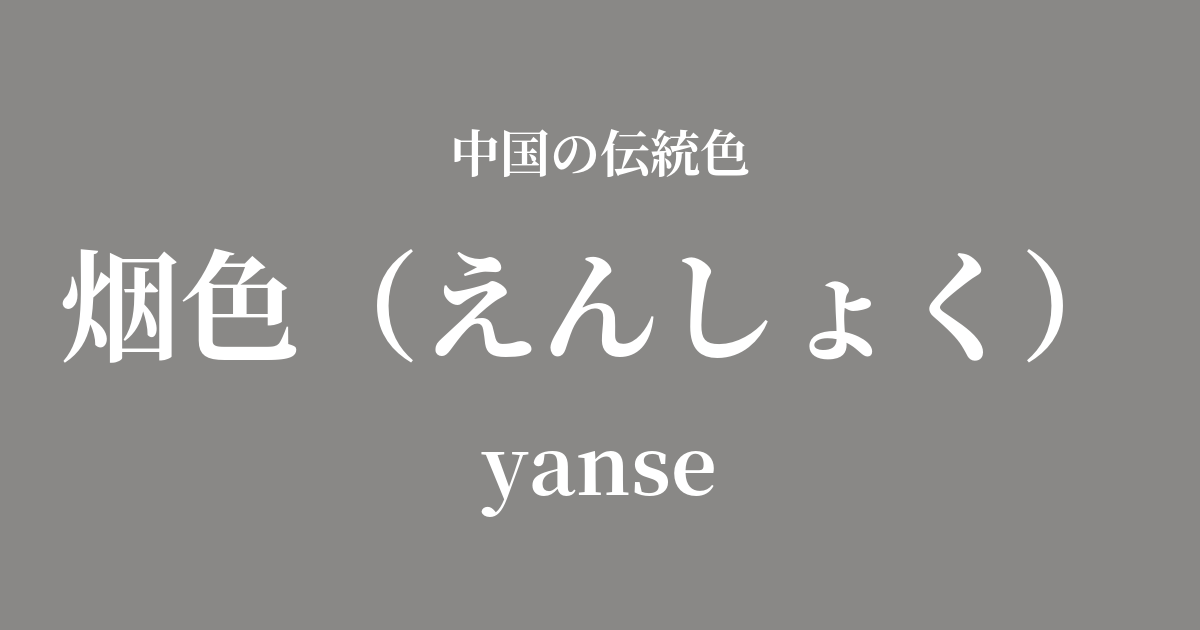
| Color name | smoke color |
|---|---|
| reading | Enshoku |
| pinyin | Yanse |
| HEX | #898886 |
| RGB | 137, 136, 134 |
What is "smoke color"? Origin and etymology
Enshoku, as its name suggests, is a deep, nuanced gray color derived from the color of "smoke" that rises when something burns. The character "烟" is an alternative form of "煙" and has been used since ancient times in poetry, literature, and painting to express fleeting and ever-changing scenes.
This color is not simply achromatic; it evokes a subtle warmth and complexity, like the light filtering through morning mist or evening haze. The color name itself reflects an Eastern view of nature and aesthetic sensibility, one that seeks to blend into nature and capture the indistinct forms of things.
Smoky Historical Background
It is believed that the color "smoky" became particularly important as an aesthetic element after the Song dynasty, when ink painting reached its peak. For literati who valued the expression of spirituality through the shades of ink more than extravagant colors, intermediate colors like "smoky" held great significance.
They found tranquility, depth, and a philosophy of secluded solitude within the color of smoke. While there are few records of it being designated as the official color of any particular dynasty, it has a history of being quietly cherished among cultural figures and artists as a symbol of inner richness. It could be said to be the color of intellect, the antithesis of colors that flaunt authority or wealth.
Smoke in Chinese Art and Crafts
The color "smoke" is most closely associated with the world of ink painting. In the philosophy of "ink-based five colors," which expresses all things using only shades of ink, smoke was indispensable as one of the infinite gradations created by ink and water, used to depict the mist hanging over distant mountains or the humid atmosphere. Painters used this color to give depth and poetic emotion to their canvases.
Furthermore, in the realm of fashion culture, it is said that this color was used for the clothing of literati and monks who avoided bright colors. The understated yet dignified hue of this hue was a fitting color for those who valued inner spirituality. Its quiet presence continues to give an intellectual impression in modern fashion.
Yanhae Envoy Shuu
Color scheme preview
This is to check the readability of the text when this color is used as the background.
Smoky color scheme proposal
Red (#495859)
This color scheme is quiet and intellectual, reminiscent of the shades of ink painting. The deep blue-black of the mayuzumi color tightens the ambiguity of the smoky color, giving it a refined and minimalist impression.
Moon White (#D9E4E8)
This combination evokes a quiet and fantastical scene, like a misty dawn sky. It gives a calm and relaxed impression, making it ideal for creating a peaceful and relaxing space.
赭石 (#A75347)
The combination of inorganic, smoky tones with the warmth of ochre creates a calm and stable color scheme. It pairs well with natural materials and gives a simple and pleasant impression.
Practical Scenes
In interior design, the muted color brings tranquility and sophistication to a space. Using it on an entire wall in a living room or study creates a calm and intellectual atmosphere. Combining it with contrasting materials such as concrete, solid wood, or metal results in a modern yet warm space.
In fashion, smoky brown gives a very elegant and intellectual impression. When incorporated into high-quality natural materials such as silk blouses or linen jackets, the profound charm of the color is further enhanced. Because it harmonizes easily with other colors, it works well as a base color in outfits.
In web design and graphic design, using it as a background color enhances the content and creates a calm, eye-friendly impression. When combined with minimalist designs, it can express a sophisticated worldview.