
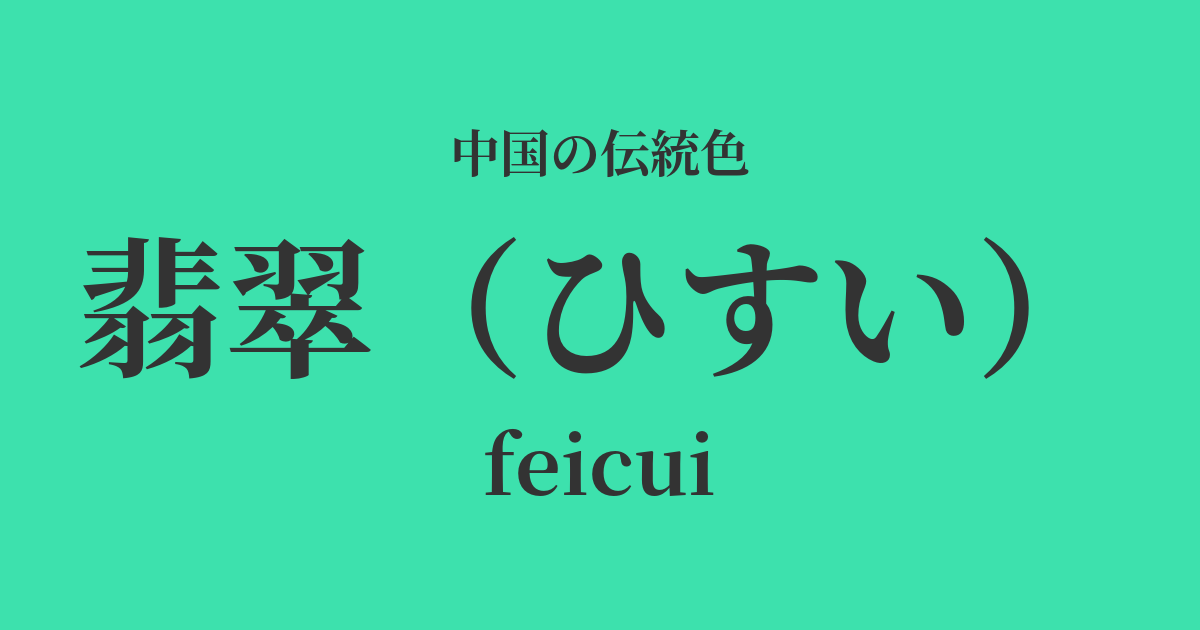
| Color name | jade |
|---|---|
| reading | jade |
| pinyin | feicui |
| HEX | #3DE1AD |
| RGB | 61, 225, 173 |
What is jade? Origin and etymology
The name "hisui" (翡翠) originates from two beautiful things. One is the kingfisher, a bird whose name is also beautiful, and the other is the gemstone "jade" which has been treasured since ancient times.
Originally, the kanji characters "翡" referred to the male kingfisher with red feathers, and "翠" referred to the female with green feathers. When these two characters were combined, they came to represent the kingfisher as a whole bird, and eventually, a beautiful gemstone resembling the vibrant colors of its feathers also came to be called "翡翠" (hisui).
This color, jade green, refers precisely to the deep, clear, and vibrant blue-green color that the gemstone emits. It's not simply green, but a shade with a subtle bluish tint, giving it a mysterious and noble impression.
Jadeite, a gemstone, is broadly classified into two types: jadeite (hard jade) and nephrite (soft jade). In China, in particular, the harder and more lustrous jadeite has been considered highly valuable. The unique transparency and vibrant color of this stone are the source of the image of jade green.
Historical background of jade
The history of jade in China is very old, dating back to the Neolithic period. Initially, nephrite was mainly used and processed into ritual tools and ornaments, known as "jade." Jade was not merely a beautiful stone, but was also considered sacred, connecting heaven and earth, and a symbol of a virtuous person possessing the five virtues of benevolence, righteousness, propriety, wisdom, and trustworthiness.
As time went on, especially during the Qing Dynasty, brightly colored jadeite was brought from Myanmar (Burma) and became incredibly popular, particularly in the imperial court. Empress Dowager Cixi, in particular, was known to have a deep love for jade, and it is said that she furnished her entire life with jade, from tableware to personal ornaments.
Thus, throughout China's long history, jade has been deeply rooted in people's spiritual culture as a symbol of wealth, authority, and moral virtue. Its color has been believed to enhance the wearer's character and bring protection from evil and good fortune.
Jade in Chinese Art and Crafts
The color of jade has inspired various Chinese arts and crafts, most notably in the world of ceramics. The celadon glaze produced during the Song dynasty was a perfect example of the ideal jade hue, and its clear blue-green color was highly prized and poetically described as "the sky turning blue after the rain."
Furthermore, jade green was a highly popular color in luxurious silk fabrics and Hanfu (traditional Chinese clothing). Its use in the clothing of high-ranking women, as well as in accessories such as sash clasps and hair ornaments, created an elegant and splendid appearance. The combination of the luster of silk and jade green enhanced each other's beauty.
Of course, we must not forget the art of carving using jade itself. Jade crafts with intricate carvings, such as incense burners, ornaments, bracelets, and necklaces, were elevated to the realm of art, becoming gifts for emperors and collections for the nobility.
鴛鴴tile cold frost flower jug, jade jukukan who and co
Color scheme preview
This is to check the readability of the text when this color is used as the background.
Jade color scheme proposal
Momoko (#F47983)
By adding a sweet and gentle reddish hue of peach to a vibrant jade green, the colors complement each other, creating a gorgeous and lively impression. It's the perfect combination to create a bright and elegant atmosphere, like the flowers that herald the arrival of spring.
Moon white (#D6ECF0)
By combining a clear jade green with a pale blue reminiscent of moonlight, a pure and fantastical atmosphere is created. This color scheme evokes a calm water surface or the night sky, giving an elegant, calm, and sophisticated impression.
Yellow (#FFD700)
The noble green of jade is combined with the golden hue of orpiment, creating a luxurious, opulent, and dignified impression. This powerful and striking color scheme evokes the splendor of court culture and symbolizes wealth and authority.
Practical Scenes
In interior design, jade green brings a refreshing and sophisticated atmosphere to a space. Simply incorporating it through small items like cushions, curtains, or vases will brighten the entire room and give it a refined feel. When combined with white, beige, or natural wood-grain furniture, the color stands out beautifully, creating a modern space.
In the world of fashion, jade green adds an elegant accent to any outfit. Its noble quality is particularly evident when used in dresses, blouses, and scarves made from lustrous materials such as silk and satin. Furthermore, jade green accessories, when paired with simple clothing, instantly brighten the face.
In web and graphic design, jade green is a color that can simultaneously convey trustworthiness and innovation. If using it as a main color is too impactful, it's recommended to use it as an accent color for buttons, icons, and headings. When added to designs based on white or dark gray, it attracts attention and gives a sophisticated impression.