
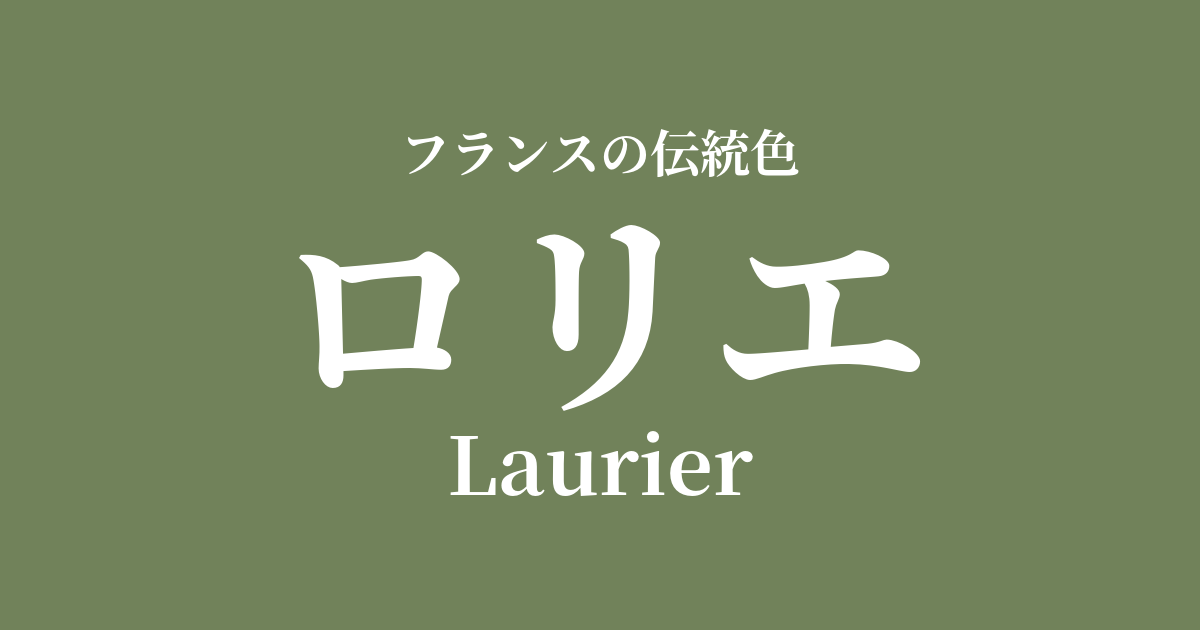
| French | Laurier |
|---|---|
| Katakana | Laurier |
| HEX | #71825a |
| RGB | 113, 130, 90 |
What is Laurier? Origin and Etymology
Laurier is a French word meaning "laurel tree." As the name suggests, it refers to the deep, slightly bluish, subdued color of the laurel tree's leaves.
Since the time of ancient Greece and Rome, the laurel tree has been considered the sacred tree of the sun god Apollo and regarded as a sacred plant. It was customary to bestow crowns woven from laurel branches and leaves (laurel wreaths) upon poets, heroes, and winners of competitions to honor their achievements. From this, the laurel tree became a symbol of "victory," "glory," and "intelligence," and the color of the laurel, laurel leaf, also came to embody a similar noble image.
Historical background of Laurier
In French history, the color of the laurel and the laurel wreath motif took on particularly significant meaning during the reign of Napoleon Bonaparte. He considered himself a successor to the ancient Roman emperors and favored the laurel wreath as a symbol of his authority. He is depicted wearing a laurel wreath in numerous portraits and sculptures, including at his coronation.
For this reason, the color of the laurel wreath became a symbol of the First French Empire established by Napoleon, the so-called "Empire style." The laurel motif was incorporated into everything from architecture and furniture to decorative items, and the color of the laurel wreath was indispensable in expressing the dignity and glory of the empire.
Furthermore, the French university entrance examination, "baccalauréat," is said to derive its name from the Latin word "bacca lauri" (laurel berries), illustrating the deep connection between this color and intelligence.
Laurier in the world of art and fashion
In the world of art, the painting "The Coronation of Napoleon I and Empress Josephine" by the Neoclassical master Jacques-Louis David is symbolic. In this magnificent work, Napoleon wears a laurel wreath like an ancient Roman emperor, visually conveying the historical authority associated with the color laurel.
Furthermore, laurel played an important role in Empire-style interiors and textiles. Combined with heavy mahogany furniture and luxurious embroidery using gold thread, it created a majestic and dignified space. The laurel motif and colors used in wallpaper, curtains, and chair upholstery convey the splendor of France at that time.
Even in contemporary fashion, this color continues to be cherished as a color that conveys intelligence and sophistication. It is particularly used in tweed jackets, high-quality coats, and designs inspired by military wear, exuding a timeless and universal appeal.
Both the glorious laurel and the sorrowful cypress sprout from the same soil.
Color scheme preview
This is to check the readability of the text when this color is used as the background.
Laurier's color scheme suggestions
Ecru (#f2e8c9)
The deep green of Laurier and the natural off-white of Ecru create a calm and intellectual harmony. This color scheme is recommended when you want to create a gentle and classical atmosphere reminiscent of a study or library.
Jaune d'Or (#ffd700)
The laurel, a symbol of glory, and the shining gold of the Jaune d'Or, create a dignified combination reminiscent of the Empire style. It adds a sense of historical grandeur and luxurious accent to the space.
Rose Pompadour (#ed87a1)
The calming green of Laurier, combined with the elegant rose beloved by Madame de Pompadour, creates a sophisticated yet romantic impression that isn't overly sweet. It's perfect as an accent color for fashion or interior design.
Practical Scenes
In interior design, Laurier brings a sense of calm and depth to a space. Incorporating it into one wall of a living room or study, or using it in large fabrics such as curtains or sofas, creates an intelligent and sophisticated atmosphere. It pairs particularly well with dark-colored wooden furniture and metal materials such as gold and brass.
In fashion, laurel is a very versatile color that is easy to style. A laurel-colored jacket or pants paired with basic colors like white, beige, or gray creates an elegant and sophisticated look. Furthermore, incorporating it through accessories such as leather bags or scarves adds a touch of understated refinement to your outfit.
In web and graphic design, it's suitable for conveying reliability, stability, and harmony with nature. When used as a background color, it's easy on the eyes, and when used as an accent color, it effectively tightens the overall design.