
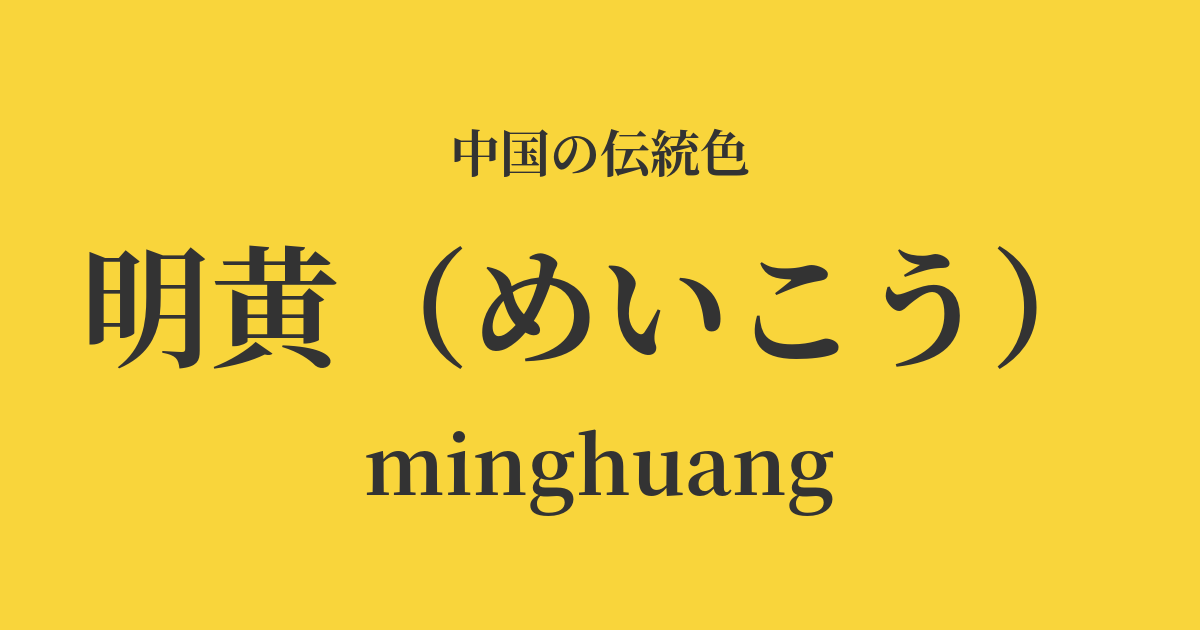
| Color name | light yellow |
|---|---|
| reading | Meikou |
| pinyin | minghuang |
| HEX | #F9D53B |
| RGB | 249, 213, 59 |
What is Mei Huang? Origin and Etymology
Meikou, as its name suggests, means "bright, shining yellow," and is a vivid and powerful color.
The special status this color holds in Chinese culture is deeply connected to the Five Elements philosophy, an ancient Chinese philosophy of nature. In the Five Elements philosophy, all things are believed to be composed of five elements: wood, fire, earth, metal, and water, each of which is associated with a direction, a season, and a color.
Yellow is considered the color that symbolizes the element of "earth," which governs the center, and has come to have a special meaning that sets it apart from other colors as the color that symbolizes the center of the universe, that is, the emperor who rules over the world. As the name of the legendary monarch "Yellow Emperor" suggests, the association of yellow with supreme rulers has very ancient origins.
Historical background of Ming Huang
It is said that yellow was formally designated as the emperor's color during the Sui Dynasty. It is believed to have started when Emperor Wen, the first emperor, routinely wore a yellow robe.
During the subsequent Tang Dynasty, a decree was issued prohibiting anyone other than the emperor from wearing certain yellow clothing, establishing yellow as a "forbidden color" symbolizing the emperor's authority.
During the Ming and Qing dynasties, this "Ming Huang" (bright yellow) became an extremely strictly controlled color reserved exclusively for the emperor. It was used in every aspect of life, from the dragon robe worn by the emperor to everyday clothing, vehicles, and even palace decorations. For anyone other than the emperor to use this color was considered a serious crime, even tantamount to treason against the state, making Ming Huang a true symbol of absolute power.
The fact that the roof of the Forbidden City (Palace Museum) in Beijing is entirely covered with this type of yellow glazed tile also indicates that it was the residence of the emperor who reigned at the center of the world.
Bright yellow in Chinese art and crafts
The most iconic use of bright yellow silk is seen in the "dragon robe" worn by the emperors of the Qing Dynasty. This garment, made of bright yellow silk, is intricately embroidered with gold and five-colored threads depicting dragons soaring through the sky, auspicious clouds, and twelve auspicious motifs, perfectly expressing the emperor's divinity and authority. It can truly be considered a work of art, representing the pinnacle of craftsmanship.
In the world of ceramics, the "yellow glaze" produced at the Jingdezhen kilns during the Ming and Qing dynasties is particularly well-known. In particular, "chicken fat yellow," exhibiting a smooth and vibrant yellow reminiscent of chicken fat, and "delicate yellow," with its soft and gentle hue, were top-quality products made exclusively for the imperial court. These porcelain pieces were used for rituals and everyday tableware, adorning the emperor's table.
Furthermore, bright yellow played an important role in architectural decoration. Not only was it used in the magnificent roof tiles of the Forbidden City, but it was also effectively used in the columns, ceilings, and furnishings inside the palace, creating a solemn and sacred space.
Color scheme preview
This is to check the readability of the text when this color is used as the background.
Bright yellow color scheme proposal
Navy blue (#222C47)
This combination features bright yellow, the color of the emperor, and deep indigo, the color used by high-ranking officials. The two colors complement each other, creating a dignified and imposing impression.
Vermillion (#FF4D4F)
This color scheme, also seen on the walls of the Forbidden City, symbolizes Chinese court culture. It exudes vitality and a festive spirit, creating a vibrant and powerful impression.
Tsukihaku (#EAF4FC)
By combining a brilliant yellow with a very pale, bluish-white reminiscent of moonlight, the design maintains a sense of nobility while creating a light and sophisticated impression.
Practical Scenes
In interior design, incorporating bright yellow as an accent color brings brightness and a sense of luxury to a space. Using it in small items such as cushion covers, artwork, or single-flower vases creates a sophisticated and elegant look. The beauty of bright yellow is particularly highlighted when paired with dark brown wooden furniture or calming colors such as navy blue and deep green.
In fashion, its vibrant color makes it perfect for special occasions. Incorporating it into dresses, scarves, or bags instantly creates a festive look. Even adding just one bright yellow accessory to a simple outfit creates an elegant and striking style.
In web and graphic design, it's effective when used for buttons and headings that you want to attract attention. When used on brand websites that want to convey a sense of luxury and trustworthiness, or in content that introduces traditional culture, it can powerfully express the worldview of that brand.