
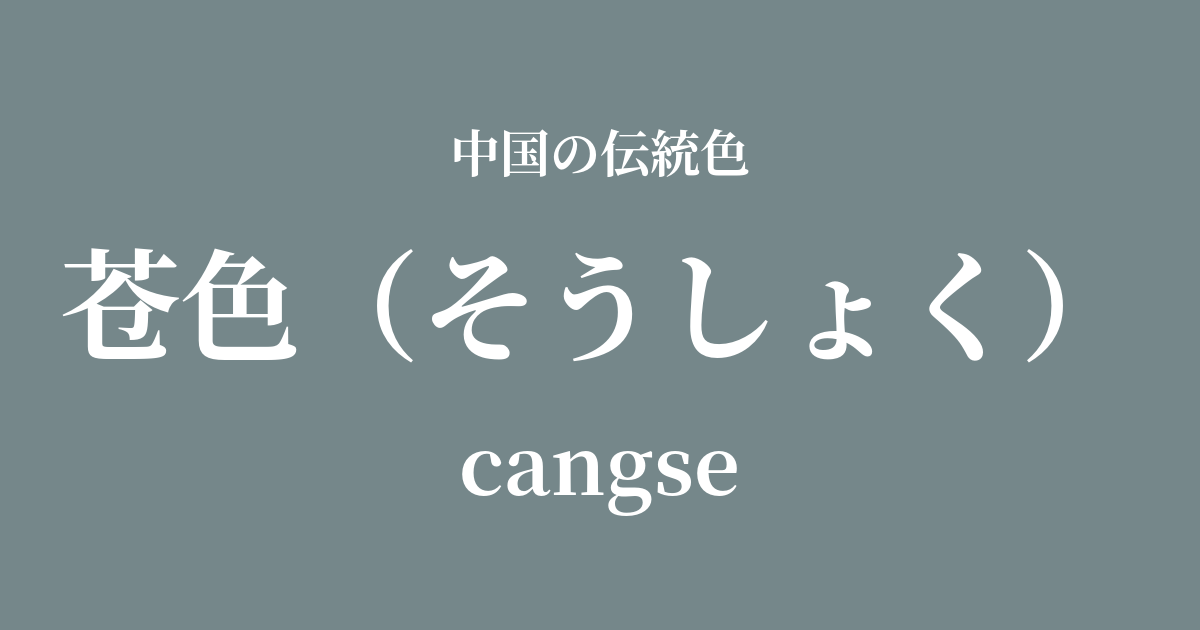
| Color name | deep blue |
|---|---|
| reading | Soybean |
| pinyin | cangse |
| HEX | #75878A |
| RGB | 117, 135, 138 |
What does "so-iro" mean? Origin and etymology.
"Sōshoku" (苍色) is a deep, calm, bluish-gray color that symbolizes the ancient Chinese view of nature. The character "苍" is a combination of the grass radical (艹) and the character "倉" (倉), meaning warehouse, and originally referred to the appearance and color of lush, abundant vegetation.
Over time, its meaning has broadened, and it has come to represent a complex and ambiguous range of shades of blue, green, and gray found in nature, such as the color of the dawn sky, the vast earth, the hazy mountains in the distance, or the deep, stagnant water. Rather than simply being a single color, it can be said to be a color name that evokes in the heart the profound scenery inherent in the majestic nature itself.
Furthermore, the character "苍" also carries connotations of "old" or "ancient." For example, as seen in words like "苍松" (ancient pine) and "苍天" (Emperor of Heaven, or eternal heaven), it has been seen as a color that symbolizes the passage of time and existence from ancient times. For this reason, the color "苍色" (soiro) encompasses philosophical nuances that go beyond mere color, including solemnity and the weight of history.
The historical background of the color blue
Rather than being a color that was popular in a particular dynasty, the color blue has been closely associated with the spirituality of the Chinese people across generations. In particular, it is deeply connected to the philosophy of Taoism, which dislikes ostentation and values a return to nature.
In the philosophy of "Tao" expounded by Lao Tzu and Zhuangzi, the ideal was a natural, unartificial state. The color cyan (or soybean) is precisely such a simple, fundamental, natural color, possessing a tranquility and depth that is the antithesis of flamboyant colors. For this reason, it was particularly favored by scholars and hermits who sought refuge in contemplation, away from the secular world.
The color blue frequently appears in historical texts and literary works. This color was effectively used to depict the vastness of the sky, the changing seasons, or the author's inner landscape. This is because blue possessed the power to evoke not only visual information, but also emotions and concepts such as loneliness, solemnity, and timelessness.
The color blue in Chinese art and crafts
In Chinese art, especially in landscape painting, the color bluish-green is indispensable. In ink painting, which is based on the shades of ink, this slightly bluish color is used to depict distant mountains and mist, vast skies and water surfaces, giving the painting an infinite sense of depth and a humid atmosphere.
In the field of ceramics, we can find an aesthetic appreciation for the color "ao-iro" (blue) in the subdued, grayish-blue hues seen in celadon from the Song dynasty. The Song aesthetic, which rejected extravagant decoration and pursued a quiet, introspective beauty, resonates deeply with the spirituality of the color "ao-iro."
In the realm of fashion culture, this color was not used in the vibrant hues of the imperial court, but rather as a color for the understated and intellectual attire worn by scholars, monks, and Taoist priests. This color, which blends seamlessly into natural landscapes, was a color for people who valued inner richness and spirituality.
Tianfeng, Noshu, Fubukigusa low-looking cow and sheep.
Color scheme preview
This is to check the readability of the text when this color is used as the background.
Deep blue color scheme suggestion
Tsukihaku (#EAF4FC)
This combination evokes the pre-dawn sky and moonlight, creating a pure and serene atmosphere. The calming azure combined with the brightness of moonlight gives a refined and clean impression.
Pilestone (#A55D46)
The combination of azure, representing the sky and mountains, and ochre, reminiscent of the earth, is truly a representation of a natural landscape. It creates a sense of warmth and stability, producing a comfortable harmony unique to earth tones.
Black (#363433)
This color scheme, fundamental to ink painting, creates a strong impression of intelligence and modernity. The tranquility of the crimson is tightened by the ink black, creating a minimalist and profound space.
Practical Scenes
In interior design, blue has a calming effect, making it ideal for wallpaper or accent colors in studies, bedrooms, and living rooms. Combining it with natural materials such as solid wood furniture, houseplants, and linen creates a quiet and comfortable space.
In fashion, navy is a color that conveys intelligence and sophistication. Incorporating it into coats, jackets, or suits creates a refined look with a nuanced feel, distinct from the usual navy or gray. Adding accent colors such as white, beige, or light pink provides a soft touch.
In web and graphic design, using this color as a background can gently enhance content and convey a sense of reliability and expertise. Because it's easy on the eyes and doesn't cause fatigue even after prolonged viewing, it's suitable for websites that focus on reading material or for brands with a calm and sophisticated aesthetic.