
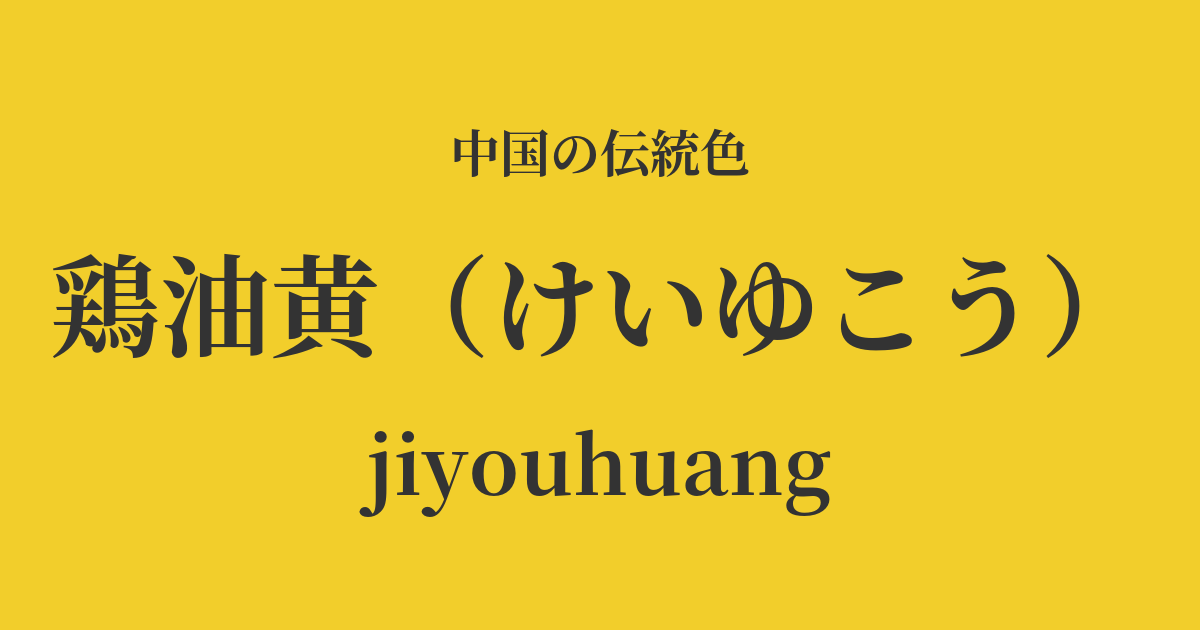
| Color name | Chicken fat yolk |
|---|---|
| reading | Keiyuko |
| pinyin | jiyouhuang |
| HEX | #F2CE2B |
| RGB | 242, 206, 43 |
What is "Ji You Huang"? Origin and etymology
As the name suggests, "Keiyukou" refers to a warm, moist, and vibrant yellow color, reminiscent of oil extracted from fresh chicken fat.
This color, which evokes a sense of vitality and abundance, is inspired by familiar elements of nature and reflects a color sensibility rooted in people's lives. It is not merely bright, but also possesses a rich depth and luster, giving viewers a warm and fulfilling impression.
Historical background of chicken oil yolk
In China, yellow is considered the color that governs the center of all things in the Five Elements philosophy, and has long been treated as the noblest color, symbolizing the emperor.
The reputation of chicken oil yellow porcelain particularly soared during the Chenghua era of the Ming Dynasty (1465-1487). During this period, an exceptionally beautiful yellow was created as the glaze color for porcelain fired in the official kilns of Jingdezhen. This color, also known as "Jiao Huang Yu" or "Yiao Huang Yu," required advanced techniques involving low-temperature firing with antimony oxide as the coloring agent. Because it was extremely difficult to achieve a uniform and beautiful color, its rarity made it extremely valuable.
During the subsequent Qing dynasty, particularly under the reigns of Emperors Kangxi, Yongzheng, and Qianlong, chicken oil yellow porcelain remained highly prized, and its color was adopted for ritual vessels and everyday items used in the imperial court. As a color embodying the authority of the emperor and refined aesthetic sensibilities, it is deeply etched in the history of Chinese color culture.
Chicken oil in Chinese art and crafts
The art form most closely associated with "Jiyouhuang" (chicken oil yellow) is undoubtedly porcelain. "Yellow-glazed porcelain" produced at the Jingdezhen imperial kilns during the Chenghua, Hongzhi, and Zhengde periods of the Ming Dynasty, and the Kangxi, Yongzheng, and Qianlong periods of the Qing Dynasty, is considered a treasure of Chinese ceramic history. Among these, those described as "Jiyouhuang" are characterized by their warm, moist, and soft coloration, exhibiting a rich expression despite being a single color. It was applied to various forms of vessels such as plates, bowls, and vases, adorning the dining tables and spaces of the imperial court.
In terms of clothing culture, it belongs to a similar family to the "bright yellow" used in the emperor's dragon robe (ceremonial robe), but chicken oil yellow is said to be a softer, more approachable color, and was also used in the clothing and accessories of court ladies. When combined with lustrous silk fabrics, the color would have become even more vibrant and elegant.
From the factory kiln, there is yellow, and there is yellow.
Color scheme preview
This is to check the readability of the text when this color is used as the background.
Color scheme suggestion for oily yellow
Ai (#274555)
When combined with a deep, calming indigo, the vibrancy of chicken oil yellow is highlighted. These complementary colors enhance each other, creating a refined and intellectual impression.
Red fat (#9D2933)
The warmth of chicken fat yellow is complemented by the luster and depth of crimson. It's a luxurious, passionate, yet dignified color scheme reminiscent of court culture.
Moon White (#D9E6E4)
By combining it with a pale, moon-like white, the warmth of the chicken fat yellow is gently enhanced. It creates a clean, bright, light, and elegant impression.
Practical Scenes
In interior design, we recommend incorporating chicken fat yellow as an accent color. Using it in small items such as cushion covers, table runners, or single-flower vases will instantly brighten the entire space and create a warm atmosphere. It pairs particularly well with natural wood and white walls.
In fashion, incorporating this color into scarves, bags, and accessories can add a touch of elegant glamour to your outfit. Shiny materials such as silk and satin further enhance the lustrous beauty of chicken fat yellow.
In web and graphic design, it's effective when used for buttons and icons that you want to attract attention. Because it gives a positive and friendly impression, it's also suitable as a brand color for services where you want to instill a sense of security in users.