
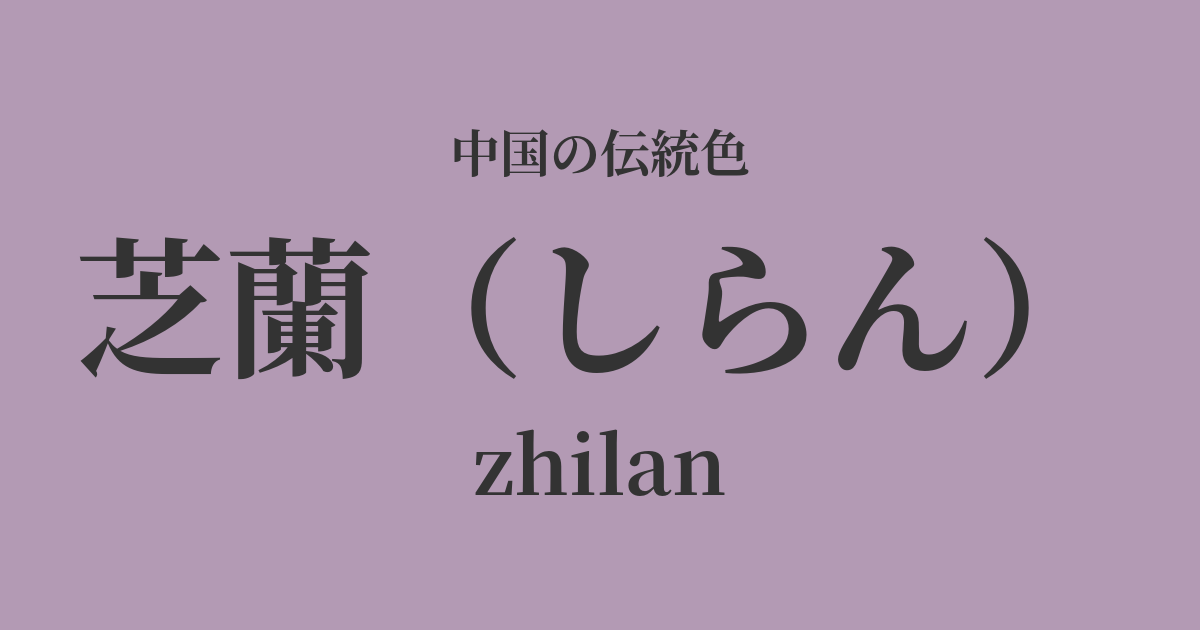
| Color name | Shiran |
|---|---|
| reading | I don't know. |
| pinyin | zhilan |
| HEX | #B39AB4 |
| RGB | 179, 154, 180 |
What is Zhilan? Origin and etymology
"Shiran" is a color name derived from a combination of "shi" from "reishi" (a type of mushroom) and "ran" from "ran" (orchid). In ancient China, reishi was known as a miraculous herb that brought eternal youth and longevity, and orchids were known for their refined beauty and noble fragrance. Both were considered very auspicious and noble plants.
Orchids, in particular, were seen as a symbol of a "gentleman" who cultivates virtue without being tainted by worldly affairs, due to their fragrant scent emanating from them even while blooming quietly in secluded valleys. Confucius's famous quote, "It is like entering a room filled with orchids; even after a long time, one may no longer smell their fragrance," is said to speak of the importance of associating with good friends.
As a color name, "Zhilan" (地兰) expresses the understated yet dignified and elegant pale purple color of orchids. It is more than just a color; it is a profound color that embodies spiritual values such as high moral character and excellent personality.
Historical background of Zhilan
The orchid has a long history as a symbol of nobility, and its noble image was deeply shared among intellectuals, as evidenced by the poet Qu Yuan of the Spring and Autumn and Warring States periods, who expressed his own purity through the orchid in his poems.
In the Five Elements philosophy, purple is considered an "intermediate color" that does not belong to any direction or season. However, due to its rarity, it has long been revered as a color that signifies high status, such as emperors and high-ranking officials. Pale and elegant shades of purple, such as "Zhilan," are thought to have been favored in the clothing and ornaments of noblewomen from the Tang Dynasty onward, when court culture flourished. It was a color that was perfectly suited to expressing both refined aesthetics and understated dignity.
During the Song Dynasty, the culture of cultivating, appreciating, and painting orchids flourished among literati. They projected their ideals and spirituality onto the form of the orchids. The color of "Zhilan" (orchid) resonated with the aesthetics of these literati, and quietly took root in the culture as a color symbolizing intelligence and elegance.
Zhilan in Chinese Art and Crafts
The color "Zhilan" has inspired various fields of Chinese art. In particular, orchids have been depicted in great numbers as one of the "Four Gentlemen" (plum, orchid, bamboo, and chrysanthemum), an important subject in literati painting. Painters such as Zheng Sixiao and Wen Zhengming have masterfully expressed the supple leaves, delicate flowers, and even the noble spirit of orchids using only shades of ink. The serene elegance that permeates the world of their ink paintings resonates deeply with the imagery associated with the color "Zhilan."
In the field of ceramics, the beautiful purplish-red glaze seen in Jun ware from the Song Dynasty is reminiscent of "Zhilan" porcelain. The complex and deep purple color, which is accidentally created in the kiln, is truly a work of art that fuses the wonders of nature with the skill of the craftsman.
In the realm of fashion culture, the use of this color in Hanfu and court attire enhanced the elegance and nobility of the wearer. "Zhilan," dyed onto lustrous silk fabrics, would have displayed delicate nuances depending on the light, creating a refined yet vibrant impression.
Yozenjinkyo, Nyoryu Shiba Rannoshitsu, Kujifumon Kika, Sokuyo no Kairi.
Color scheme preview
This is to check the readability of the text when this color is used as the background.
Chilan's color scheme proposal
Moon White (#D7DDE4)
The combination with "Tsukishiro," reminiscent of pure moonlight, brings out the transparency and elegance of Zhilan to the fullest. It gives a clean, very refined, and sophisticated impression.
Matsue (#5A5354)
By combining it with the ink color "Shōen" (pine smoke), it creates a quiet and intellectual atmosphere reminiscent of the world of ink painting. It is recommended when you want to project a calm, dignified, and mature impression.
Beni Kaido (#DB5A6B)
Adding the delicate color of the crabapple blossom, "Begonia Red," enhances the elegance of the orchid, creating a vibrant and charming color scheme reminiscent of classic feminine attire.
Practical Scenes
For interior design, we recommend using it as an accent wall in a bedroom or study, or in fabrics such as cushions or curtains. It brings a sense of calm and elegance to the space, creating a relaxing and intellectual atmosphere. The color stands out beautifully when paired with white, gray, or light wood-grain furniture.
In fashion, choosing "Zhilan" (a type of turmeric) for items such as dresses, blouses, and scarves creates an elegant and soft impression. It pairs particularly well with high-quality materials such as silk and cashmere. In traditional Japanese clothing, incorporating this color into the obi sash or collar creates a refined yet understated look.
In web and graphic design, it is suitable for brand websites that want to convey a sense of luxury, as well as content related to beauty and wellness. Rather than using it as the main color, using it as an accent for headings and buttons gives a sophisticated impression and instills a sense of security in the user.