
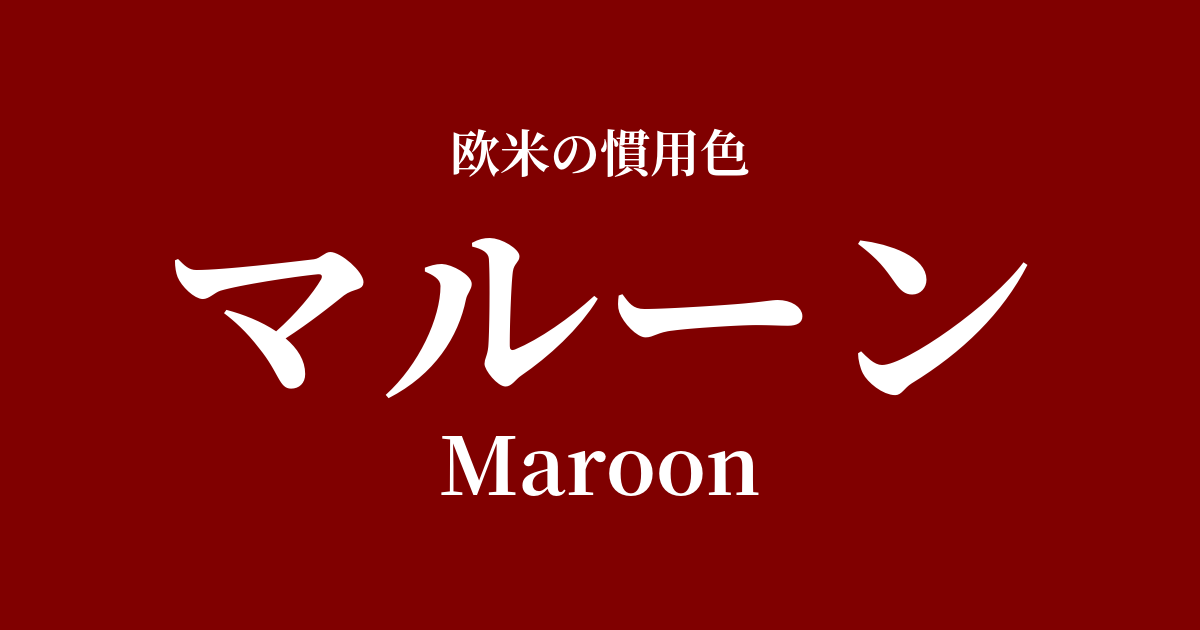
| Original English name | Maroon |
|---|---|
| Japanese notation | Maroon |
| HEX | #800000 |
| RGB | 128, 0, 0 |
What is maroon? Origin and etymology
The name Maroon comes from the French word "marron," meaning "chestnut." It shares the same etymology as "marron," the dessert we are familiar with.
This color represents the deep, rich reddish-brown of chestnuts, which are widely found in Europe. It began to be used as an English color name around the 16th century and became established as the warm, calming hue of ripe chestnut skin.
Rooted in nature, this color symbolizes the stability of the earth and the abundance brought by the autumn harvest, giving people a sense of security and maturity.
Maroon's historical background and culture
Due to its subdued hue, maroon has been used throughout Western history as a color symbolizing authority and tradition. In the Victorian era of the 19th century, it was extremely popular in luxurious interiors and fashion, frequently used in velvet curtains, heavy furniture, and dresses, and became a symbol of sophistication and wealth.
Furthermore, maroon is a color deeply associated with educational institutions. Many universities around the world, including the University of Chicago and Texas A&M University in the United States, have adopted it as their school color. This is because the intellectual and mature image that maroon evokes is considered suitable for representing academic authority and history.
Maroon in design and art
In the world of fashion, maroon is a beloved staple color, especially for the autumn and winter seasons. Incorporating it into wool coats, cashmere sweaters, leather boots, and bags creates a classic and sophisticated style. Its warmth without being overly sweet adds depth to adult attire.
In interior design, this color is effective in bringing a sense of depth and comfort to a space. When used in accent walls, sofas, or rugs, it envelops the entire room in a calm atmosphere. It also pairs exceptionally well with wooden furniture and gold metal.
Furthermore, we can find maroon hues in high-quality, historically significant items around us, such as the color of aged red wine, antique leather goods, and the bindings of old books.
Color scheme preview
This is to check the readability of the text when this color is used as the background.
Maroon color scheme proposal
Ecru (#F5F3E4)
The richness of the maroon is softened by the brightness of the ecru, creating an elegant and warm atmosphere. It's a sophisticated color scheme that feels both classic and modern.
Forest Green (#228B22)
These colors, both derived from nature, are a very compatible combination. They give off a dignified impression, full of calmness and vitality, like the trees of a forest and ripe fruit.
Old Gold (#CFB53B)
The lustrous shine of old gold further enhances the sophisticated feel of maroon. It creates a luxurious and classic atmosphere, giving a glamorous impression that is perfect for special spaces and items.
Practical Scenes
In interior design, maroon adds depth and warmth to spaces where you want to relax, such as living rooms, studies, and bedrooms. Using it over large areas like wallpaper or curtains creates a sophisticated atmosphere, while incorporating it through smaller items like cushions or artwork adds a touch of accent. It particularly stands out when paired with gold or brass items, creating a classic and refined impression.
In fashion, maroon is a versatile color that works well in any season, but it's especially perfect for autumn and winter outfits. A maroon coat or knitwear can be the centerpiece of an outfit, adding depth to your look. It also pairs well with basic colors like navy, gray, and beige, making it easy to create a sophisticated and elegant style.
In web and graphic design, it is an effective key color for brands that want to convey trustworthiness and tradition. When used as an accent color for buttons and links, it attracts the user's attention while bringing a sense of calm and sophistication to the entire site.