
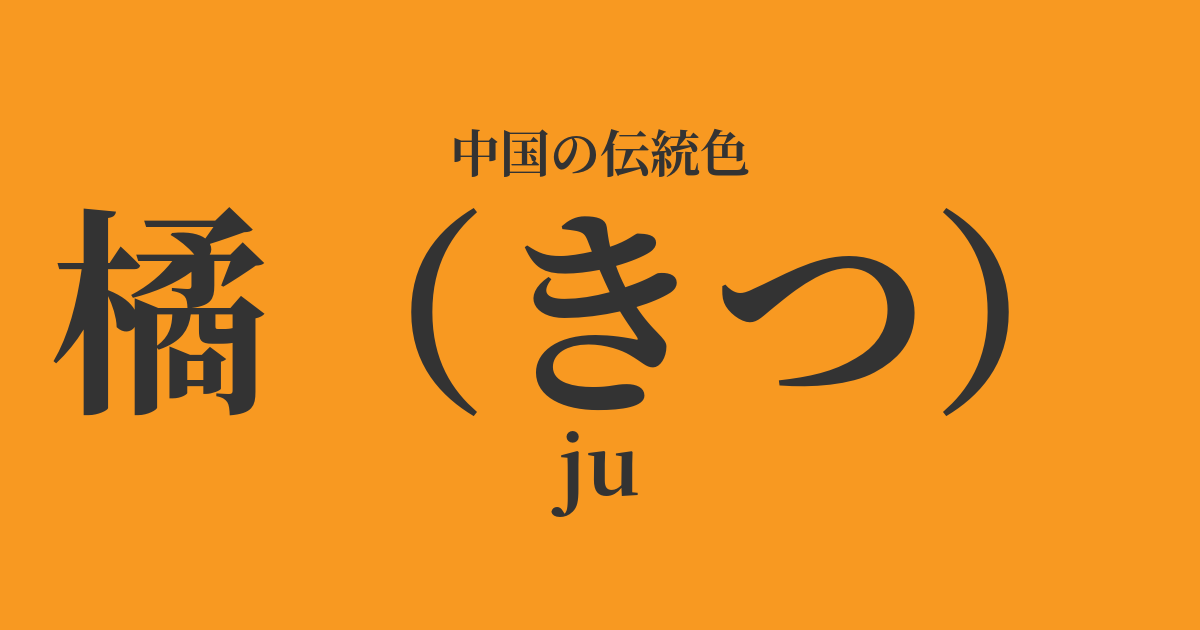
| Color name | 橘 |
|---|---|
| reading | tight |
| pinyin | ju |
| HEX | #F89921 |
| RGB | 248, 153, 33 |
What is a Tachibana? Origin and Etymology
As the name suggests, "Kitsu" is a vibrant, warm orange color derived from the color of the ripe fruit of the tachibana, a type of citrus fruit.
In Chinese, the pronunciation of "橘 (jú)" is similar to "吉 (jí)," leading to its association with good fortune and auspiciousness. Therefore, not only the tachibana fruit itself, but also its color, became deeply ingrained in people's lives as an auspicious color that brings good luck, wealth, and prosperity.
Historical background of Tachibana
The cultivation of the mandarin orange has a long history, even appearing in the poem "Ode to the Orange" in the "Songs of Chu," a collection of poems written by Qu Yuan, a poet of the Warring States period. In this poem, Qu Yuan praises the mandarin orange tree, comparing its unchanging form and rootedness in the southern lands to his own unwavering resolve. This shows that the mandarin orange has been cherished as a plant with cultural significance since ancient times.
During the Tang Dynasty, the mandarin orange was highly valued as a tribute to the imperial court, and many literati wrote poems praising its beauty and fragrance. From the Song Dynasty onward, it became a popular subject for paintings as a symbol of good fortune. In particular, in "New Year's Day paintings" celebrating the new year, the mandarin orange was depicted along with other auspicious symbols, embodying people's wishes for happiness.
Mandarin oranges in Chinese art and crafts
In Chinese art, the mandarin orange frequently appears as an important motif in auspicious designs. For example, it is often depicted together with a chicken (雞, jī) to represent "great fortune and prosperity," or together with a persimmon (事, shì) to express the wish for "everything to go as planned."
During the Ming and Qing dynasties, these vibrant colors were also used in decorating porcelain. Mandarin orange motifs, painted using techniques such as five-color and fencai, adorned tableware and decorated dining tables and interiors as symbols of abundance and prosperity.
In fashion culture, this bright orange color was particularly favored for women's clothing and accessories. The tangerine color, expressed in lustrous silk fabrics, would have shimmered in the light, creating a cheerful atmosphere befitting a festive occasion.
Retired Emperor Jiaju, Tachibana Choifugu. Unrequited, born Nankokuro.
Color scheme preview
This is to check the readability of the text when this color is used as the background.
Tachibana's color scheme proposal
Matsuka Midori (#B0D2C1)
This color scheme, reminiscent of the fruit and leaves of the tachibana orange, is natural and full of vitality. It gives a fresh, bright, and approachable impression, creating a lively rhythm in the space.
Ai (#165E83)
The warm color of mandarin orange and the cool color of deep blue are almost complementary colors that enhance each other. The vibrancy of the mandarin orange stands out, giving a modern and sophisticated impression. It is ideal when you want to add a touch of glamour to an intelligent and calm atmosphere.
Ehuang (#FFF143)
When combined with a similar color, bright goose yellow, the overall impression becomes radiant, positive, and full of happiness. This color scheme is effective in expressing joy and warmth.
Practical Scenes
In interior design, using mandarin orange as an accent color brings warmth and vibrancy to a space. In a natural space based on white, beige, and wood tones, incorporating it through cushions, art, or small pieces of furniture adds a pleasant stimulus and a touch of elegance.
In fashion, it's a color that takes center stage in an outfit. Incorporating it into dresses or scarves brightens your complexion and gives you a confident impression. Even using it as an accent color in accessories like bags or shoes will instantly brighten up your entire look.
In web design and graphic design, it's effective when used for buttons and banners that you want to attract attention. It's also suitable for brand images that you want to convey friendliness and energy, and can evoke positive emotions in users.