
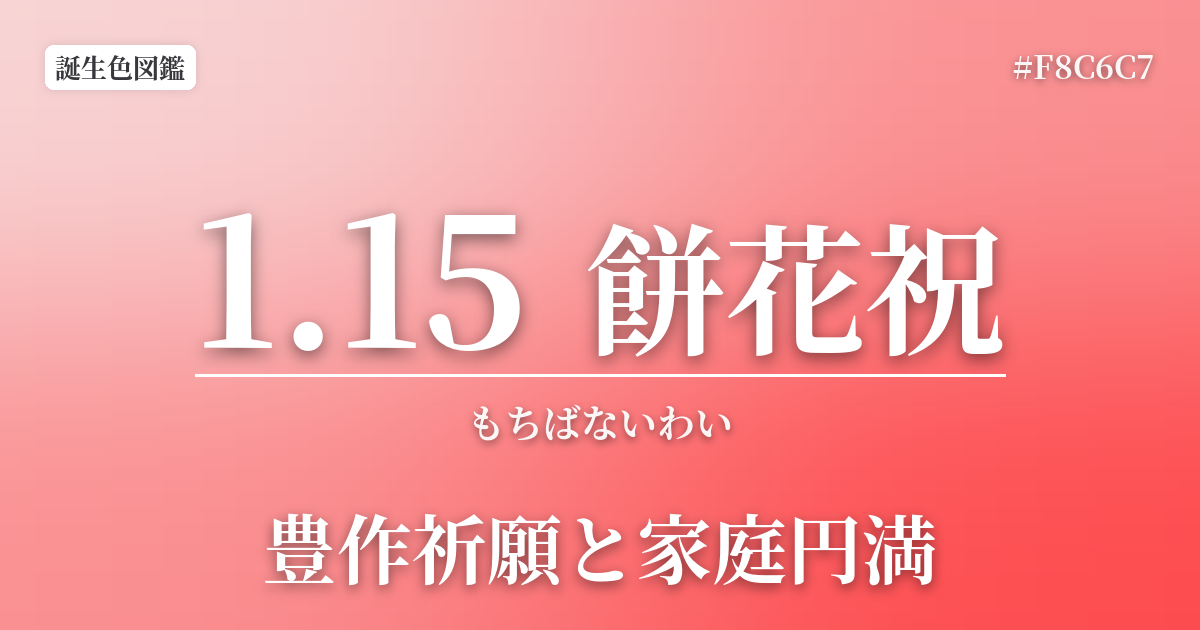
| birthday | January 15 |
|---|---|
| Color name | Mochibana Iwai (rice cake flower celebration) |
| HEX | #F8C6C7 |
| RGB | 248, 198, 199 |
| Color meanings | Prayers for a bountiful harvest and family harmony |
- What is the birth color "Mochibana Iwai" for January 15th?
- The color symbolizes "a bountiful harvest and family harmony" and personality.
- Connection to the seasons — Little New Year / Mochibana (rice cake flower)
- Color scheme preview
- Color scheme suggestions for celebratory rice cake flower arrangements
- FAQ
- Related traditional colors
What is the birth color "Mochibana Iwai" for January 15th?
"Mochibana Iwai" is a birth color uniquely selected by this website, inspired by the beautiful seasonal traditions of Japan. It evokes the subtly colored rice cakes used in "mochibana," which are displayed during the Little New Year.
The color is a soft, gentle, slightly yellowish pink. It evokes the softness of freshly steamed mochi and the warmth of the gentle light of the New Year. It's a color full of happiness, reminiscent of the auspiciousness of red and white, and the peaceful scene of a family gathering.
The name "Mochibana Iwai" (rice cake flower celebration) embodies the ancient prayer for a bountiful harvest and family harmony throughout the year. The colors have a calming and gentle charm that soothes the hearts of those who see them.
The color symbolizes "a bountiful harvest and family harmony" and personality.
People who like this color tend to be calm, kind-hearted, and show deep affection to those around them. In color psychology, pink is considered a symbol of love, happiness, and acceptance, and pale pink, especially like that used in "mochibana celebratory rice cakes," represents pure kindness that expects nothing in return.
They are often highly empathetic, skilled at understanding others' feelings, and excellent listeners. They dislike conflict and always value harmony, making them beloved by those around them as a "soothing presence." They also cherish domestic warmth and peaceful time with loved ones above all else.
They possess a delicate sensibility and are strongly drawn to beautiful things and heartwarming stories. While they are reserved in their assertiveness, their gentle demeanor and sincere personality naturally make them the center of attention.
Connection to the seasons — Little New Year / Mochibana (rice cake flower)
January 15th is called "Koshogatsu" (Little New Year), and various events are held to pray for a bountiful harvest and the safety of the family. A representative decoration displayed on this day is "mochibana" (rice cake flowers).
Mochibana are decorations made by attaching small, round pieces of red and white mochi or dango to branches of trees such as willow or dogwood. This is a custom of "yoshuku," a form of "pre-harvest celebration" where people pray for a bountiful harvest by making it appear as if flowers are blooming during the winter months when no flowers are in bloom. It is said to represent the abundant grain of rice.
The colors of the "Mochibana Iwai" (rice cake flower offering) are a reflection of the red rice cakes used in this Mochibana. In the harsh cold season, this decoration, symbolizing people's wishes and warmth, vividly conveys the anticipation for the arrival of spring and prayers for the happiness of families.
Color scheme preview
This is to check the readability of the text when this color is used as the background.
Color scheme suggestions for celebratory rice cake flower arrangements
Gofun (#FFFFFB)
This pure and sacred color scheme is reminiscent of the red and white combination of mochi flowers. The gentleness of the mochi flower celebration is combined with the pure white of the gofun (white pigment used in traditional Japanese crafts), expressing the refreshing atmosphere and innocent beauty of the New Year.
Walnut color (#A58468)
Combining soft pink with warm brown creates a sense of security and homey coziness. It's a natural and calming combination, much like mochi flowers adorning a tree branch.
Young leaf color (#B5D36A)
This vibrant color scheme evokes the delicately colored petals and newly sprouted leaves, bursting with life. The soft impression of the mochi flower arrangement is enhanced by the freshness of the young leaf green, creating a hopeful image that heralds the arrival of spring.