
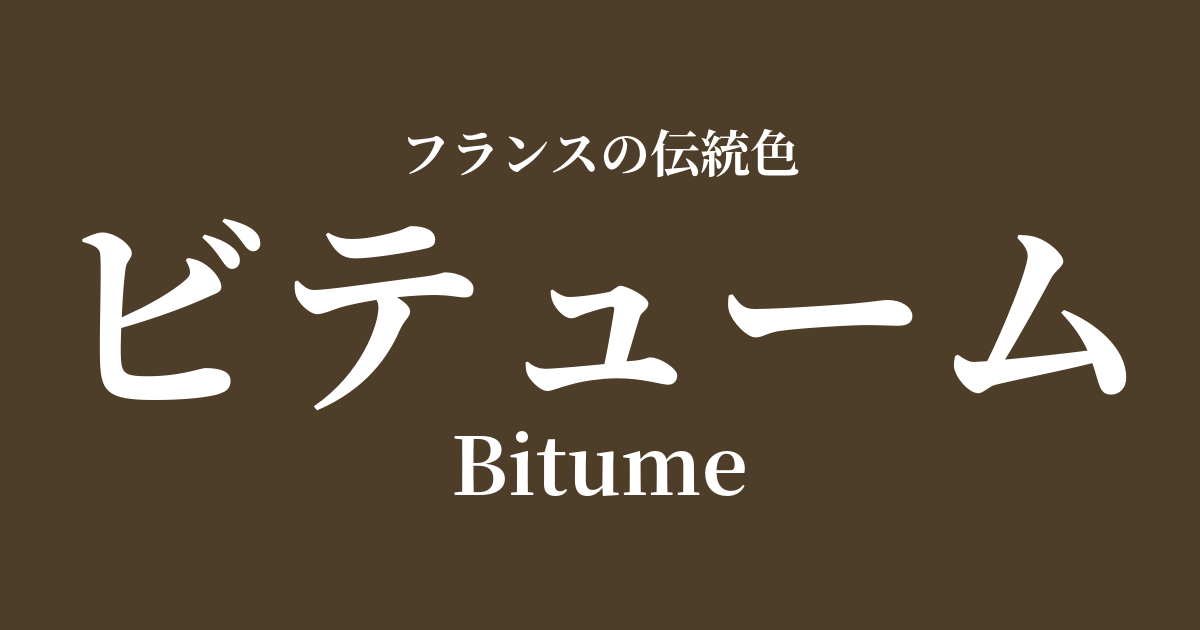
| French | Bitume |
|---|---|
| Katakana | Bitum |
| HEX | #4E3D28 |
| RGB | 78, 61, 40 |
What is bitum? Origin and etymology
"Bitume" is a French word meaning natural asphalt or bitumen. Its etymology traces back to the Latin word "bitumen."
This color does not originate from dyes or pigments extracted from specific plants or minerals, but rather from the natural tar-like hydrocarbon substance itself. In ancient Mesopotamia and Egypt, this substance was used as an adhesive and waterproofing agent for building materials, and even for the embalming of mummies, making it deeply intertwined with human history.
That deep, almost black, dark brown color became the established name for the color.
The historical background of bitum
The history of bitum is deeply intertwined with its history as a paint pigment. This pigment, also known as "asphaltum," was particularly favored during the Baroque period of 17th-century painting. For the painters of this era, characterized by dramatic contrasts of light and shadow, the deep, translucent dark colors produced by bitum were essential for expressing shading.
However, this pigment had a major drawback. Its main component, bitumen, was high in oil and dried very slowly. Over time, it would shrink, causing serious cracking (crackers) on the surface, or it would erode and darken the surrounding colors. Many classical paintings are said to have suffered irreparable damage from the use of bitumen.
In the 19th century, the use of bitum in painting gradually declined as new, more chemically stable pigments were developed one after another. On the other hand, with the spread of asphalt as a road paving material after the Industrial Revolution, bitum also came to symbolize the modern urban landscape.
Bitum in the world of art and fashion
In the world of art, bitum is an indispensable color when discussing the Baroque era's "chiaroscuro" (the use of light and shadow). Masters such as Caravaggio, Rembrandt, and the French painter Georges de La Tour used this pigment to depict deep darkness in areas not illuminated by light, creating dramatic space and a sense of three-dimensionality. It is said that Gustave Courbet, a 19th-century French realist painter, also made extensive use of bitum to create his weighty and substantial compositions.
In the world of fashion, the sophisticated and understated dark brown of bitum is especially beloved as a staple color for the autumn and winter seasons. When combined with high-quality, warm materials such as leather jackets and boots, or wool and tweed coats, it completes a refined adult style. It is a classic color that is not affected by trends and is also valued as a color that conveys reliability and stability.
Color scheme preview
This is to check the readability of the text when this color is used as the background.
Bitum's color scheme proposal
Ecru (#F5F5DC)
The richness of bitum and the natural, soft brightness of ecru create a beautiful contrast. They complement each other, giving a classic, sophisticated, and refined impression.
Terre de Sienne (#E97451)
The deep brown of bitum and the warm reddish-brown of terre de sienne harmonize to create a rich and profound color scheme. It gives a gentle and pleasant impression, reminiscent of autumn foliage and ripe fruit.
Blue Roi (#00539C)
The combination of the substantial Vitume with the noble and vibrant Blue Roi creates an intelligent and modern atmosphere. The blue accent stands out against the stable brown, giving a stylish impression.
Practical Scenes
In interior design, bitum brings a sense of weight and tranquility to a space. Incorporating it into dark-colored wooden furniture such as walnut or mahogany, or as the color of a leather sofa, can create a dignified, classic atmosphere in a study or living room. Using this color as an accent wall is also an effective way to create a more defined space.
In fashion, this color adds depth and sophistication to autumn and winter outfits. It pairs particularly well with items that highlight the texture of the material, such as wool coats, corduroy pants, and leather jackets. Combining it with beige or off-white creates an elegant look, while using colors like mustard yellow or burgundy as accents allows you to enjoy a stylish, seasonally appropriate style.
In web design, it's suitable for use in areas where you want to convey stability and reliability to the entire site, such as background colors and footers. When combined with white or light beige as text colors, it creates a highly readable page with a calm and sophisticated feel.