
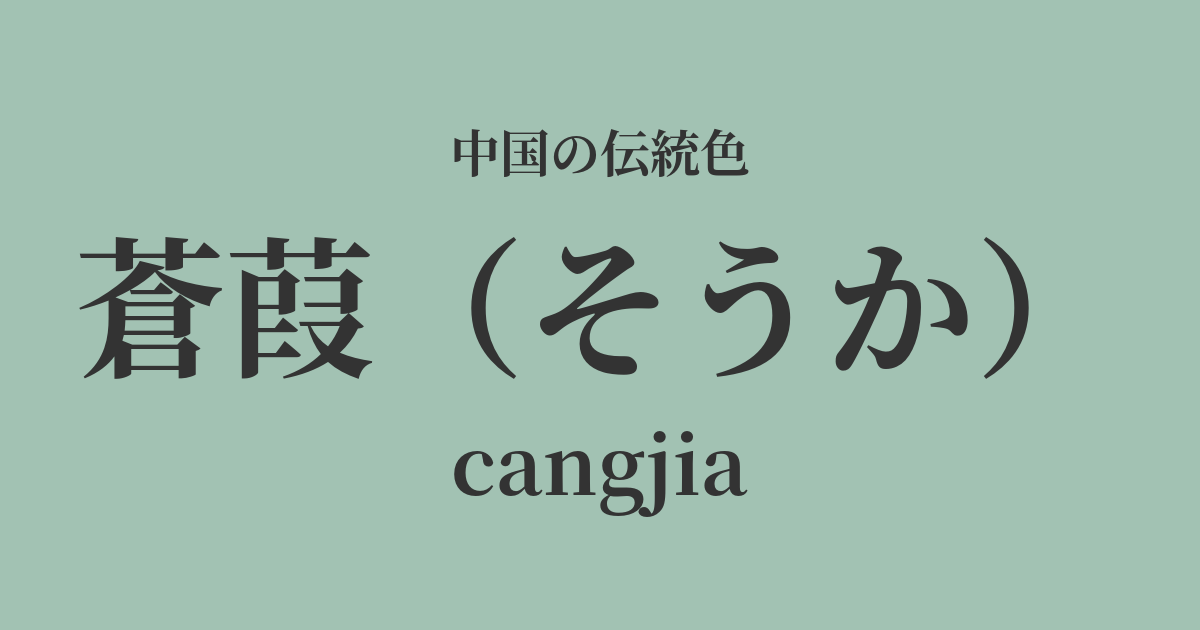
| Color name | Blue reed |
|---|---|
| reading | I see. |
| pinyin | cangjia |
| HEX | #A2C2B3 |
| RGB | 162, 194, 179 |
What is *Aoyoshi*? Origin and etymology
The color "Cangjia" (苍葭) is a poetic color whose origins lie in "Jianjia" (蒹葭), a poem in the "Book of Songs" (Shijing), the oldest collection of Chinese poetry.
The color that appears in the line "The reeds grow lushly, and the white dew turns into frost" describes the vibrant green of the reeds (reeds) growing along the riverbank in the morning light. "蒼" means deep blue or green, and "葭" means reed, and as the name suggests, it simultaneously evokes the fresh vitality of waterside plants and the tranquil atmosphere of morning mist.
Historical background of the Japanese reed
From the Zhou Dynasty, when the Book of Songs was compiled, the color of reeds has been deeply rooted in people's inner landscapes. While there are not many records of it being popular in any particular dynasty, it can be said that it was a color quietly cherished by writers and intellectuals who loved nature and indulged in contemplation, rather than by the splendor of the imperial court.
In particular, since the Song dynasty, when landscape painting flourished, these delicate intermediate colors have played an important role in depicting natural scenery. Reed green is one of the colors that symbolizes the traditional Chinese aesthetic, which values inner richness and spirituality rather than competing in extravagance.
Reeds in Chinese Art and Crafts
In Chinese art, reeds were used to depict distant landscapes and waterside plants in landscape paintings, adding depth to the expression of a moist, humid atmosphere. It was an indispensable color for depicting ethereal landscapes shrouded in smoke and mist.
Furthermore, this color is reminiscent of the hues of celadon from the Song Dynasty. In particular, the celadon glaze color, known as "Uka Tensei" (rain-passing sky blue), which resembles the clear sky after a rain shower, resonates with the gentle and dignified beauty of the reed.
In clothing culture, this color was used for simple and understated garments favored by literati, such as the "Dōhō" (a type of robe) and "Shin'i" (a type of robe). Their philosophy of valuing harmony with nature is reflected in their choice of this color.
Soyaku Sousou, Shiroro Tamashimo. The so-called Italians lived in the water.
Color scheme preview
This is to check the readability of the text when this color is used as the background.
A color scheme proposal for Aoyoshi
Moon white (#D9D6C3)
The tranquility of the reeds and the soft light of the moon harmonize to create a calm space reminiscent of a study or tea room. It gives an intellectual, refined, and serene impression.
Pilestone (#9C5442)
This combination of lush green plants (reeds) and earthy colors (ochre) evokes the vibrant life force and warmth of nature, creating a calming and natural atmosphere.
Blue color (#EDD1D5)
The coolness of the reed and the gentle sweetness of the lotus flower-like orange complement each other perfectly. This color scheme expresses a refined, elegant, and somewhat ephemeral beauty.
Practical Scenes
Incorporating reeds into your interior design brings a calm and relaxing atmosphere to your space. It's recommended for use in fabrics such as wallpaper, curtains, and cushions. Combining it with furniture made from natural materials like light-colored wood or bamboo creates a particularly tranquil and comfortable space.
In fashion, this color gives an elegant and intellectual impression. Choosing this color for shirts or dresses made from natural materials such as linen or silk creates a sophisticated look without being too flashy. It also pairs exceptionally well with earth tones and light-colored clothing.
In web design, using it as a background or accent color gives the entire site a sense of reliability and calmness. It harmonizes particularly well with natural brands, websites dealing with cultural content, and minimalist designs.