
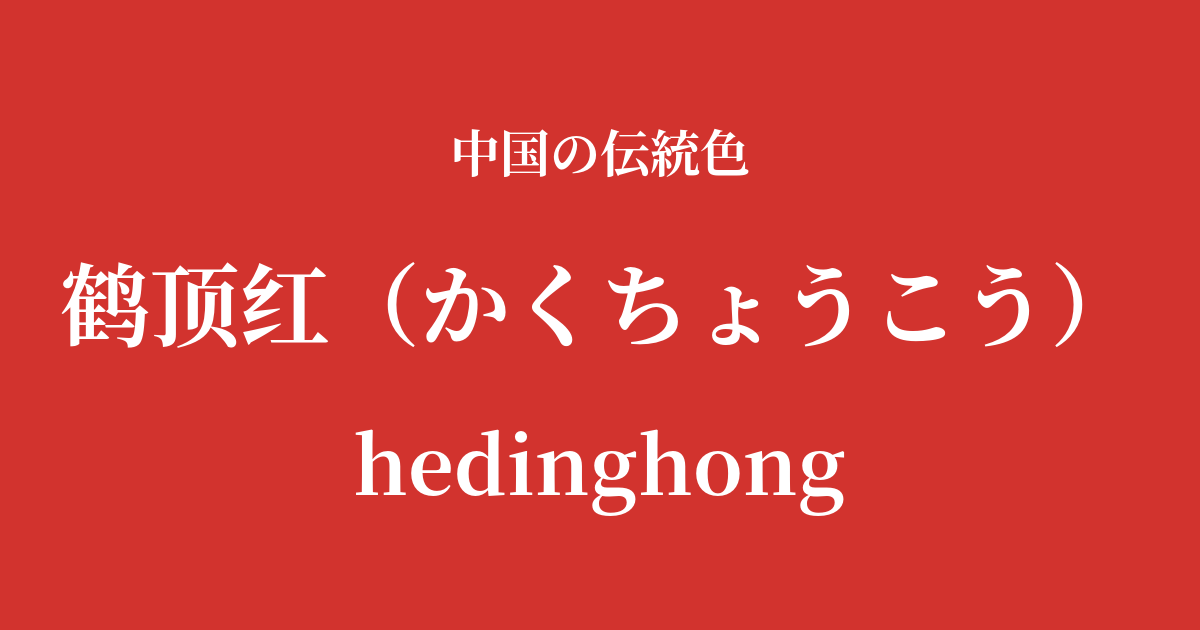
| Color name | red barrel |
|---|---|
| reading | Kakuchōkō |
| pinyin | hedinghong |
| HEX | #D2332E |
| RGB | 210, 51, 46 |
What is "鹤顶红"? Origin and etymology
Kakuchōkō literally means "the red on the top of a crane's head," and is a vibrant and powerful red color. This name originates from the red part on the top of the head of the red-crowned crane, which is known as a symbol of longevity and good fortune.
Interestingly, however, the red color on the head of the red-crowned crane is not due to feathers, but rather to exposed skin covered with fine fleshy growths. It is believed that this striking red color left a strong impression on people and became established as a color name.
On the other hand, this color name has another side to it. In ancient China, "鱤顶红" (heding red) was also a common name for arsenic trioxide (arsenous acid), a highly poisonous substance. It is said that because naturally occurring, impure arsenic trioxide often had a reddish tint, it came to be called this because its appearance was likened to the head of a red-crowned crane.
Thus, "Crane Red," possessing both the beauty of an auspicious bird and the terrifying poisonous nature of its name, exudes a unique presence in Chinese color culture due to the narrative hidden within its name.
Historical background of 鹤顶红
"Heding Red," as a poison, frequently appears in Chinese historical novels, plays, and modern films and dramas. In particular, it is often depicted as a tool of assassination in court intrigues vying for the favor of emperors and powerful figures, and its name has instilled in people images of fear and mystery.
The name can be found in many literary works, such as the Ming Dynasty novel "Jin Ping Mei" and the Qing Dynasty play "Chang Sheng Dian." However, there are limited clear records indicating that these were frequently used in the imperial court as historical fact, and it is said that they have a strong aspect of literary embellishment and legend.
As a color name, "Crane Red" attracted attention due to its vividness. However, perhaps because of its strong association with poison, there are not many records of it being actively used in public like other auspicious colors. Rather, its dangerous allure has been effectively used in the world of stories and on the stage as a color symbolizing the passion, power, or hidden poison of the characters.
Furthermore, the red-crowned crane, from which this color is derived, has been treated as a sacred bird, considered in Taoist thought to be the mount of immortals. It was also a symbol of nobility, as the official robes of first-rank officials (the highest-ranking civil officials) were embroidered with red-crowned cranes. The coexistence of these two extreme images—an auspicious bird and deadly poison—shapes the historical depth of the color Crane Red.
Crane-headed red in Chinese art and crafts
In Chinese art, the color of the crane's crown is most symbolically represented in paintings depicting the red-crowned crane. As an auspicious motif symbolizing longevity, the red on the crane's head, often depicted alongside pine, bamboo, and turtles, is an important accent that tightens the overall composition and gives it a sense of vitality.
In the world of ceramics, the deep and lustrous red color seen in "Xuande Red Ware," perfected during the reign of Emperor Xuande of the Ming Dynasty, is reminiscent of the vividness of Heding Red. Furthermore, the deep red of the multiple layers of vermilion lacquer used in "Tekko," a technique of carving patterns onto the surface of lacquerware, also shares a similar powerful quality with this color.
In fashion culture, due to its strong individuality, red is most effective when used as an accent color rather than for the entire outfit. In particular, in Peking Opera makeup, red is used as a color that symbolizes loyalty and courage, and the powerful image of crane-head red is associated with it.
Furthermore, incorporating this color into women's clothing and accessories can express striking beauty and hidden passion. When paired with achromatic colors such as black and white, its vibrancy will stand out even more, creating an outfit that will remain in the viewer's memory.
The drink is crane top red, the drink is gold sake.
Color scheme preview
This is to check the readability of the text when this color is used as the background.
Suggestion of red color scheme
Moon white (#D9D6C3)
The vibrant red of Tsurutoko is beautifully complemented by the gentle and elegant white of Tsukishiro. The contrast between stillness and movement is stunning, creating a dignified impression that conveys both sophistication and strong will.
Gen (#191614)
When combined with the deep black of Gen, the crane-pink red stands out even more, creating a powerful and dramatic impression. This color scheme evokes a sense of authority, mystery, and a slightly dangerous allure.
Matsuka Green (#B0CB7A)
This color scheme evokes a natural and vibrant image of a pine forest where red-crowned cranes dance. The vividness of crane red and the youthfulness of pine blossom green complement each other, creating a gorgeous and auspicious impression.
Practical Scenes
In the world of fashion, crane red is a very striking accent color. Just incorporating it as the color of a dress, scarf, or lipstick can tighten up the overall outfit and create a glamorous and passionate atmosphere. Its vibrancy is especially striking when paired with monochrome outfits such as black, white, and gray.
In interior design, it's recommended to incorporate these elements through smaller items like cushions, vases, and art panels, rather than using them over large areas like wallpaper or curtains. They bring energy and a sense of luxury to a space, functioning as dramatic accents. They pair particularly well with dark wood-grain furniture and gold metal materials.
In the world of web and graphic design, crane red is a powerful tool for attracting user attention. Using it on important call-to-action buttons, headings, and logos can create visual impact and emphasize a message. The strength and vibrancy of this color are maximized when used against a dark background.