
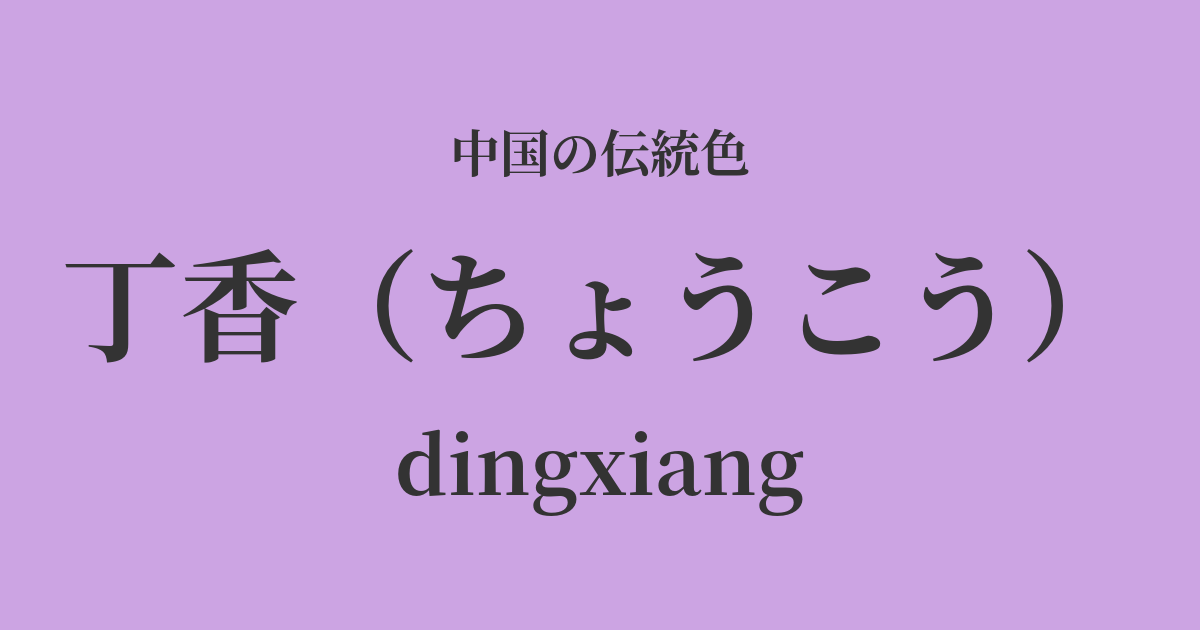
| Color name | Clove incense |
|---|---|
| reading | Choko |
| pinyin | dingxiang |
| HEX | #CCA4E3 |
| RGB | 204, 164, 227 |
What is clove? Origin and etymology
Chokou is a traditional Chinese color referring to a pale, elegant light purple, like that of a lilac flower. Its name originates from the plant called "Dingxiang."
The term "clove" in the context of plants refers to both the deciduous tree of the Oleaceae family, known as lilac in Japan, and the clove plant of the Myrtaceae family, famous as a spice. However, the color name "clove" is generally believed to originate from the purple flowers of the lilac.
The sweet, gentle fragrance and ephemeral appearance of lilacs, which bloom in full glory at the end of spring, have long captivated people's hearts. The color clove yellow reflects the delicate beauty, elegance, and somewhat melancholic atmosphere of the flower.
Historical background of cloves
The color of cloves appears as an important motif, particularly in literary works from the Tang to the Song dynasties. Many poets used the flower and its color as themes to express the subtleties of the human heart.
Among them, the line from a poem by Li Jing, the emperor of the Southern Tang dynasty, "The cloves, in vain, tie up sorrow in the rain," is particularly famous. This poem has had a great influence on later literature, as the clove flower, blooming drenched in rain, has become a symbol of a woman burdened with unresolved worries and sorrows. The phrase "cloves tie up" has become established as a metaphor for a state in which sorrow is bound to the heart and cannot be undone.
In court culture, purple was considered a noble color, but because the dye was precious, it wasn't a color that everyone could wear. Pale purple, like that of cloves, is said to have been favored by high-ranking nobles and women for its understated beauty.
Cloves in Chinese Art and Crafts
The elegant hue of clove is beautifully expressed in Chinese clothing culture, particularly in Hanfu. When this color is used in women's shan (shirts) and jukun (skirts) made of light silk fabrics, it enhances the wearer's grace and refinement. The shadows created by the light reflecting off the pale hues are extremely lyrical.
Furthermore, in paintings such as Gongbi painting, cloves and their color are effectively used when depicting spring gardens or elegant women. The clove color depicted in paintings is not merely a color representation, but plays a role in imbuing the work with poetic emotion and narrative.
The pale purple glaze found in Qing Dynasty ceramics, especially fencai and enamelware, is reminiscent of clove color. Combined with the delicate paintings on the white porcelain, it conveys the refined aesthetic of the imperial court to this day.
Chouka sky and rainy season
Color scheme preview
This is to check the readability of the text when this color is used as the background.
Color scheme proposal for clove
Tsukihaku (#EAEBE6)
When combined with the pure, moon-white color reminiscent of moonlight, the elegance and grace of cloves are further enhanced. It gives a quiet, calm, and refined impression.
Willow green (#B0C98B)
By combining it with the willow green of newly sprouted willows, it creates a vibrant color scheme reminiscent of a spring garden. The lyricism of cloves is infused with the breath of life, giving a bright and hopeful impression.
Mayuzumi (#49494B)
By combining it with the color of 'daizu' (a type of ink used by women to draw their eyebrows), the purple of the clove stands out, creating a noble and mysterious atmosphere. It gives a chic, mature, and dignified impression.
Practical Scenes
In the world of fashion, clove yellow can be incorporated into dresses and blouses to create an elegant and feminine impression. It can also be expected to brighten the area around the face, and it pairs particularly well with soft materials such as silk and chiffon.
In interior design, it's recommended to use it as an accent color in bedrooms and living rooms. Using it in cushion covers, curtains, or art panels will bring a calm and relaxing atmosphere to the space. Adding it to a room with a white or gray color scheme creates a sophisticated accent.
In web and graphic design, it is suitable for websites related to products and services for women, as well as wellness and beauty-related sites. When used as the main color, it creates an elegant atmosphere, and when used as an accent color, it adds sophistication and delicacy to the design.