
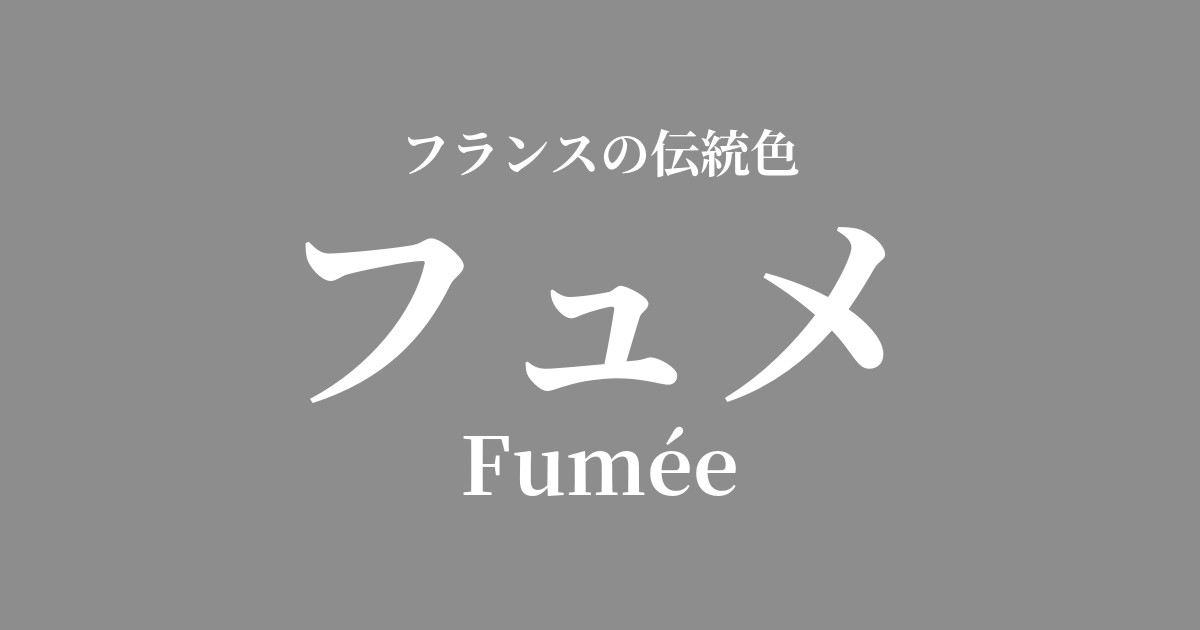
| French | Fumée |
|---|---|
| Katakana | Fumé |
| HEX | #8D8D8D |
| RGB | 141, 141, 141 |
What is Fumet? Origin and Etymology
Fumée is a French word meaning "smoke." As the name suggests, it refers to a nuanced shade of gray that evokes the elusive, fleeting, and ever-changing scenery of smoke rising from a fireplace or morning mist.
Rather than being simply achromatic, it possesses a subtle warmth and depth, and its appearance changes depending on the lighting at the time of viewing—a very delicate hue. This ambiguity, conversely, gives it a profound and refined impression, and it has been cherished as a color that resonates with the French aesthetic.
Historical background of Fumé
While there is no clear record of the origin of the color fumé in a specific era, it is said that its aesthetic became widely shared in Paris during the late 19th and early 20th centuries.
In Paris, which underwent rapid urbanization following the Industrial Revolution, factory chimneys and steam locomotive smoke became an integral part of the everyday landscape. While these scenes were symbols of modernization, they also exuded a somewhat melancholic and poetic atmosphere. Artists captured this urban zeitgeist in their works, which led to the rise of neutral colors like fumé.
Especially during the glamorous era known as the "Belle Époque" (the beautiful era), fumé was favored among cultured people as a "chic" color that, while not flashy, conveyed a sense of inner intelligence and refinement.
Fumé in the world of art and fashion
In the art world, Impressionist painters skillfully employed colors like fumé. In Claude Monet's series of paintings of the Saint-Lazare train, the way smoke and light blend together from a steam locomotive is depicted fantastically using a variety of grays. They employed these nuanced colors to capture the effects of shifting light and atmosphere on canvas.
In the world of fashion, fumé gray played a crucial role in the style established by Coco Chanel in the early 20th century. She rejected the extravagant ornamentation of the past and proposed functional and modern women's clothing based on basic colors such as black, white, beige, and gray. Fumé gray became a color that symbolized the understated yet unwavering elegance of an independent, mature woman.
Color scheme preview
This is to check the readability of the text when this color is used as the background.
Fume's color scheme proposal
Rose Pompadour (#EDADC7)
The sophisticated and cool impression of Fumé is complemented by the gentle and sweet pink of Rose Pompadour, creating a refined yet feminine softness. It is recommended for creating a modern and feminine space or fashion.
Blue Nuit (#0F2540)
When paired with a deep night sky-like blue nuit, the nuances of the fumé are highlighted, creating a very intellectual and calm atmosphere. It is ideal for study decor or for business attire where trustworthiness is required.
Champagne (#F7E7CE)
The cool tones of the fumet, combined with the bright, warm beige of the champagne, create a comfortable and relaxing atmosphere. It's perfect for natural modern interiors or elegant yet approachable casual styles.
Practical Scenes
Fumé is a versatile color that can be used in a variety of situations.
In interior design, using it on large areas such as walls, curtains, and sofas brings a calm and sophisticated atmosphere to the entire space. It serves as an excellent background color that enhances other colors and harmonizes beautifully with different materials such as wood, metal, and glass. It is especially recommended for modern, minimalist, and industrial styles.
In fashion, fumé gives an intelligent and sophisticated impression, making it ideal for suits, coats, and jackets. Furthermore, incorporating it in high-quality materials such as cashmere knits or silk blouses further enhances its delicate beauty. Because it pairs well with any color, it's a valuable color to use as the foundation of your outfits.