
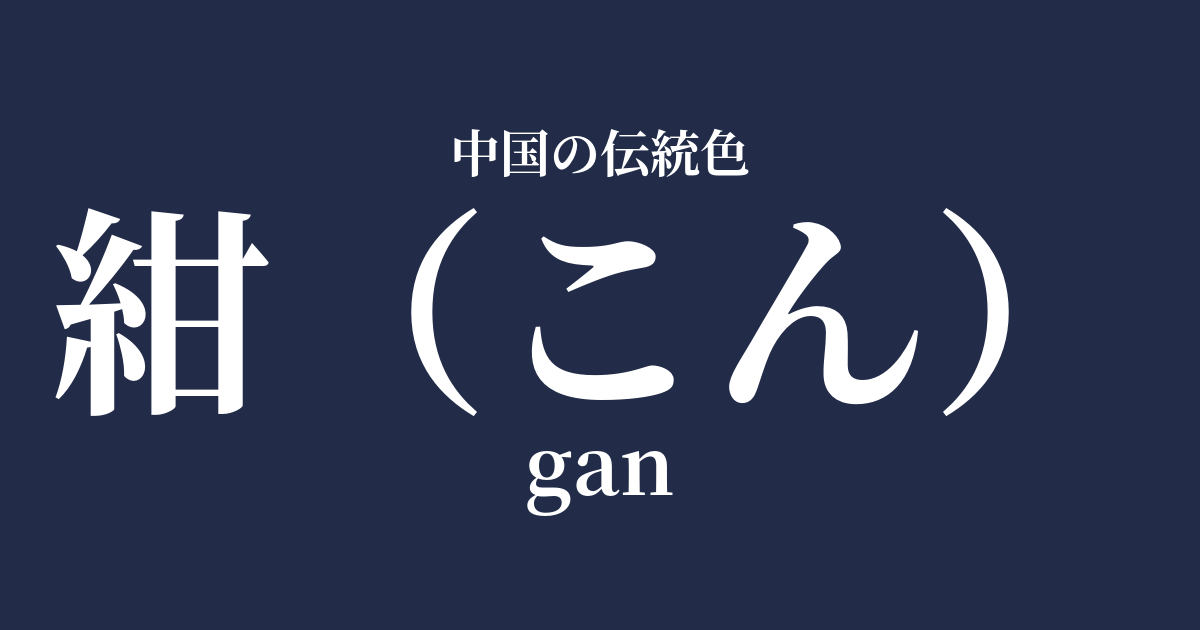
| Color name | 紺 |
|---|---|
| reading | dark blue |
| pinyin | gan |
| HEX | #222C48 |
| RGB | 34, 44, 72 |
What does "绀" mean? Origin and etymology
"Kon" refers to a deep, dark indigo color with a subtle hint of red. Its name originates from the ancient Chinese dictionary "Shuowen Jiezi," which describes it as "a deep blue color of silk with a hint of red."
This indicates that the silk fabric was dyed a deep blue, with added red tones, resulting in a complex and deep hue that is not simply a dark blue.
It is said to be the color of the eastern sky just before dawn, as it begins to lighten, evoking a sense of tranquility and solemnity. It is also likened to the color of the vast and calm deep sea, and has long instilled a sense of peace and awe in people's hearts.
In the Five Elements philosophy, blue symbolizes the east and spring, but navy blue, being an even deeper shade of blue, was thought to embody greater power and fundamental energy.
Historical background of the
Navy blue has long been treated as a color symbolizing nobility and dignity throughout China's long history. During the Zhou Dynasty, there were strict regulations regarding the colors of formal attire, and shades of blue were highly valued. Navy blue, in particular, is thought to have been used in important ceremonies due to its deep hue.
From the Han dynasty onward, as Confucian thought spread, the meanings associated with colors became even more important. Dark blue, with its calm and dignified appearance, was favored as a color that represented scholarship, thoughtfulness, and the dignity of officials.
During the Tang Dynasty, a system of "ranking by color" was established, indicating the rank of government officials through the color of their clothing. Purple and crimson (red) were considered the highest-ranking colors, but shades of blue also held an important position, and navy blue, due to its depth, was associated with the image of an honest and capable official.
Furthermore, indigo blue holds special significance in Buddhist art. The Buddha's hair is described as "konjō-iro" (deep blue), which refers to the deep blue of lapis lazuli. The "konshi kinji-kyō," in which sutras are written on dark blue paper in gold ink, is considered to have great merit, demonstrating that dark blue was a sacred color.
In Chinese art and crafts
Navy blue has long been a symbol of refined beauty in Chinese art, crafts, and clothing culture. It pairs particularly well with silk fabrics; navy blue-dyed silk Hanfu and robes subtly change their appearance depending on the light, emitting a deep luster. This quietly speaks to the wearer's dignity and authority.
In the world of ceramics, the deep cobalt blue hue of blue-and-white porcelain (blue and white porcelain) produced from the Yuan to the Ming dynasties shows traces of dark blue. The deep blue patterns painted on white porcelain created a vivid contrast that captivated many people.
In painting, when depicting distant mountains and deep waters in landscape paintings, dark blue pigments were sometimes used in addition to shades of ink. In particular, in a style called "blue-green landscape," dark blue (sekisei) was used along with verdigris (sekiryoku) to depict the shadows of rocks and mountains, creating a fantastical and majestic landscape.
Dark blue sky
Color scheme preview
This is to check the readability of the text when this color is used as the background.
Color scheme proposal
Moon White (#EAEFEF)
This pure and dignified color scheme evokes the moonlight floating in a quiet night sky. The brightness of the moonlight enhances the depth of the navy blue, creating a refined and calm impression.
Red gold (#D9A44E)
This combination, reminiscent of gold embroidery on a navy blue fabric, is traditional and opulent. The colors complement each other, creating a festive and noble atmosphere.
Matsuka (#BCEE68)
This color scheme evokes the tranquility of a deep forest and the vitality of young leaves sprouting within it. The calm impression of navy blue is complemented by the brightness of pine blossoms, creating an impression that is both fresh and profound.
Practical Scenes
In interior design, navy blue brings a sense of calm and depth to a space. Using navy blue as an accent wall in a study or bedroom can enhance concentration and create a calming effect. Furthermore, incorporating it into fabrics such as sofas, cushions, and curtains easily creates a sophisticated and refined atmosphere.
In the world of fashion, navy blue is a color that symbolizes intelligence and trustworthiness, and is especially popular in formal settings. Incorporating it into suits, jackets, and coats creates a dignified look. Using it as an accent color in accessories such as ties, scarves, and bags tightens the overall outfit and gives it a refined impression.
In web and graphic design, navy blue is a very effective background color. It enhances content readability while simultaneously conveying a sense of sophistication and reliability. It is particularly used on websites of financial institutions, law firms, technology companies, and luxury brands to express a sense of security and expertise.