
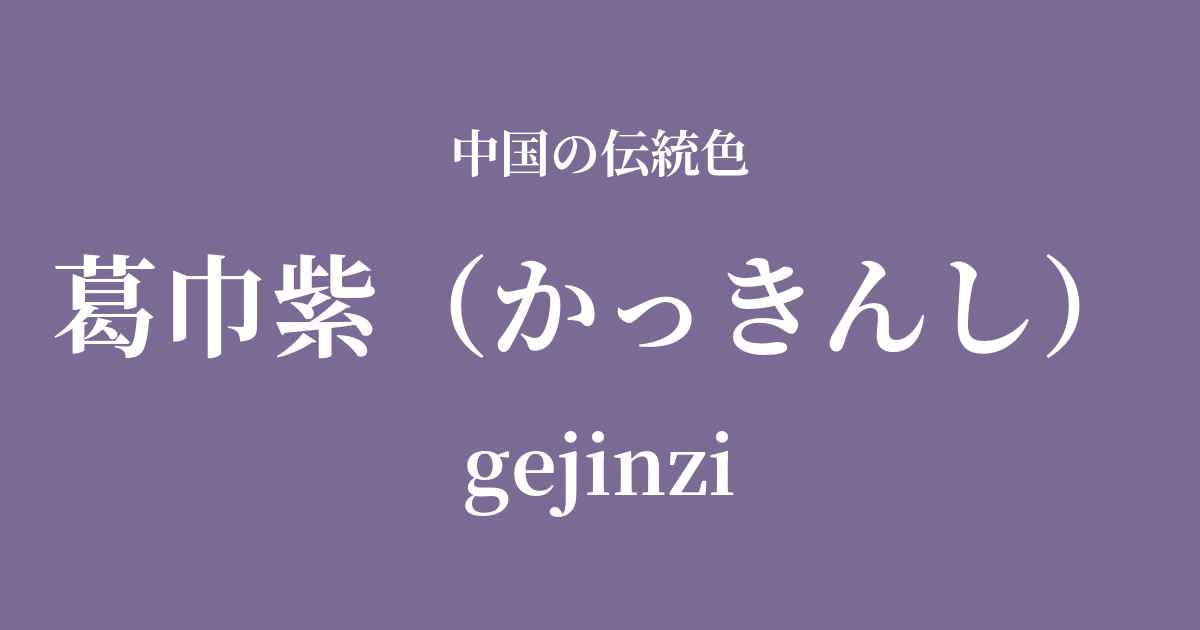
| Color name | Kudzu Purple |
|---|---|
| reading | Kakkinshi |
| pinyin | gejinzi |
| HEX | #7B6A94 |
| RGB | 123, 106, 148 |
What is Kuzuhachi Murasaki? Origin and etymology
Kakkinshi, as the name suggests, is a subdued, slightly grayish purple color derived from "kudzu cloth." "Kudzu" refers to the kudzu plant, and "cloth" refers to a headscarf or cloth.
Originally, cloth woven from kudzu fibers was off-white, but this color name is said to originate from the beautiful purple color of the kudzu flower. There is also a theory that the kudzu cloth was dyed using gromwell root or similar dyes.
In any case, this color stood apart from the opulent colors of the royal court and was seen as a symbol of the simplicity and spiritual richness of people who lived in harmony with nature.
Historical background of Kuzukin Purple
The ge jin (a type of headscarf) was particularly popular among scholars and hermits who valued a free spirit and distanced themselves from worldly affairs, from the late Eastern Han dynasty to the Wei-Jin-Southern and Northern Dynasties period. They distanced themselves from Confucian formalism and idealized a natural and simple way of life based on Taoist philosophy. The ge jin was a fashion item that symbolized their way of thinking.
A famous anecdote tells of Guo Tai, a scholar of the Later Han dynasty, who, on a rainy day, wore a kudzu headscarf. His unpretentious appearance became so popular that many people in the capital began to imitate him. Similarly, Zhuge Liang (Kongming), the renowned military strategist of the Three Kingdoms period, is often depicted wearing a kudzu headscarf in stories, highlighting his intelligence and reclusive demeanor.
Even during the Tang Dynasty, many poets, including Du Fu, mentioned Ge Jin in their poems, and it continued to be used as a symbol to express a longing for a secluded life. Thus, Ge Jin purple can be said to be a color that developed in a culture that valued inner spirituality rather than power or wealth.
Ge Jin Zi in Chinese Art and Crafts
In Chinese art, the color gejin purple was used to depict specific figures such as hermits and scholars. In landscape paintings and portraits, when a character wears clothing or a gejin of this color, it suggests that they are a highly spiritual person who has detached themselves from worldly honors and lives in harmony with nature.
Furthermore, although not directly related, the purple speckles floating on a blue background in the "kiln transformation" seen in Jun ware from the Song dynasty share a similar quiet and mysterious hue with the kudzu purple. The complex colors created by chance also resonate with Taoist thought in terms of reverence for nature.
In the realm of clothing culture, this subdued purple was sometimes used for the "Dao robe" worn by Taoist priests. In contrast to the opulent court attire, it was believed that a profound spirituality resided in the simple, dyed fabric.
The Wildlings sent Shu Sakura, what is the name?
Color scheme preview
This is to check the readability of the text when this color is used as the background.
A proposed color scheme for Kuzuhachi purple.
Moon white (#D6D6D6)
The combination of the quiet and intellectual Kudzu purple with the clear, moon-like moon white creates a refined and elegant impression. It's a serene and calming color scheme reminiscent of the world of ink painting.
Matsuka (#B0CE98)
The combination of a calming purple and the vibrant color of pine blossoms creates a color scheme that evokes the tranquility of nature. It gives a gentle and comforting impression, like the scenery of a mountain forest where a hermit lives.
Pilestone (#9C3828)
By combining the reddish earthy color with ochre, the tranquility of Kuzuhachi purple gains warmth and depth. It is a dignified color scheme that is intellectual yet somehow conveys a human warmth.
Practical Scenes
In interior design, it's ideal for creating quiet and peaceful spaces such as studies, bedrooms, and meditation areas. Incorporating it into a wall, curtains, cushions, or other fabrics adds elegance and depth to the space. Pairing it with moon white, off-white, or wood brown creates a modern and relaxing atmosphere.
In fashion, this color is used to create an elegant and intellectual impression. Incorporating it into dresses, skirts, or accessories such as scarves and bags will create a sophisticated adult style without being too flashy. It will especially add depth and composure to autumn and winter outfits.
In web and graphic design, it is suitable for websites and brands that want to convey trustworthiness and expertise. Using it as an accent color can give users a sense of security and convey a thoughtful impression.