
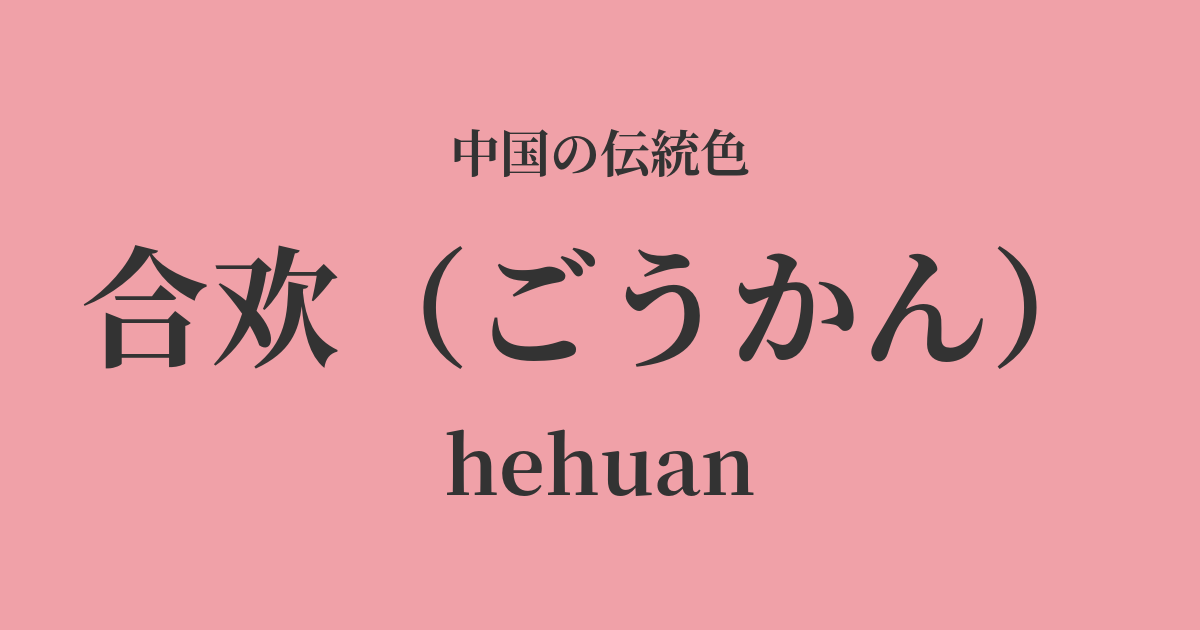
| Color name | union |
|---|---|
| reading | Rape |
| pinyin | hehuan |
| HEX | #F0A1A8 |
| RGB | 240, 161, 168 |
What is He Huan? Origin and Etymology
"Gōkan" refers to the mimosa tree, which blooms with delicate, feather-like flowers in early summer. This gentle, slightly yellowish, soft pink color is named after the color of the mimosa tree's flowers.
It is said that the name "Nemunoki" (Albizia julibrissin) was given because at night, the leaves on either side of the tree close together, making it look as if they are sleeping. Because this appearance evokes images of a man and woman snuggling together or a loving couple, it has long been cherished as an auspicious tree symbolizing marital harmony and family unity. The color "Gokan" (合欢色) is a heartwarming color imbued with such happy wishes.
Historical background of He Huan
The Hehuan tree has been cherished in China since ancient times, and its history is said to date back to the Zhou Dynasty poetry collection, the "Book of Songs." In particular, during the Tang Dynasty, its elegant appearance led to its planting in imperial gardens and it became a subject of poetry and song for many literati and artists.
The auspicious meanings associated with this color, such as "marital harmony" and "joy," have become deeply ingrained in people's lives across generations. It is said that this hōkan color was sometimes incorporated into decorations and clothing used in wedding ceremonies and celebrations. This was an expression of the wish for lasting happiness for the couple embarking on a new chapter in their lives.
He Huan in Chinese Art and Crafts
The elegant hues of the Hehuan tree have inspired the world of Chinese art and crafts. In particular, in paintings such as flower and bird paintings, the flowers of the Hehuan tree are sometimes depicted with delicate brushstrokes as a motif that alludes to scenes of early summer or the love between men and women.
Furthermore, in the field of clothing culture, this Hehuan color can be found in Hanfu (traditional Chinese clothing) and traditional silk fabrics. It is especially often used in women's clothing, and its soft hues enhance the wearer's elegance, grace, and inner affection. In the field of ceramics, this color scheme is also used in overglaze decoration such as fencai (poem enamel), adding vibrancy and warmth to the vessels.
Mutually loving, the harmonious trees intertwine their leaves, becoming one.
Color scheme preview
This is to check the readability of the text when this color is used as the background.
Color scheme proposal for He Huan
Moon White (#D9E4E8)
By combining it with Gekko, a pale bluish-white reminiscent of moonlight, the gentleness of Hehuan is further enhanced. The result is an elegant, sophisticated, and dreamy color scheme.
Yanagi Huang (#C9DD22)
By combining it with a vibrant willow yellow, reminiscent of newly sprouted willows, it creates a lively and energetic impression of early summer. It's a bright and hopeful color scheme.
Silver mouse (#A2A6A5)
The subdued silver-gray tones down the sweetness of the reddish-brown color, creating a chic and mature atmosphere. It's a recommended combination for a refined and elegant look that isn't overly sweet.
Practical Scenes
In interior design, reddish-brown is ideal as an accent color for bedrooms and living rooms. Incorporating it into cushions, curtains, rugs, and other items brings warmth and tranquility to the space, creating a relaxing atmosphere.
In the world of fashion, this color gives a particularly feminine and soft impression. It can be incorporated into dresses and blouses, or even just into accessories like scarves and obi sashes, instantly creating a more elegant and gentle look. It also makes a lovely accent color for wedding dresses.
In web and graphic design, it pairs well with themes related to beauty, weddings, and lifestyle. If using it as the main color gives a slightly too sweet impression, using it as an accent color or in a background gradient can effectively express feelings of happiness and elegance.