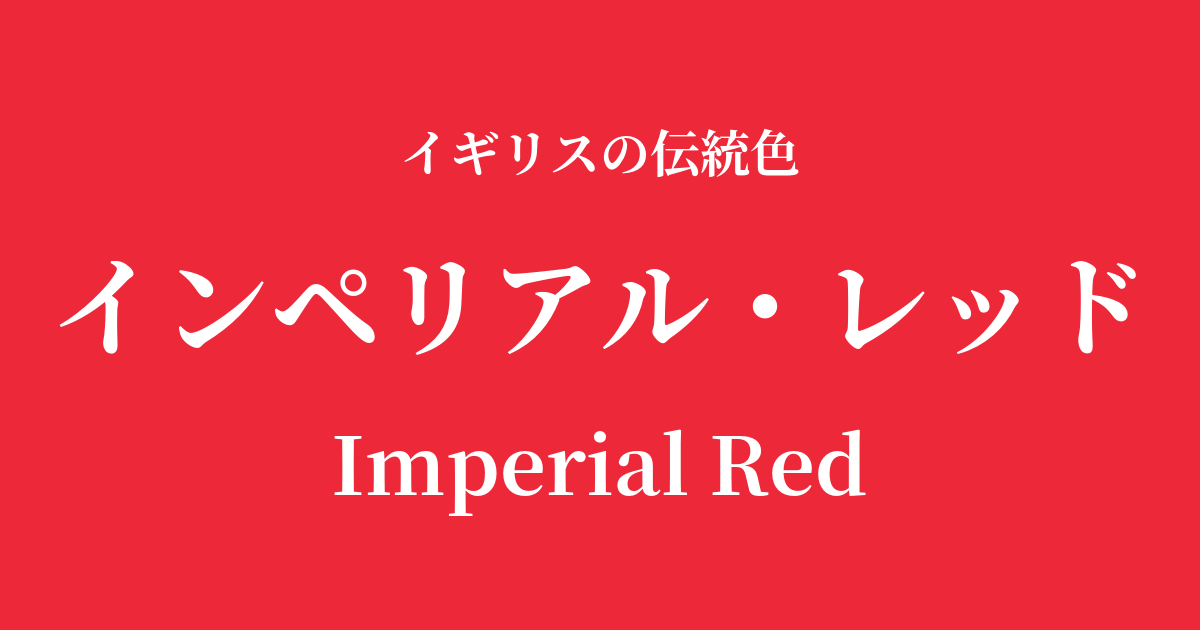
| Original English name | Center Red |
|---|---|
| Japanese notation | Imperial Red |
| HEX | #ED2939 |
| RGB | 237, 41, 57 |
What is Imperial Red? Origin and Etymology
Imperial Red, as its name suggests, is a color that symbolizes "empire." This name originated from the immense power and prestige of the British Empire, which was known as "the empire on which the sun never sets" from the 19th to the early 20th century.
It is said that Imperial Red was named not directly after the name of a specific plant or mineral used as a dye, but rather as a symbolic color to express the dignity and nobility of the empire. Vibrant and powerful red has long symbolized power, wealth, and passion in both the East and the West, and fabrics dyed with dyes extracted from expensive materials like cochineal were status symbols of the ruling class. Imperial Red embodies all of these historical meanings of red; it is truly a color for the empire.
The historical background of Imperial Red
The history symbolized by Imperial Red is inextricably linked to the splendor of the Victorian era. This vivid red visually represented the power of the British Empire, which, after the Industrial Revolution, became the world's factory and acquired vast colonies.
The most symbolic use of this color was in the red uniforms worn by soldiers of the British Army, commonly known as the "Redcoats." In the Napoleonic Wars and numerous battles in the colonies, this striking color on the battlefield became known worldwide as a symbol of the military power of the British Empire. While being conspicuous on the battlefield might seem like a disadvantage, it is believed to have made it easier to identify allies and boosted the morale of the troops.
Furthermore, this red has played an important role in royal ceremonies and official events. From the attire worn by kings and queens to the carpets and decorations adorning palaces, Imperial Red remains an indispensable color for conveying the sanctity and authority of royalty.
Imperial Red in British Culture
Imperial Red is deeply ingrained in British culture and industrial design. A prime example is the red of the pillar boxes—a common sight on any street. Since its official adoption in 1874, this color has become a national icon, defining the British streetscape.
The vibrant red of London's iconic double-decker buses also belongs to the lineage of Imperial Red. When people around the world think of London, these red buses are almost always a part of the image that comes to mind.
In the world of fashion, this color has inspired both tradition and innovation. From the effective use of red in Burberry's check patterns to the rebellious spirit embodied in tartan by Vivienne Westwood, who spearheaded the punk movement, it has shown various expressions that reflect the times.
Color scheme preview
This is to check the readability of the text when this color is used as the background.
Imperial Red color scheme proposal
Royal Blue (#002366)
By combining two colors that symbolize the British royal family, the colors complement each other, creating a highly dignified and powerful impression. It is ideal for designs that want to express tradition and authority.
Old Gold (#CFB53B)
The combination of red and gold evokes a sense of luxury and festivity. The vibrancy of Imperial Red, combined with the depth of Old Gold, creates a rich and warm impression.
Wedgwood Blue (#A2C6E0)
Combining vibrant red with a calm, pale blue creates a modern and sophisticated contrast. While using traditional colors, it gives a light and stylish impression.
Practical Scenes
In interior design, Imperial Red is an ideal accent color that brings vibrancy and energy to a space. By using this color on just one wall, or incorporating it into small items like cushions, artwork, or rugs, you can create a dramatic atmosphere. In particular, combining it with heavy materials such as dark brown wooden furniture or brass hardware creates a classic and dignified ambiance.
In fashion, Imperial Red dresses and coats are statement pieces perfect for special occasions. For everyday wear, simply adding a pop of color with a scarf, bag, or shoes instantly elevates the look and creates a sophisticated style. It also pairs exceptionally well with basic colors like navy, gray, and beige.
In website and graphic design, it's highly effective when used for call-to-action buttons or important headings that you want to grab the user's attention. Using it extensively as a background color can create a sense of oppression, so using it as an accent while considering the overall balance can result in a powerful and impressive design.