
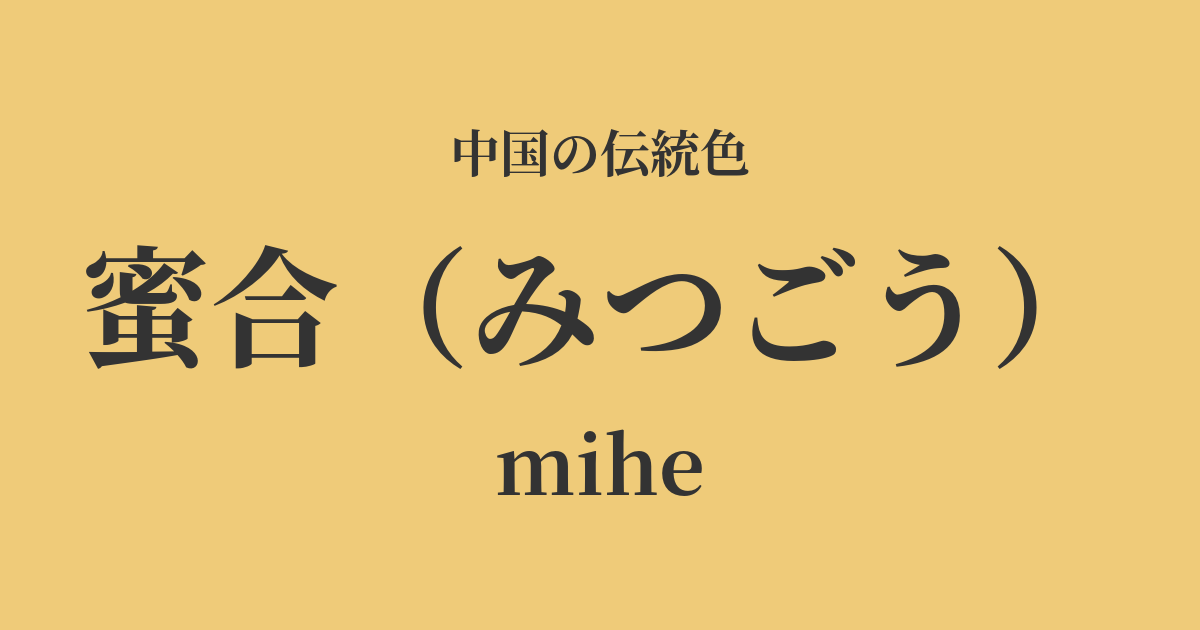
| Color name | Mitsuai |
|---|---|
| reading | Mitsugo |
| pinyin | mihe |
| HEX | #EFCB79 |
| RGB | 239, 203, 121 |
What is "Mitsuai"? Origin and etymology
"Mitsugou" is a color name that, as the name suggests, represents a deep, sweet yellow like ripe honey. "Mitsu" means honey, and "gou" means to combine or blend, evoking a smooth, glossy finish and rich color, as if honey had been boiled down and kneaded.
In ancient China, honey was not merely a sweetener, but a valuable nutritious food also used as medicine. Therefore, the color of honey evokes positive images such as sweetness, abundance, vitality, and health. It can be said to be a very poetic color name that captures the beauty of nature's bounty itself.
Historical background of the close relationship
Yellow has long held special significance in Chinese philosophy, symbolizing the center and considered the color of the emperor. During the Tang Dynasty in particular, while the emperor's exclusive color (ochre) was strictly defined, various shades of yellow became fashionable among the nobility and the wealthy.
The warm and deep yellow of honey is thought to have been cherished by people as a symbol of wealth and happiness, and was favored for use in clothing and furnishings. During the Ming Dynasty, when dyeing techniques advanced, such delicate shades were created by complex combinations of plant dyes such as gardenia and phellodendron. As court culture matured, honey established its position as a color that reflected a refined aesthetic sense.
Closeness in Chinese Art and Crafts
The warm and rich hues of honey dye can be seen in various fields of Chinese art. In particular, in clothing culture, it pairs exceptionally well with silk fabrics. When honey dye is applied to lustrous silk, it creates a smooth, honey-like sheen, giving clothing an elegant and splendid look. It was used in the Hanfu worn by aristocratic women and in special costumes for festivals, brightening the atmosphere of the occasion.
Furthermore, a yellow glaze similar to that of honeycomb porcelain can also be found in the world of ceramics. In particular, the yellow glaze added to Tang sancai porcelain and the yellow-glazed porcelain produced from the Song dynasty onward brought warmth and a sense of luxury to the vessels. In Gongbi painting, this color was effectively used to depict the clothing and decorations of figures and the abundant harvest of autumn, giving the works depth and a sense of life.
Color scheme preview
This is to check the readability of the text when this color is used as the background.
Mitsugo's color scheme proposal
Moon White (#D9E4E8)
The warmth of the honeycomb color is enhanced by the combination with a pale blue reminiscent of quiet moonlight. The gentle contrast between warm and cool colors creates an intelligent, sophisticated, and elegant impression.
Beni Kaido (#E43A4B)
Combining it with the vibrant red of the crabapple blossom creates a very festive and celebratory atmosphere. It's a traditional and beautiful color scheme that conveys both abundance and passion.
Matsuka Midori (#B3D493)
The combination with a bright green reminiscent of pine pollen evokes images of spring fields and mountains, flowers, and nectar. It's a color scheme that gives a vibrant, natural, and approachable impression.
Practical Scenes
In interior design, honeycomb is an ideal accent color that brings warmth and brightness to a space. Incorporating it into fabrics such as cushions, curtains, and rugs creates a cozy and inviting atmosphere throughout the room. It pairs particularly well with wooden furniture and houseplants, creating a natural and modern space.
In fashion, this color looks especially stunning in autumn outfits. When incorporated into high-quality materials such as silk blouses or cashmere sweaters, the rich texture of the honeycomb blend stands out. It also blends well with the skin and has the effect of brightening the complexion, so it's lovely to incorporate it into accessories such as scarves and jewelry.