
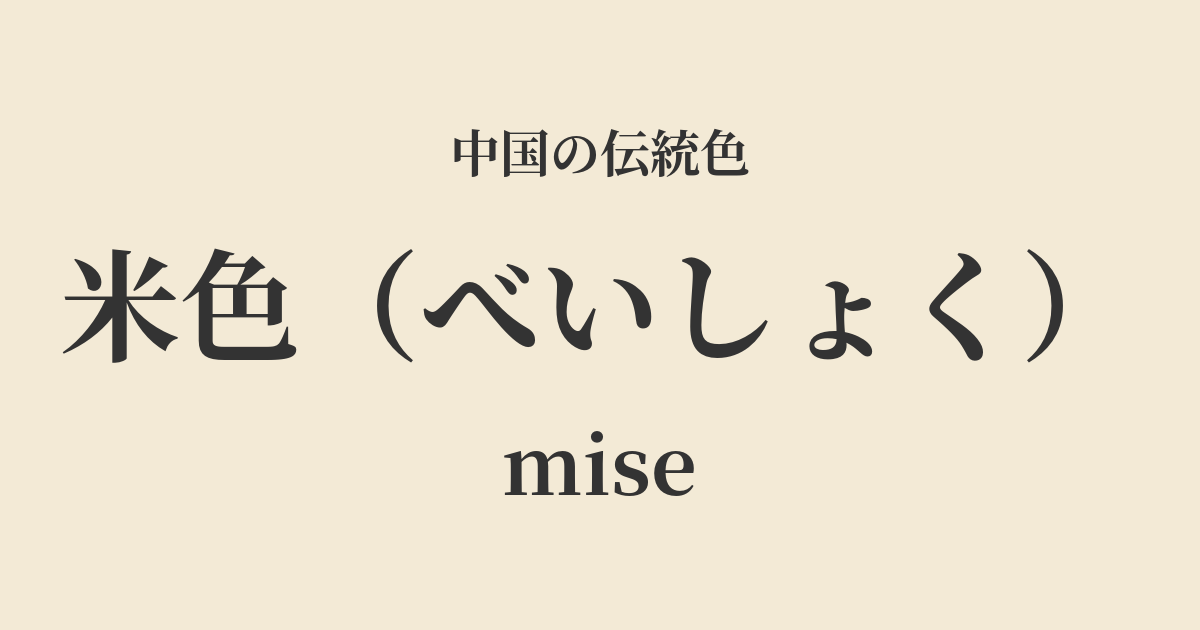
| Color name | rice color |
|---|---|
| reading | Beishoku |
| pinyin | mise |
| HEX | #F3EAD6 |
| RGB | 243, 234, 214 |
What is "rice color"? Origin and etymology
"Beishoku" (米色), as the name suggests, refers to a warm, slightly yellowish white color, like polished rice. It's not pure white, but rather contains the hue of grain, the source of life, and gives the viewer a sense of peace and tranquility.
This color is deeply connected to China's long-standing agricultural culture. Rice, the daily sustenance, was the most familiar and sacred thing to the people. Therefore, the color of rice became more than just a color name; it became deeply ingrained in people's hearts as a symbol of fertility, wealth, and a simple and healthy way of life.
Historical background of the color rice
Unlike the vibrant colors used in the royal court, rice brown is a color that has primarily been a part of the daily lives of ordinary people. In an era when dyeing techniques were still underdeveloped, the natural colors of natural fibers such as hemp and cotton were close to this rice brown. As a result, this natural hue was abundant in the clothing and everyday objects of many people.
On the other hand, rice brown was also favored by literati and intellectuals who avoided ostentation and cherished simplicity. They valued harmony with nature and inner richness, and it is said that they chose this unadorned color as a way to express their spirituality. In particular, during the Song dynasty, when art and culture were at their peak, this simple aesthetic sense was widely shared.
Rice color in Chinese art and crafts
In the world of Chinese art, the beauty of rice color can be found particularly in the field of ceramics. For example, the white porcelain of the Ding ware kilns produced during the Song dynasty is characterized not by its pure white color, but by a warm, ivory-like hue, and was highly prized, known as "Fen Ding" or "Ya Bai." This soft white color has something in common with the gentle and elegant expression of rice color.
In clothing culture, this color, representing the natural, undyed silk and linen, was used for everyday clothing and undergarments of Hanfu (traditional Chinese clothing). Its natural texture gives the wearer a pure and calm impression. The color of the rice paper used in ink painting is also close to rice brown, softly complementing the black of the ink and bringing a profound depth to the entire artwork.
Color scheme preview
This is to check the readability of the text when this color is used as the background.
Rice-color scheme proposal
Indigo (#233B6C)
When combined with a calming indigo color, it creates an intellectual elegance within its simplicity. It gives a pure and refined impression, like the interplay of indigo-dyed fabric and unbleached fabric.
Pilestone (#994A3D)
The warm, reddish-brown color of the ochre stone is an excellent match for rice-colored tones. It evokes images of the earth and pottery, creating a natural, reassuring, and tranquil space.
Bean green (#A4C893)
Adding a vibrant, bean-like green enhances the image of abundance associated with the rice color. It creates a natural and refreshing impression, full of vitality.
Practical Scenes
Incorporating rice-colored tones into your interior design will brighten the entire space and create a warm, inviting atmosphere. Using it on large areas such as wallpaper, curtains, and sofas will create a relaxing and tranquil space. It also pairs well with natural materials like wood and bamboo, harmonizing with various styles including Japanese, Scandinavian, and minimalist.
In fashion, rice brown is ideal for linen and cotton shirts and dresses. It gives a natural and effortless impression, enhancing the wearer's elegance. It's easy to pair with other earth tones and light colors, expanding your styling options.
When used as a background color in web design, it is easy on the eyes and does not interfere with content such as text and photos. It is well suited to themes that promote a mindful lifestyle, such as websites featuring organic products, traditional crafts, and lifestyle-related sites.