
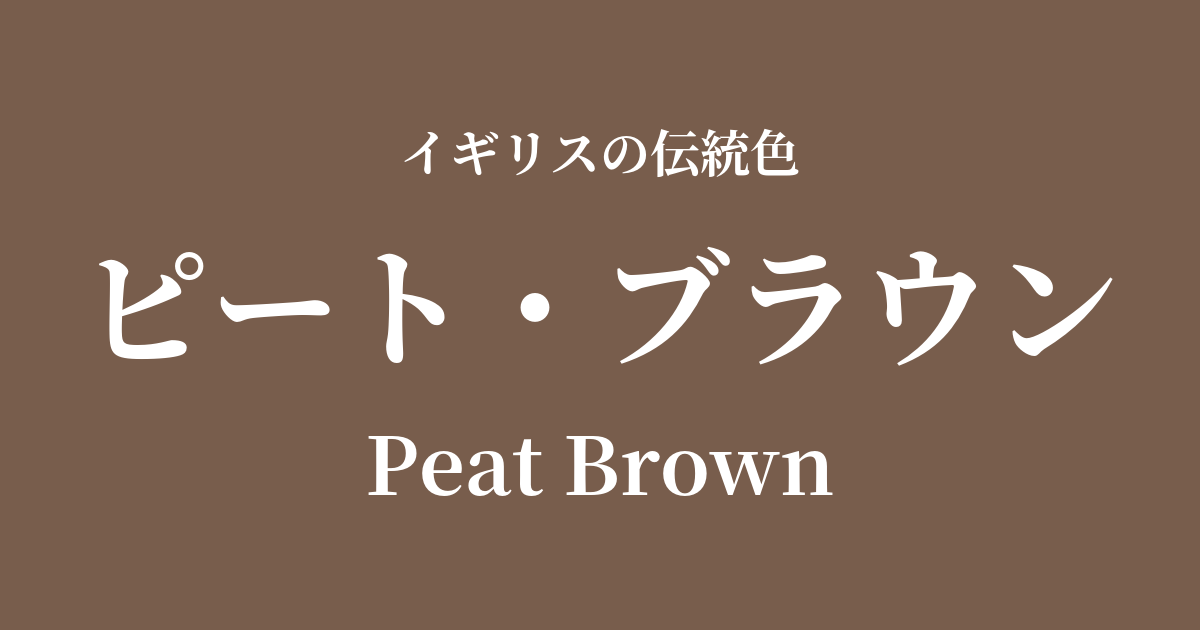
| Original English name | Peat Brown |
|---|---|
| Japanese notation | Pete Brown |
| HEX | #785D4C |
| RGB | 120, 93, 76 |
Who is Pete Brown? Origin and etymology
Peat Brown, as the name suggests, is a deep, warm brown color derived from "peat," or peat. Peat refers to the carbon-rich soil found in the vast moors of Scotland and Ireland, formed over long periods of time from the accumulation and incomplete decomposition of plant matter.
This color captures the raw, unspoiled nature of Britain, especially the landscapes of its wetlands. Peat, which sustains people's lives as fuel and imparts the distinctive aroma to Scotch whisky, is deeply rooted in the landscape and culture of Britain. This earthy color, peat brown, evokes a sense of simplicity, strength, and the warmth of nature.
The historical background of Pete Brown
The history of the color peat brown is inextricably linked to the history of life in Britain, especially Scotland and Ireland. For centuries, peat has been used in rural homes as a valuable fuel source. The peat fire burning in fireplaces to ward off the harsh winter cold was central to life, and its earthy color was an integral part of people's daily lives.
While coal became the primary energy source in urban areas during the Industrial Revolution, peat brown continued to be used in the countryside, solidifying its image as a color symbolizing rural life. During the Victorian era, amidst a trend of returning to nature and rediscovering simple beauty, these earth tones gained attention in the world of design and crafts. Peet brown came to be recognized as a color that represented grounded stability and reliability, the antithesis of extravagant ornamentation.
Pete Brown in British Culture
Peet brown is one of the key colors that make up tweed, a representative British textile, especially Harris Tweed. Tweed fabric is made using traditional methods of dyeing wool with local plants and lichens, and it is said that the presence of peat in the water used in the dyeing process creates a unique depth and complex hue.
Furthermore, it has a deep connection to the culture of Scotch whisky. Peat is burned during the drying process of malted barley, the raw material for whisky, and the resulting smoke imparts a smoky flavor (peaty aroma). The peat brown color is not the color of the whisky itself, but it is the source of its aroma and evokes the Scottish landscape that is the background to the creation of this amber-colored liquid. For this reason, it can be said that it is a very familiar color to whisky lovers.
The cold smell of potato mold, the squelch and slap / Of soggy peat, the curt cuts of an edge / Through living roots awaken in my head.
Color scheme preview
This is to check the readability of the text when this color is used as the background.
Pete Brown's color scheme proposal
Old Gold (#CFB53B)
The combination of earthy peat brown and ripe grain-like old gold creates a color scheme reminiscent of a bountiful autumn landscape. It's a warm, calming combination that also exudes a refined elegance.
Hunter Green (#355E3B)
This color combination is very natural, reminiscent of the soil of a wetland and the leaves of the plants that grow there. It pairs well with outdoor wear and country-style interiors, giving off a calm and peaceful impression.
Wedgwood Blue (#A2BACC)
The simple, earthy brown and the elegant, sophisticated blue reminiscent of porcelain complement each other beautifully. This classic yet refined color scheme is perfect for creating a calm and tranquil space.
Practical Scenes
In fashion, Pete Brown adds warmth and depth to autumn and winter outfits. It's ideal for items that showcase the texture of materials, such as tweed jackets and coats, corduroy pants, and leather boots and bags. Because it's a color that conveys reliability and stability, it's also a good choice for business accessories.
In interior design, using it for living room sofas and rugs, or for wallpaper in a study, creates a calm and sophisticated atmosphere. It pairs exceptionally well with wooden furniture, and when combined with warm lighting, it creates a comfortable and relaxing ambiance.
In web and graphic design, it's suitable for representing the image of organic products or traditional brands. While it can sometimes be too subdued when used as a background color, it's most effective when used as a heading or accent color to convey reliability and warmth.