
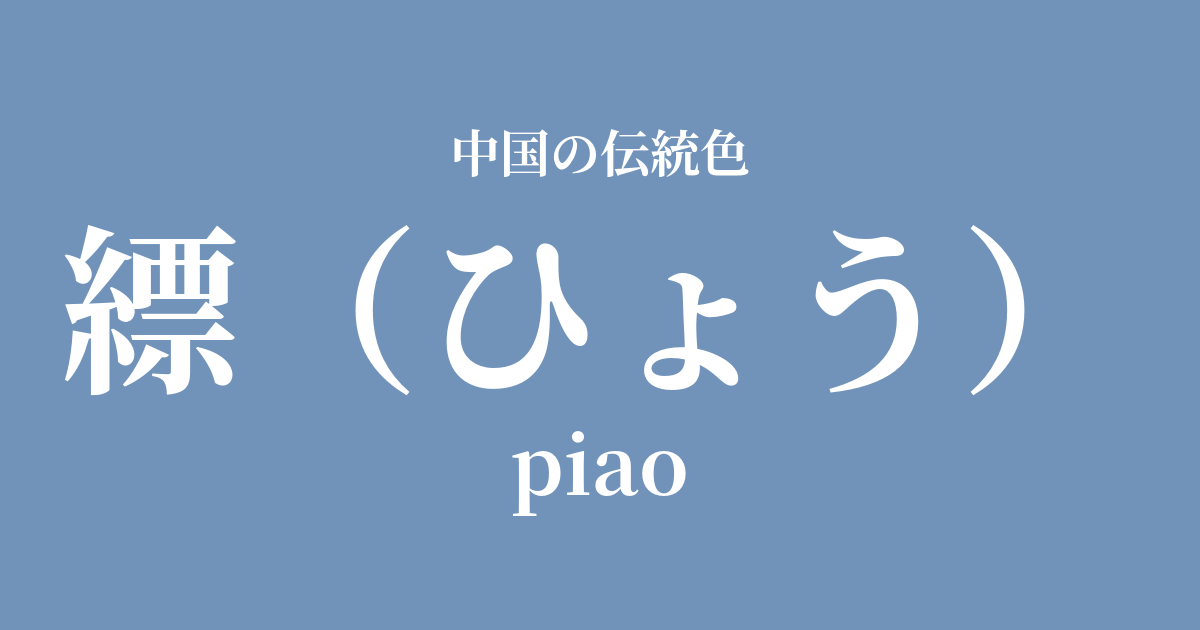
| Color name | 縹 |
|---|---|
| reading | hail |
| pinyin | piao |
| HEX | #7193BA |
| RGB | 113, 147, 186 |
What is "缥"? Origin and etymology
缥 (縹) is a very old color name that refers to a slightly bluish white or pale blue. The character for "縹" is written with the radical for "thread" and the character for "vote," which means "fluttering" or "thin." From this, it can be inferred that it originally referred to the color of lightly dyed blue silk fabric.
The dictionary "Shuowen Jiezi" from the Later Han dynasty describes it as "the bluish-white of silk," defining it as the color of bluish-white silk. Similarly, "Shiming," also from the Later Han dynasty, describes it by likening it to the hazy appearance of distant scenery, evoking an elusive, pale blue image like the sky on a clear day or the mist hanging over distant mountains.
In nature, it has been recognized as the color of a clear sky after the rain or the color of pure flowing water. Although it is an artificial dye, its hue has always been associated with natural landscapes, nurturing people's sense of beauty.
Historical background of the
The history of the color 缥色 (hyōen) is ancient, and its name can be found in the "Book of Songs," a collection of poems from the Zhou Dynasty. In particular, the "青" in the famous line "青青子衿、悠悠我心" (Your collar is blue, my heart is relaxed) is widely believed to refer to this 缥色. In ancient times, the kanji character "青" referred to a wide range of hues, from green to blue and even colors close to black, but depending on the context, it was used to refer to a specific shade of blue, such as 缥.
From the Han dynasty onward, blue came to be used as the color of clothing for scholars and officials. In particular, in the Five Elements philosophy, blue symbolizes the east and spring, and was therefore considered a color representing the beginning of life and youthfulness. Furthermore, in Taoist thought, blue was considered a sacred color symbolizing the world where immortals reside and the heavens, and was favored in the clothing of Taoist priests. Its pure and detached hue likely resonated with people who valued spirituality.
During the Tang Dynasty, many poets incorporated this color into their poetry, praising its beauty. In the Song Dynasty, celadon, exemplified by "sky blue," flourished in the world of ceramics, and it is believed that the aesthetic sense of the clear blue of this color underpinned the development of such crafts.
In Chinese art and crafts
In the world of clothing culture, the indigo color has been widely used in Hanfu (traditional Chinese clothing) throughout history, particularly due to its excellent compatibility with silk fabrics. Clothing dyed in this light, flowing silk color gives the wearer a pure and intellectual impression. It was especially indispensable for representing the image of a scholar detached from the dust of the secular world, or a Taoist priest reminiscent of an immortal.
In Chinese art, particularly in landscape painting, pale blue played a crucial role in depicting distant landscapes. Similar to atmospheric perspective, using light blue to portray distant mountains, mist, and vast bodies of water brought depth and a poetic sensibility to the image. This went beyond mere realism, inviting the viewer into the majestic natural world unfolding within the painting.
Furthermore, the hues of the celadon glaze, which reached its peak during the Song dynasty, and the celadon (yingqing) glaze of the subsequent era, resonate deeply with the aesthetic sensibilities of the color "yuan." The potters' attempts to capture the color of the sky after the rain in their vessels are surely not unrelated to the longing for nature evoked by the color name "yuan."
blue, blue, blue
Color scheme preview
This is to check the readability of the text when this color is used as the background.
Color scheme proposal for the character
Tsukihaku (#EAEBE6)
The combination of the pure white of Tsukishiro and the pale blue of Hanada creates a calm and intellectual atmosphere, reminiscent of a tranquil moonlit night or a clear winter morning. This color scheme is ideal for a study or meditation space.
Blue color (#EDD1D5)
The soft pinkish-beige of lotus root color softens the cool impression of indigo, creating a gentle and elegant harmony. It is recommended for feminine fashion and cosmetic packaging designs.
Willow Green (#B9D699)
Combining the willow green of newly sprouted willows with the clear blue of the sky creates a vibrant and refreshing color scheme that evokes the arrival of spring. It gives a light and cheerful impression to interiors and web designs.
Practical Scenes
In interior design, muted colors bring a sense of calm and openness to a space. When used over large areas such as wallpaper, curtains, and sofa covers in living rooms and bedrooms, the entire room is enveloped in a gentle and sophisticated atmosphere. When combined with white or light wood-grain furniture, it blends naturally into Scandinavian or minimalist spaces.
In the world of fashion, dark blue is a color that symbolizes cleanliness and intelligence. When incorporated into shirts, blouses, or dresses, it gives a fresh and elegant impression. It is especially suitable for spring and summer outfits and goes very well with neutral colors such as white, beige, and gray. When this color is used in light materials such as silk or linen, the delicate beauty of the color is further enhanced.
In web and graphic design, dark gray is a suitable color for conveying trustworthiness and integrity. It is effective when used as a background color for corporate websites or services that prioritize a clean image. By using dark gray or black for the text color, you can create a calm and sophisticated design while maintaining readability.