
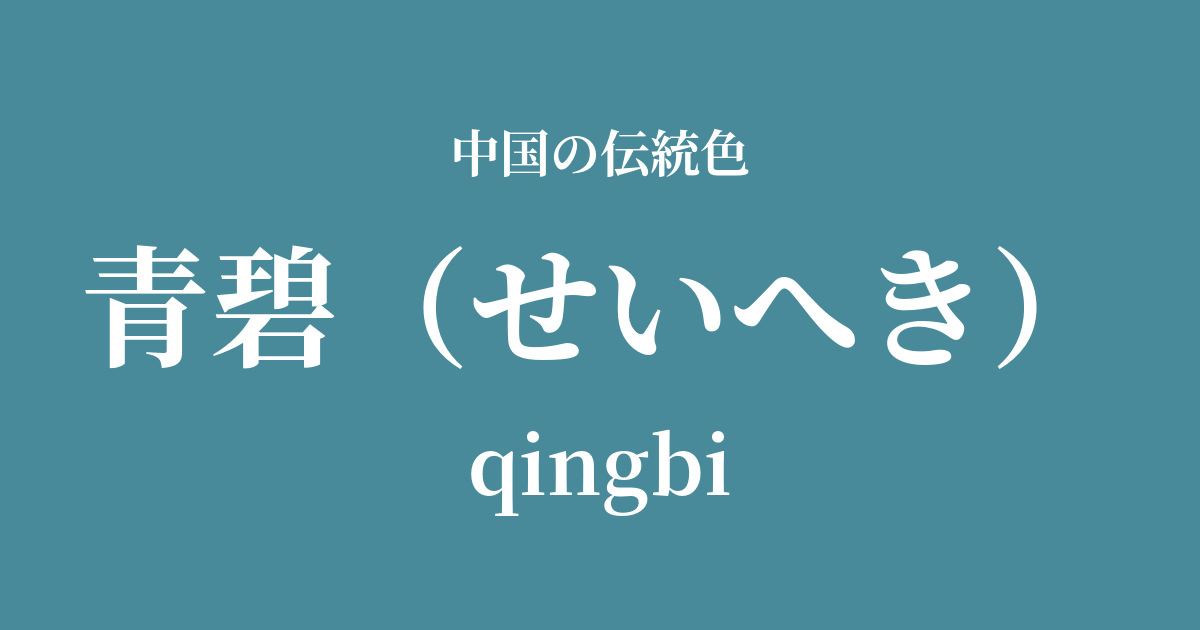
| Color name | blue |
|---|---|
| reading | sexual preference |
| pinyin | qingbi |
| HEX | #488A99 |
| RGB | 72, 138, 153 |
What does "Ao-heki" mean? Origin and etymology
Seiheki, as the name suggests, is a deep, calming blue-green color, a combination of "blue" and "green."
The kanji character "碧" (heki) has long represented a beautiful gemstone known as jasper or nephrite. Jasper is a type of gemstone known as jasper or nephrite today, and its deep, clear green color made it highly valuable in ancient China.
The color azure originates from the hue of this noble gemstone, and it has taken root in people's aesthetic sensibilities as a color that is neither simply blue nor green, but exudes a quiet and intellectual elegance. It has also been likened to the color of deep pools of still water and mountains seen in the distance, and has come to be seen as a color that symbolizes the grandeur and mystery of nature.
The historical background of the blue-green
The deep blue color of jade has its roots in China's long history of jade culture. From the Neolithic period onward, jade was not merely an ornament, but held special significance as a tool for rituals and a symbol of authority. Particularly from the Zhou to the Han dynasties, jade was considered to represent the virtues of a gentleman, and its pure and deep color was idealized. It is thought that the deep blue color was associated with this noble image of jade.
During the Tang Dynasty, international cultural exchange flourished, and the culture of color also blossomed. Around this time, complex and nuanced shades like blue and green became popular in poetry, literature, and painting.
During the Song dynasty, this aesthetic appreciation of color reached its peak. Particularly famous is the celadon pottery of the Song dynasty. The color of the glaze on celadon pottery fired at Longquan kilns and other locations, including the Ru ware celadon which the emperor is said to have described as "the color of the sky after the rain," truly embodies the world of blue and green. In the aesthetics of the Song dynasty, which rejected extravagant decoration and pursued a serene and introspective beauty, blue and green was cherished as one of the ideal colors.
The blue and blue of Chinese art and crafts
The deep blue-green color has inspired various fields of Chinese art. Perhaps the most symbolic example is the celadon pottery of the Song Dynasty. The deep, captivating blue-green color created by the thickly applied glaze is full of tranquility and elegance. This hue, integrated with the form of the vessel, has captivated many people across generations.
In landscape painting, blue-green plays an important role. It is used to depict distant mountains, deep valleys, and still water surfaces, bringing depth, tranquility, and a majestic atmosphere to the painting. It is a color that conveys the rich colors and vitality of nature that cannot be fully expressed by the shades of ink alone.
In the realm of fashion culture, azure is said to have been used in the attire of officials and literati, as it conveyed a sense of nobility and intelligence. Azure garments made from lustrous silk fabrics would have exuded both understated elegance and sophistication, enhancing the wearer's dignity.
Shujiang water blue, Shu mountain blue
Color scheme preview
This is to check the readability of the text when this color is used as the background.
A blue-green color scheme proposal
Ivory (#F2E6CE)
The tranquility of the deep blue and the soft warmth of the ivory color harmonize to create a very elegant and calm impression. This color scheme is recommended when you want to create a peaceful and intellectual space.
Coral beads (#F2A0A1)
The calm, deep blue hues, combined with the bright, gentle red of the coral beads, create a harmonious and vibrant impression, with each color complementing the others. It's a color scheme that is both traditional and modern.
Black (#333333)
The deep blue-green color, accentuated by the ink-black hue, creates a sophisticated and chic impression. It evokes an intelligent and modern atmosphere, bringing a sense of luxury and depth to the design.
Practical Scenes
In interior design, azure is an ideal accent color that brings depth and tranquility to a space. Incorporating it into one wall in a study or bedroom, or adding it through cushions, rugs, or artwork, can create a quiet and contemplative atmosphere. It also pairs exceptionally well with white, beige, and wood-grain furniture.
In the world of fashion, blue is a color that conveys elegance and intelligence. Incorporating it into larger items such as dresses and coats creates a sophisticated, mature look. It is also effective to use it as an accent color in accessories such as scarves, bags, and jewelry, adding a touch of refinement to the entire outfit.
In website and graphic design, blue is an effective color for conveying trustworthiness and expertise. Using it as a background or key color gives users a calm impression and encourages them to focus on the content. Its beauty is further enhanced when combined with a minimalist design.