
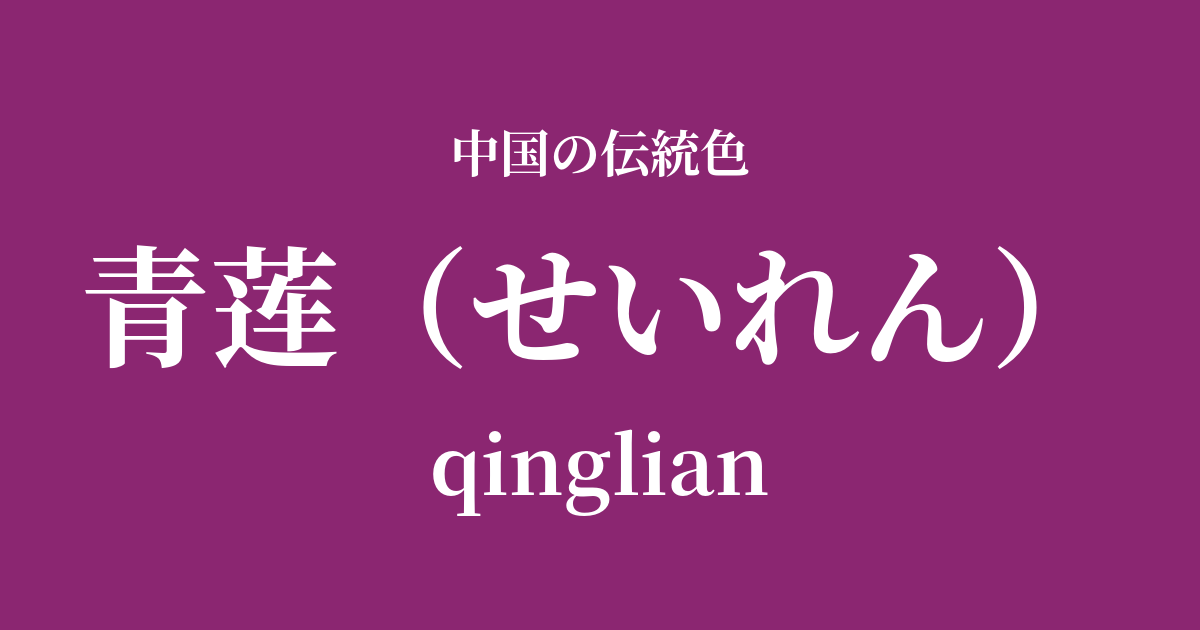
| Color name | Seiren |
|---|---|
| reading | Seiren |
| pinyin | qinglian |
| HEX | #8B2671 |
| RGB | 139, 38, 113 |
What is Qinglian? Origin and etymology
Seiren (青莲) is a color name derived from the "blue lotus," as its name suggests. However, this color is not blue, but rather a vibrant purplish-pink, a shade close to magenta.
In ancient Chinese, the character for "blue" (青) referred to a very broad range of colors, including not only the blue we understand today, but also green, indigo, black, and even purple. Therefore, "青莲" (qinglian) was not interpreted as a literal blue lotus, but rather as "the mysterious, bluish color of a lotus flower," and thus became established as a name for this beautiful purple-ish color.
Furthermore, the lotus flower is extremely important in Buddhism. Because it emerges from the mud yet blooms with a pure, unstained beauty, it is considered a symbol of purity, enlightenment, and integrity. The color of the blue lotus deeply reflects this spiritual beauty.
The historical background of Qinglian
Lotus flowers have been cherished in China since ancient times, but their cultural importance increased even further, especially after the introduction of Buddhism during the Han Dynasty. As evidenced by the numerous depictions of Buddhas and Bodhisattvas seated on lotus thrones, the lotus came to be regarded as sacred.
During the Tang Dynasty, culture flourished, and Buddhist art reached its peak. The murals found in the Mogao Caves of Dunhuang, for example, richly depict lotus motifs, and it is believed that colors reminiscent of blue lotus flowers were also used.
It is also well known that Li Bai, a great poet of the Tang Dynasty, used the pseudonym "Qinglian Jushi" (青蓮居士). It is said that this name originated from his birthplace, or that he identified with the noble image of the lotus flower. This suggests that the word "Qinglian" (青莲) was more than just a color name; it was a cultural symbol representing an ideal spirituality.
Furthermore, purple has long been considered a noble color, both in the East and the West. In China, purple dye was extremely precious, making it a forbidden color that only the emperor and a select few high-ranking officials were permitted to wear. The purple hue of the blue lotus flower, combined with this historical background, further reinforced its image as a noble and special color.
Blue lotus in Chinese art and crafts
The color of the blue lotus flower can be found in various fields of Chinese art, where its beauty can be appreciated.
In Buddhist art in particular, a majestic purple similar to this color is sometimes used for the lotus pedestals on which Buddhas and Bodhisattvas sit, or for the robes of celestial maidens. In paintings depicting scenes of the Pure Land, lotuses of various colors are often depicted in profusion, and the blue lotus is one of them, contributing to the mystical worldview.
In the world of ceramics, the "kiln-fired" glazes seen in Jun ware from the Song dynasty are reminiscent of the complex hues of blue lotus flowers. The accidental colors created by the blending of blue, purple, and red were highly valued as art created by nature.
In clothing culture, the luster of silk fabrics brings out the full beauty of the blue lotus color. The purple Hanfu, which changes its appearance depending on how the light hits it, was a symbol of the wearer's status and dignity. This color is still incorporated into modern Qipao and Hanfu designs as an elegant and striking accent.
A blue lotus flower, in muddy water, untainted by odor, and without loss of fragrance or purity.
Color scheme preview
This is to check the readability of the text when this color is used as the background.
Seiren's color scheme suggestion
Tsukihaku (#EAEFE6)
By combining vibrant blue lotus with gentle, pure moon white, the colors complement each other, creating an elegant and refined impression. It evokes the vibrant harmony of a lotus flower and its leaves in nature.
Fukuai (#E0C1C4)
The deep purple of the blue lotus flower is complemented by the softer, lighter shade of the lotus flower, creating a beautiful, harmonious gradient. This results in a sophisticated and elegant color scheme with depth.
Female yellow (#FFC90C)
The noble blue lotus flower, accented with orpiment (which symbolizes light and sanctity in Buddhist art), creates a remarkably vibrant and majestic impression. This combination exudes a strong presence in special occasions and designs.
Practical Scenes
With its noble and striking color, the blue lotus flower can be used effectively in a variety of settings.
In fashion, incorporating it into special occasion outfits such as dresses and scarves creates a glamorous and mysterious atmosphere. It pairs particularly well with glossy materials like silk and velvet. For everyday wear, using it as an accent color in accessories such as bags and jewelry will tighten up the overall look.
In interior design, it's recommended to use it as an accent in items such as cushion covers, art panels, and rugs. It brings a sense of luxury and tranquility to the entire room, creating an extraordinary space. When paired with natural spaces featuring white, gray, or light wood tones, the beautiful color of the blue lotus stands out.
In the fields of website and graphic design, it is suitable for luxury brand sites, content related to traditional culture, or when dealing with spiritual themes. Combining it with gold or silver can further enhance the expression of a luxurious world.