
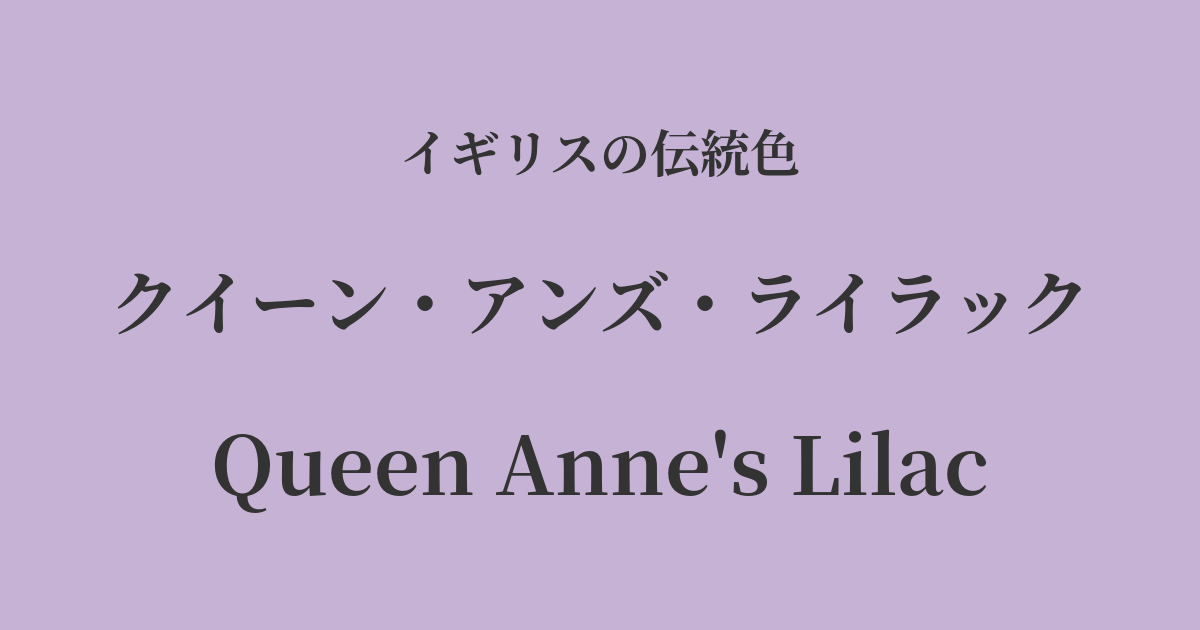
| Original English name | Queen Anne's Lilac |
|---|---|
| Japanese notation | Queen Anne's Lilac |
| HEX | #C6B2D5 |
| RGB | 198, 178, 213 |
What is Queen Anne's Lilac? Origin and Etymology
Queen Anne's Lilac, as its name suggests, is an elegant and refined pale purple color, meaning "Queen Anne's lilac."
This color is named after Queen Anne (reigned 1702–1714), the last monarch of the Stuart dynasty who ruled the Kingdom of Great Britain in the early 18th century. It is said that she personally favored this lilac hue, or that it was a popular color in fashion and interior decoration at court during her reign, hence the name.
Lilac flowers have long been cherished in Europe for their sweet fragrance and delicate appearance. This color is characterized by its gentle and soothing tone, as if it were directly reflecting the delicate hues of lilac blossoms that herald the arrival of spring.
The word "lilac" originates from the Persian word "līlak," meaning a bluish color. It was introduced to Europe around the 16th century, captivating many with its beautiful flowers and fragrance. This color is associated with the lilac's symbolic meanings: "first love," "humility," and "friendship," creating a refined yet warm image.
Historical background of Queen Anne's Lilac
The reign of Queen Anne marked a pivotal period in British history, marked by events such as the War of the Spanish Succession and the formation of the Kingdom of Great Britain through the union of England and Scotland.
Culturally known as the "Queen Anne Style," this period established a simple yet elegant style in architecture, furniture, and silverware, devoid of excessive ornamentation. While influenced by French Baroque and Rococo styles, a more practical and understated design was preferred.
Queen Anne's Lilac is truly a color that symbolizes the aesthetic sensibilities of this era. This color was used in the silk dresses worn by aristocratic women of the time, as well as in the wallpapers and tapestries that adorned their mansions, conveying the atmosphere of refined court culture to this day.
Queen Anne's Lilac in British Culture
In Queen Anne's era, this delicate lilac color was particularly popular among women. Dresses crafted from lustrous silk and satin fabrics brought out the elegance of this color to the fullest, enhancing the wearer's sophistication. Even today, it remains a beloved accent color in spring and summer collections and wedding dresses.
In the field of interior design, it harmonizes beautifully with "Queen Anne style" furniture. The warm wood grain of the walnut wood, combined with this lilac-colored wallpaper and curtains, creates a comfortable space that is classic yet not stuffy.
Furthermore, lilacs are an indispensable part of Britain's world-renowned gardening culture. The lilac blossoms that bloom in English gardens are a source of inspiration for this color, adding depth and a sense of the seasons to the garden's hues.
when the light summer wind stirred amidst the trees of the garden, there came through the open door the heavy scent of the lilac
Color scheme preview
This is to check the readability of the text when this color is used as the background.
Queen Anne's Lilac color scheme proposal
ドーヴ・グレイ (#D1C9C0)
When combined with a soft gray reminiscent of a dove's feather, the elegance of lilac is highlighted, creating a calm and sophisticated impression. It is perfect for classic interiors and formal attire.
ウィロー・グリーン (#A2A98B)
The gentle green, reminiscent of young willow leaves, expresses the natural contrast between lilac flowers and leaves. It creates a natural, relaxed, and pleasant color scheme that evokes the feeling of spring's arrival.
Old Gold (#CFB53B)
Adding a deep, antique gold further enhances the noble image of lilac. It creates a slightly luxurious and dignified atmosphere reminiscent of the court of Queen Anne.
Practical Scenes
In fashion, this color is perfect for spring and summer outfits. Incorporating this color into light materials such as silk blouses or linen dresses creates an elegant and feminine impression. It is also a popular theme color for weddings, and using it in bridesmaid dresses or floral arrangements can create a romantic atmosphere.
In interior design, this color is recommended for wallpaper or accent walls in relaxing spaces such as bedrooms and living rooms. Adding this color to curtains or cushions in a room based on white, off-white, or light gray will create softness and depth in the space. Pairing it with silver or glass accessories will give a modern feel, while pairing it with gold or brass accessories will create a classic impression.
In website and graphic design, this color is suitable for women's brands, wedding-related content, beauty, and lifestyle content. It's an effective color when you want to convey elegance, sophistication, and trustworthiness.