
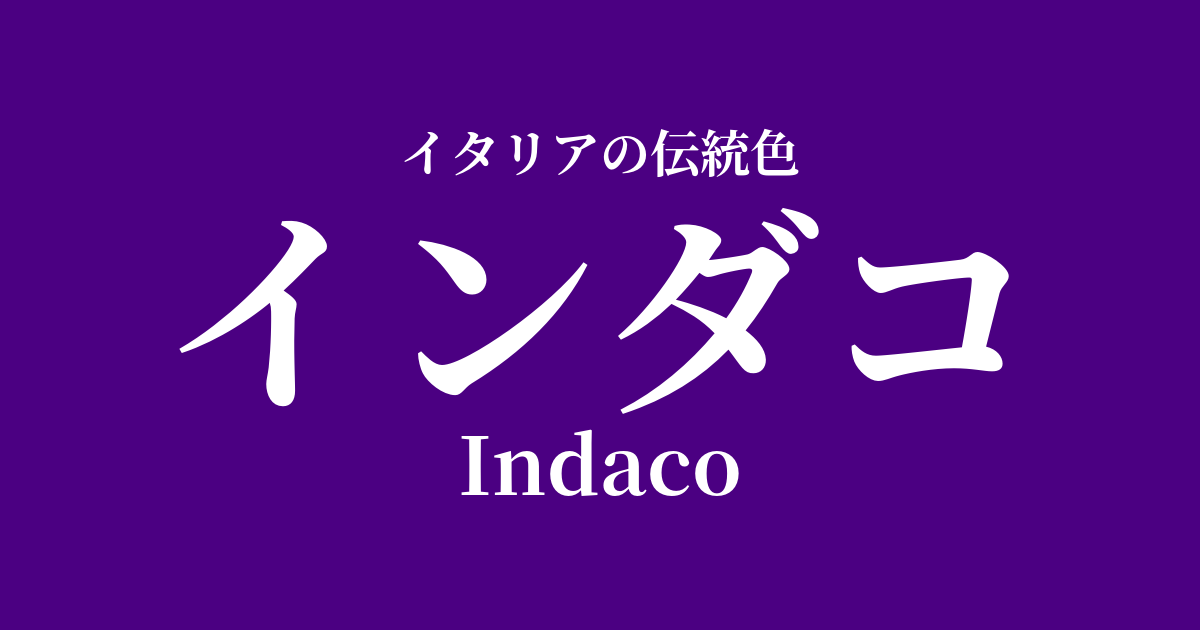
| Italian original name | Indaco |
|---|---|
| Japanese notation | Indaco |
| HEX | #4B0082 |
| RGB | 75, 0, 130 |
What is Indaco? Origin and etymology
Indaco is a deep, slightly purplish blue color, meaning "indigo" in Italian. Its name derives from the Latin word "indicum," and even further back from the Greek word "indikon," which means "of India."
As its etymology suggests, in ancient Europe, the highest quality indigo dye was a precious import brought from far-off India. Extracted from the indigo plant, this color, with its mystical and deep hue, has captivated people all over the world since ancient times.
Historical background of Indaco
In ancient Roman times, indigo from India was an extremely expensive trade commodity, and its use was limited to a privileged class such as emperors and nobles. It is said to have been used in clothing and murals as a color symbolizing wealth and power.
In the Middle Ages, maritime city-states such as Venice and Genoa gained control of trade with the East, bringing spices and dyes, including indigo, to Europe. This made indigo more readily available within Italy, contributing to the development of the textile industry.
During the Renaissance, blue dye was also produced from woad (a type of blue) native to Europe, but indigo from India was highly valued as the finest blue because of its more vibrant and deep color. This color also symbolized Italy's rich commerce and culture.
Indaco in Italian Culture and Art
In Renaissance painting, blue was considered a sacred color, used to depict the Virgin Mary's mantle. The most expensive pigment was ultramarine, made from lapis lazuli, but indigo also played an important role as a substitute, underpainting, and for adding depth to the depiction of shadows. Venetian painters such as Titian effectively used this deep blue to create dramatic contrasts of light and shadow.
Furthermore, indaco is deeply intertwined with Italian textile culture, particularly the history of Genoa. Since the Middle Ages, Genoa has produced durable work cloth dyed with indigo. It is widely believed that this cloth made its way to America and became the origin of jeans. The very word "jeans" itself derives from "Gênes," the French name for Genoa, further highlighting this deep connection to the color.
In contemporary Italian fashion, indaco remains an indispensable color. From sophisticated navy suits to casual denim, it's expressed in a variety of forms as an elegant and intellectual color that has been loved across generations.
Color scheme preview
This is to check the readability of the text when this color is used as the background.
Indaco color scheme proposal
Testa di Moro (#5D3A1A)
The combination of deep indigo and dark brown creates a very classic and dignified atmosphere. Reminiscent of leather goods and aged wood, it adds a touch of sophistication to intellectual spaces like a study or to autumn and winter fashion.
Avori (#FFFFF0)
The contrast between the deep indako and the warm ivory white creates a clean and sophisticated impression. It also evokes the refreshing feeling of Mediterranean white walls and the deep sea, making it ideal for modern interior design.
Porpora (#6A0DAD)
Indigo and purple, though adjacent hues, enhance each other's mystique. This combination of colors, symbolizing the authority of ancient Rome, creates a dramatic and artistic space.
Practical Scenes
In interior design, Indaco is a color that brings a sense of calm and depth to a space. When used as an accent wall in a living room or bedroom, it can create a pleasant tranquility and enhance concentration. Combining it with white furniture and gold accessories creates a sophisticated and modern space.
In the world of fashion, indaco is a color that symbolizes intelligence and trustworthiness, and is widely used in both business and casual settings. Navy jackets and dresses are classic items, and incorporating them in materials such as linen or silk further enhances the depth of the color.
In web and graphic design, using this color as a background enhances content readability and instills a sense of security in users. It is particularly suitable for websites dealing with specialized information or for brand websites that aim to project a high-end image.