
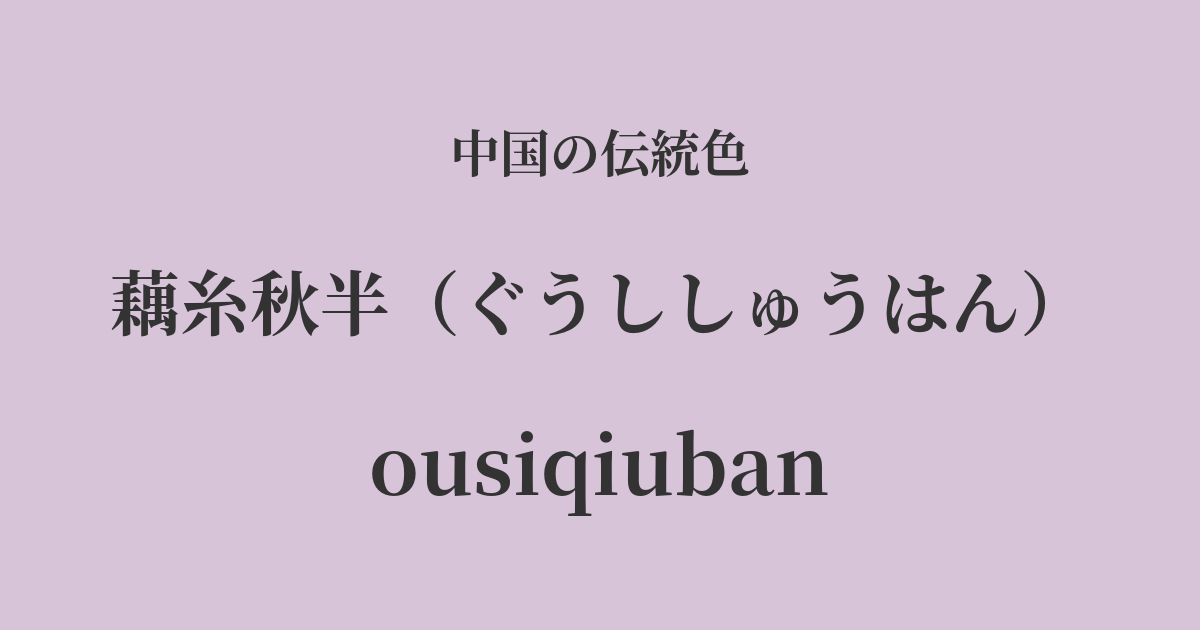
| Color name | Autumn half of Kasui |
|---|---|
| reading | Guushishuhan |
| pinyin | ousiqiuban |
| HEX | #D8C4D8 |
| RGB | 216, 196, 216 |
What is Oushi Qiuhan? Origin and etymology
The name "Gūshi Shūhan" (藕丝秋半) itself poetically tells the story of the origin of the color.
"Ousi" refers to the thin, white threads that become visible when a lotus stem is broken. And "Shuhan" refers to the middle of autumn, or mid-autumn.
These two words combine to mean "the color of lotus threads in mid-autumn." It's the season when the peak of summer has passed and the air is gradually becoming clearer. In this season, the lotus threads you see are not simply white, but perhaps appear faintly purplish, tinged with the soft light of autumn and a touch of melancholy. It's a very lyrical color name that captures a delicate moment in nature.
Historical background of Qiuhan
There are not many records indicating that the color name "Ousi Qiuhan" was officially established by any particular dynasty, but the aesthetic appreciation associated with this color has been cultivated throughout China's long history.
In particular, it resonates with the sensibilities of the Song Dynasty literati who found beauty in natural scenery and cherished its subtle changes. Rather than flamboyant colors, they preferred quiet, profound colors such as the shades of ink painting, the color of the sky after the rain, and the texture of withered leaves.
The lotus, which blooms purely from the mud, is considered a symbol of the "gentleman" and has been the theme of much literature and art, including Zhou Dunyi's "On Loving the Lotus." The "Lotus in Autumn" pattern is thought to have been favored by intellectuals and the aristocracy as a refined color scheme that combines the noble image of the lotus with the tranquility and transience brought about by the autumn season.
Ousi Qiuhan in Chinese Art and Crafts
In clothing culture, pale and elegant purple hues like Ousi Qiuhan were used especially in women's clothing to express refinement and modesty. This type of hue, seen in Hanfu and Qipao (cheongsam), combined with the luster of silk, enhances the wearer's graceful elegance.
Furthermore, in traditional Chinese painting, especially in Gongbi painting, delicate intermediate colors are skillfully used when depicting flowers and figures. "Lotus Petal Autumn Half" is a color well-suited to expressing the shading of lotus petals and the soft texture of a fairy's robe.
In the world of ceramics, we can find an aesthetic sensibility that resonates with this color, such as the "moon white glaze" seen in Jun ware from the Song dynasty and the pale purple glaze found in porcelain from the Qing dynasty. The soft color variations that occur accidentally in the kiln reflect traditional Chinese values that find beauty in and reverence for nature.
Color scheme preview
This is to check the readability of the text when this color is used as the background.
Qiuhan color scheme proposal
Moon White (#DCDDEB)
By combining it with Tsukishiro, a bluish-white reminiscent of moonlight, the transparency and transience of both colors are enhanced. It gives a pure, dreamy, and extremely elegant impression.
Akika color (#D9B873)
Adding warm, autumnal colors reminiscent of rice stalks in autumn further enhances the sense of autumn in the Ousi Qiuhan color scheme. It's an elegant color combination that adds a gentle brightness to a calm atmosphere.
Stone green (#61B4A9)
The deep, calming blue-green color of this stone, derived from the mineral malachite, is reminiscent of lotus leaves. This creates a natural contrast, like that between a lotus flower and leaves, giving it an intelligent and refined impression.
Practical Scenes
In the world of fashion, incorporating lotus flower (藕丝秋半) into items such as dresses, blouses, and scarves creates a gentle and feminine atmosphere. It pairs particularly well with light and lustrous materials such as silk, chiffon, and lace. In traditional Japanese clothing, it adds elegance when used as a color for formal kimonos, obi sashes, and accessories.
In interior design, using it as an accent color in bedrooms or living rooms brings a calm and relaxing atmosphere to the space. It is recommended to incorporate it into one wall of wallpaper, curtains, or cushions, and combine it with off-white, light gray, or light wood-grain furniture.
In web and graphic design, using it as a background or key color can create an elegant and sophisticated brand image. It is particularly suitable for designs related to beauty, wellness, bridal, or traditional culture.