
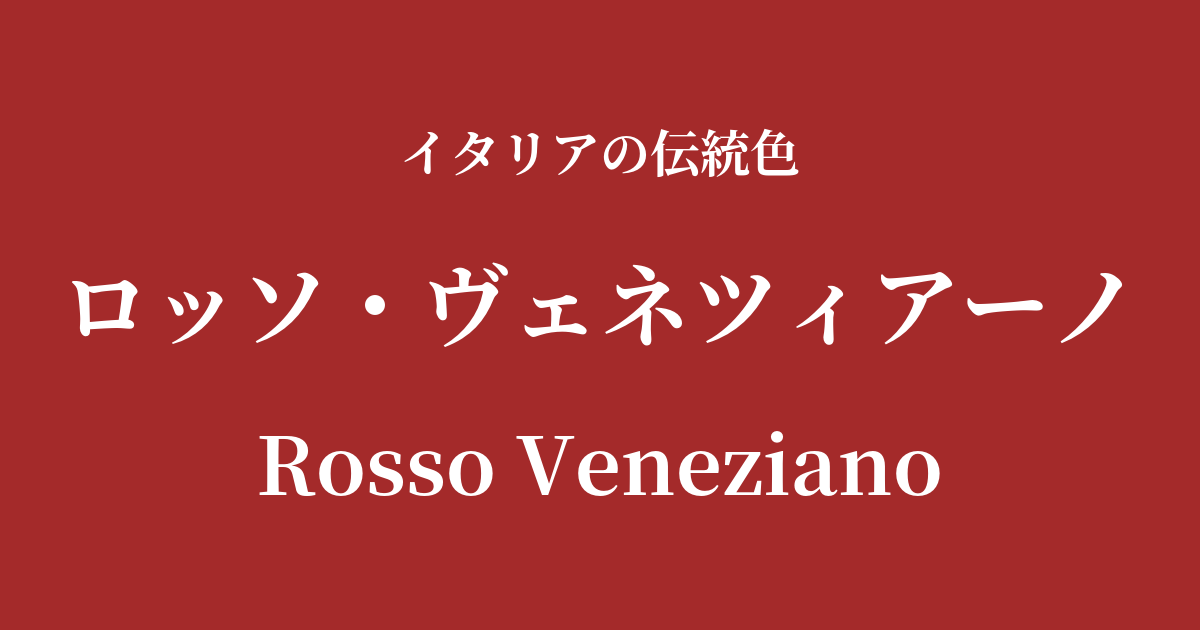
| Italian original name | Rosso Veneziao |
|---|---|
| Japanese notation | Rosso Veneziano |
| HEX | #A42A2A |
| RGB | 164, 42, 42 |
What is Rosso Veneziano? Origin and Etymology
Rosso Veneziano, meaning "Venetian red" in Italian, is a deep and warm shade of red. As its name suggests, it is a color deeply rooted in Venice, the city of water.
The origins of this color can be traced back to the pigments favored by Venetian painters during the Renaissance. Venice at that time flourished as a center of Eastern trade, and had easy access to rare and expensive pigments from around the world, such as cinnabar and carmine (cochineal) extracted from scale insects. By skillfully blending these pigments, the painters created a rich and passionate red unlike any other.
The historical background of Rosso Veneziano
The shade of Rosso Veneziano is inextricably linked to the Golden Age of the Venetian Republic from the 15th to the 16th centuries. Venice, known as the "Queen of the Adriatic," amassed immense wealth through maritime trade, which fueled a magnificent artistic and cultural flourishing.
The masters of the Venetian school, such as Titian, Tintoretto, and Veronese, were active during this period. In contrast to the Florentine school's emphasis on drawing (disegno), they established a style that emphasized color (colorito). In particular, the deep red used by Titian, also known as "Titian Red," became an iconic color of Rosso Veneziano and greatly influenced later artists. This color reflected the prosperity of Venice and the passion of the artists themselves.
Rosso Veneziano in Italian Culture and Art
In Venetian painting, Rosso Veneziano was effectively used to express the emotions and social status of the characters, as well as the dramatic moments of the story. In Titian's "Bacchus and Ariadne," the vivid red of Ariadne's dress dramatically enhances the mythical scene, while in Veronese's "The Wedding at Cana," the color is used extensively in the lavish costumes and curtains, highlighting the splendor of the celebration.
This color is not only present in paintings, but also in the very streetscape of Venice. The walls of buildings painted with plaster mixed with terracotta pigment are reflected in the canal waters, creating a uniquely beautiful landscape. The red color of Venetian glass made on Murano Island can also be said to have been inspired by this traditional color. Rosso Veneziano deeply permeates every aspect of Venetian culture, from works of art to architecture and crafts.
Color scheme preview
This is to check the readability of the text when this color is used as the background.
Rosso Veneziano's color scheme proposal
Auro (#E6B422)
This combination is reminiscent of the golden mosaics that adorn the churches and palaces of Venice. The depth of Rosso Veneziano is enhanced by the shimmer of Oro, creating a luxurious and majestic impression.
Verde Marina (#3C7A78)
This color combination evokes the deep green of the Venetian lagoon. The complementary relationship between red and green enhances each other, creating a classic, calm, and intellectual impression.
Azzurro CIELO (#A0D8F0)
This color scheme beautifully contrasts with the clear blue skies of Venice. The richness of Rosso Veneziano is enhanced by a touch of lightness, creating a dramatic and open impression.
Practical Scenes
In interior design, Rosso Veneziano brings elegance and warmth to a space. Using it as an accent wall, or incorporating it into velvet sofas, cushions, or carpets, instantly creates a luxurious atmosphere. Combining it with gold, brass, or dark wood furniture creates an even more classic and sophisticated ambiance.
In the world of fashion, this color is highly valued for its passionate yet sophisticated appeal. It's perfect for statement pieces like dresses and coats, but even incorporating it into accessories like scarves, bags, and shoes can add a touch of elegance to an entire outfit. It pairs particularly well with basic colors like black, navy, and beige.
In web and graphic design, it's effective when you want to convey a brand's history, reliability, and sense of luxury. Using it as an accent color on buttons and headings can attract the user's attention and deliver a powerful message.