
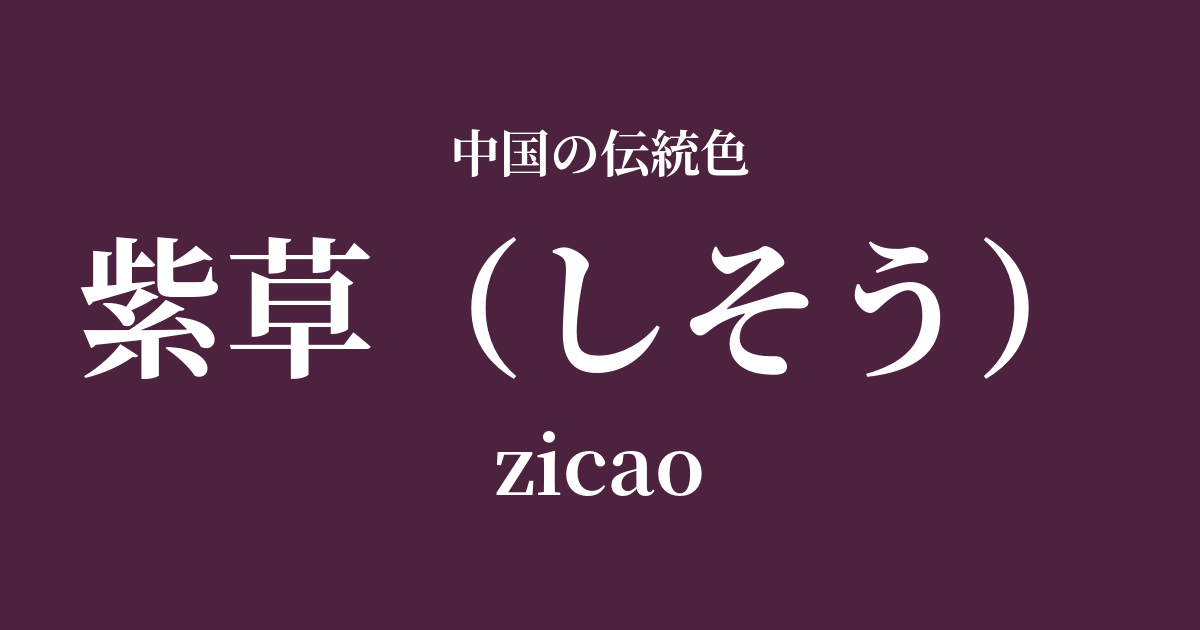
| Color name | purple grass |
|---|---|
| reading | It seems |
| pinyin | zicao |
| HEX | #4D223F |
| RGB | 77, 34, 63 |
What is purple gromwell? Origin and etymology
Shisō, as the name suggests, is a deep reddish-purple color dyed using the roots of the purple gromwell plant, or "shikon," which belongs to the Boraginaceae family.
The pigment called "shikonin" contained in the gromwell root is the source of its beautiful purple color. However, cultivating gromwell root is difficult, and extracting the pigment and dyeing with it required advanced techniques and effort, making cloth dyed with gromwell extremely valuable.
Due to its rarity, the purple gromwell has long been admired not only as a color name, but also as a symbol of nobility and mystery.
Historical background of purple gromwell
In ancient China, purple was considered an extremely noble color. During the Spring and Autumn period, Duke Huan of Qi favored purple clothing, causing its value to skyrocket, and it is said that at one point it was worth more than the hides of five horses.
From the Han dynasty onward, purple became established as the color worn by emperors and high-ranking officials, and it became a symbol of authority. In particular, during the Tang dynasty, the "pin-se" system, which indicated the rank of officials, was established, and only high-ranking officials of the third rank or higher were permitted to wear purple robes.
Just as the heavenly palace where the Emperor of Heaven resides is called the "Ziwei Enclosure," purple was associated with the heavens and the center of the universe. The emperor's residence was named the "Forbidden City" because the place where the emperor, the Son of Heaven, lived was likened to this heavenly palace. In this way, the color of the gromwell plant played a role in linking the highest authority on earth with the sacredness of heaven.
Lithospermum in Chinese Art and Crafts
The color of gromwell holds a particularly important place in Chinese clothing culture. The finest silk fabrics dyed with gromwell were used for ceremonial robes worn by emperors and nobles, as well as for the official attire of high-ranking officials. Its deep, lustrous purple color eloquently conveyed the wearer's status and dignity.
In the world of ceramics, purple is considered a rare color that is difficult to express with glaze. However, the purple spots created by "kiln transformation" seen in Jun ware from the Song Dynasty are highly valued for their accidental beauty. The deep purple created by the art of fire is like a nebula floating in the night sky.
Furthermore, in paintings such as Gongbi painting, it is effectively used to depict the clothing of noble figures or mystical scenes, giving the image a sense of dignity and depth.
Purple Rose Flower Shibiro
Color scheme preview
This is to check the readability of the text when this color is used as the background.
Color scheme proposal for purple gromwell
Moon White (#D9E9E5)
By combining it with moonlight-like white, the richness of the purple gromwell is softened, giving it a pure and refined impression. It is an elegant color scheme that evokes the stillness and nobility of the night.
Golden (#FFD700)
The combination of gold, the color of the emperor, and purple, the color of nobility, is an unparalleled and magnificent color scheme that symbolizes wealth and authority. The two colors complement each other, creating an overwhelming presence.
Willow Green (#7F996E)
By combining it with the soft green of a spring willow, the mystical atmosphere of the gromwell is enhanced by the vitality of nature. The color scheme is calm yet somehow fresh and intellectual.
Practical Scenes
In interior design, incorporating gromwell into accent walls, cushions, or rugs instantly brings a sense of luxury and tranquility to a space. Adding gold or brass accessories further enhances the sophisticated and modern atmosphere.
In fashion, simply wearing this color gives an elegant and mysterious impression. It pairs exceptionally well with glossy materials such as silk and velvet. It's great for statement pieces like dresses and coats, but it also looks wonderful when used as an accent color in accessories like scarves and bags.
In web design and graphic design, using this color as a background can sometimes create an overly heavy feel, so it's more effective when used as an accent color for headings and buttons. It's an ideal color for conveying trustworthiness and sophistication on websites for luxury brands, traditional culture, or spiritual themes.