
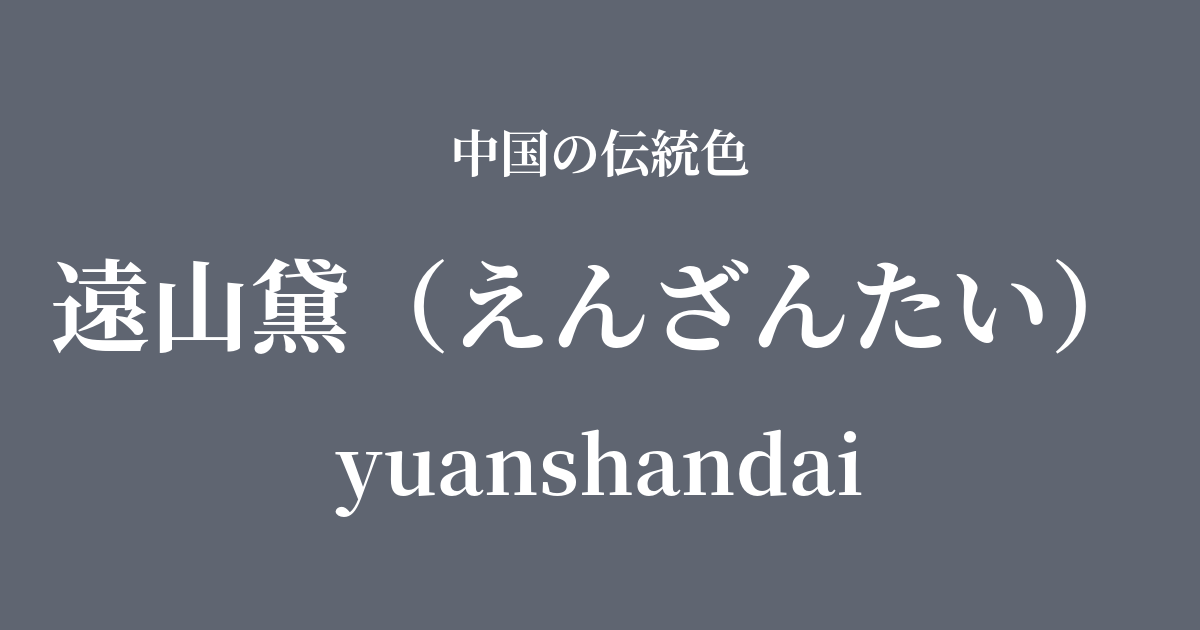
| Color name | Mayuzumi Toyama |
|---|---|
| reading | Enzantai |
| pinyin | yuanshandai |
| HEX | #5F6571 |
| RGB | 95, 101, 113 |
Who is Toyama Mayuzumi? Origin and etymology
Enzantai, as its name suggests, is composed of two elements: "distant mountains" and "eyebrow ink." The mountain ridges that appear hazy in the distance, as depicted in ink paintings, appear as a pale, bluish ink color due to the layers of air. This poetic scene is the origin of this color.
Another origin of the word lies in the makeup of women in ancient China. "Dai" refers to the pigment used to draw eyebrows, and a particularly beautiful eyebrow shape was called "Yuanshan Mei" (遠山眉). This reflects an aesthetic ideal of long, slender, and gracefully curved eyebrows, resembling a range of distant mountains. Yuanshan Dai is a very evocative color name that connects natural landscapes with human beauty.
The historical background of Toyama Mayuzumi
The aesthetic appreciation for this color dates back to the Han Dynasty. A famous anecdote tells of Sima Xiangru, the husband of Zhuo Wenjun, a woman known for her talent, who praised her eyebrows as being "like distant mountains." From this, thin, beautiful eyebrows came to be called "distant mountain eyebrows," and they became an object of admiration for women.
During the Tang Dynasty, the "Distant Mountain Eyebrow" style became even more refined and became fashionable among court ladies. Many paintings and poems of the time depict women adorned with this eyebrow style, suggesting that this color was not merely a scenic color, but a symbol of beauty representing the trends of the era. It was a manifestation of a unique culture, a fusion of sophisticated urban aesthetics and a longing for nature.
Toyama Dai in Chinese Art and Crafts
The colors of Yuan Shan Dai are deeply connected to the world of landscape painting, which forms the foundation of Chinese art. Painters skillfully manipulated the shades of ink, depicting the foreground in darker tones and the background in lighter tones, thereby creating depth and a magnificent sense of space in their paintings. Yuan Shan Dai is precisely the kind of ethereal and poetic color palette used when depicting the most distant mountains.
In fashion culture, this subdued bluish-gray was favored in the attire of intellectuals and the aristocracy. Its understated elegance symbolizes intelligence and inner richness, and when combined with silk fabrics, it exhibits a profound beauty that subtly changes depending on the light. Even in modern Hanfu, it remains a popular color for its refined appearance.
Yibin Hai Shui Cup middle class, slow-drawing pure book Xue Toshan.
Color scheme preview
This is to check the readability of the text when this color is used as the background.
Mayuzan Haruyama's color scheme proposal
Tsukihaku (#EAF4FC)
The tranquility of Toyama Mayuzumi and the pure whiteness of Tsukishiro resonate with each other, creating a serene and elegant impression, much like mountains floating in the moonlight. It is perfect for creating a minimalist and sophisticated space.
Aoi green (#A4B5A1)
This color scheme evokes the natural beauty of distant mountains and the vegetation at their base, creating a calming and natural atmosphere. The combination of earth tones is gentle on the eyes and creates a relaxing ambiance that soothes the mind.
Hot oil (#DB5A6B)
By adding a vibrant crimson accent to a subdued, deep brown, a striking contrast is created that is both classic and impressive. It evokes the image of a woman's makeup, giving an elegant and glamorous impression.
Practical Scenes
In interior design, Toyama Mayuzumi is the perfect color for creating a quiet and calming space. Incorporating it into an accent wall in a living room, study, or bedroom adds depth and richness to the space. Combining it with light wood or pale gray furniture creates a sophisticated Japanese modern or minimalist style.
In the world of fashion, the color Mayumi Toyama symbolizes intelligence and elegance. Coats and dresses in this color give a sophisticated and urban impression, making them suitable for both business and private occasions. By pairing them with brightly colored scarves and accessories, you can enjoy a variety of expressive outfits.
In web and graphic design, using this color as a background enhances the content and gives users a sense of security. It is particularly effective when used as the image color for websites dealing with traditional crafts or for brands with a serene aesthetic, effectively conveying their appeal.