
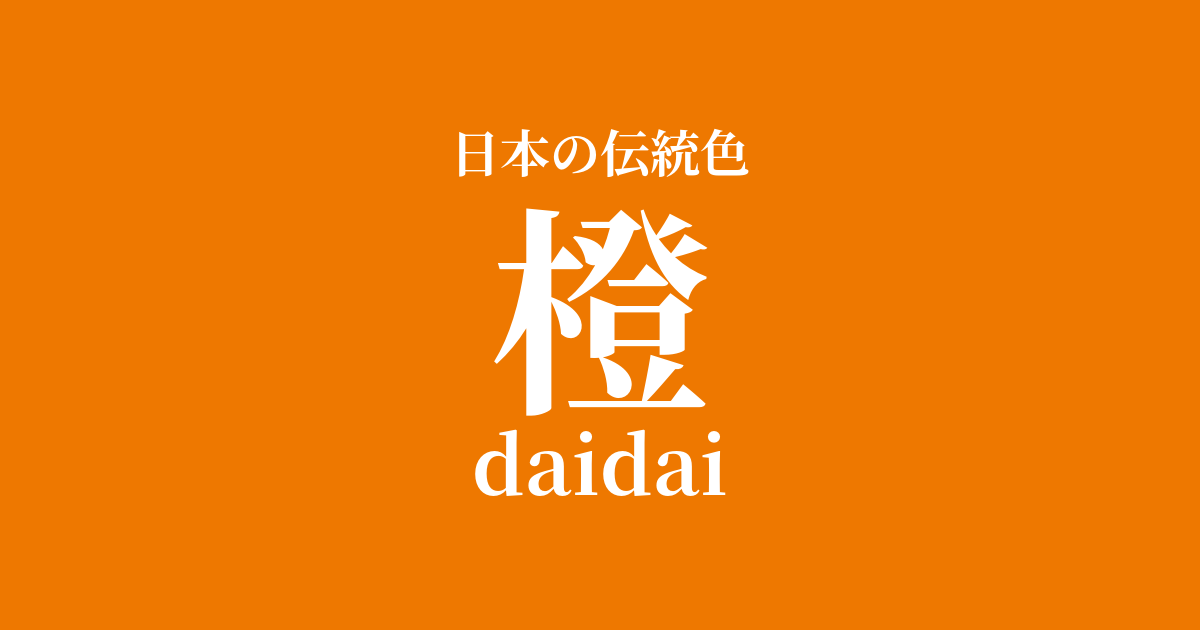
| Japanese color name | 橙 |
|---|---|
| reading | daidai |
| HEX | #EE7800 |
| RGB | 238, 120, 0 |
What is a bitter orange? Origin and etymology
The color "daidai" (橙) is derived from the color of the ripe peel of the citrus fruit "daidai." This fruit does not fall from the tree even in winter, and several generations of fruit can grow on a single branch. This characteristic sounds similar to "daidai" (代々), and thus it came to have the auspicious meaning of "the family prospering for generations." This auspicious symbolism is strongly reflected in the color name.
The use of "orange" as a color name is considered relatively recent. In the past, it was recognized as a color included in the categories of "red" and "yellow." For example, orange-based colors such as persimmon color and mandarin orange color were often referred to by individual names. However, it is said that this vibrant orange color became established as "orange" along with the auspicious association of the orange fruit.
Historical background of orange
In ancient Japan, orange was rarely used as an independent color name, and was generally recognized as a color in the same family as red or yellow. Similar colors included "koji-iro" (a color representing citrus fruits) and "ouni" (a color derived from dye). These colors were primarily used in the clothing and attire of the nobility and are believed to have functioned as colors indicating specific social status.
With the advent of the Edo period, the development of woodblock printing techniques led to the widespread use of vibrant colors in ukiyo-e prints and other works. Orange tones were effectively used in the costumes of Kabuki actors and in portraits of beautiful women, enriching the color sensibilities of ordinary people. Furthermore, due to the auspicious image of the orange, this color became favored for New Year's decorations and celebratory occasions, becoming deeply ingrained in people's lives.
Related literature, waka poetry, and seasonal words
In the world of literature, "daidai" (bitter orange) is known as a seasonal word for winter. This is because the bitter orange fruit ripens in winter and is symbolically used especially as a decoration for the New Year. Many haiku poets, such as Matsuo Basho and Kobayashi Issa, have incorporated this seasonal word when composing poems about winter scenes or the celebratory spirit of the New Year.
While direct expressions of the color "orange" are rare in classical literature, "koji-iro" (orange-colored) clothing appears in narrative literature such as "The Tale of Genji." This provides a clue to how orange-based colors were perceived and used within the color culture of the time. This color, which is both vibrant and warm, is thought to have played an important role in expressing the attire of the characters and the atmosphere of the setting.
They cut the orange in half and used it as a decoration.
Color scheme preview
This is to check the readability of the text when this color is used as the background.
Orange color scheme proposal
Indigo (#165E83)
The warmth of orange and the coolness of indigo complement each other, creating a color scheme that is close to complementary. It gives a vibrant and powerful impression, and its high visibility makes it effective as a design accent. It can create a traditional yet modern atmosphere.
Blue gold (#FABE29)
Combining orange with turmeric, another warm color, creates a sense of unity and gives an overall impression of brightness and vitality. The color scheme evokes images of autumn foliage and abundant harvests, resulting in a warm and approachable feel.
Tokiwa color (#007B43)
The deep green of the evergreen tree evokes the natural scene of oranges, the fruit of which, grow on trees. This color scheme conveys vitality and tranquility, providing a sense of security and stability. It is well-suited to Japanese-style designs and interiors.
Practical Scenes
In the world of kimono, orange is often used at celebratory occasions due to its auspicious nature. It is particularly used as an accent in furisode (long-sleeved kimono), children's kimono, and accessories such as obiage (sash ties) and obijime (sash cords), creating a vibrant and festive atmosphere. Depending on how it's combined with other colors, it can be used in a wide range of styles, from classic patterns to modern designs.
In interior design, orange is an effective accent color that brings warmth and vitality to a space. Using it in cushion covers, rugs, or art panels brightens the entire room. It harmonizes particularly well with natural spaces based on wood and earth tones, creating a comfortable atmosphere.
In web and graphic design, orange is used to attract user attention and encourage action. It is effective when used for elements that need to stand out, such as purchase buttons and important announcements. It is also said to be a color that stimulates appetite, and is frequently used in the design of food-related packaging and websites.